Tulang Merah (Mutton Bone Marrow Stew)
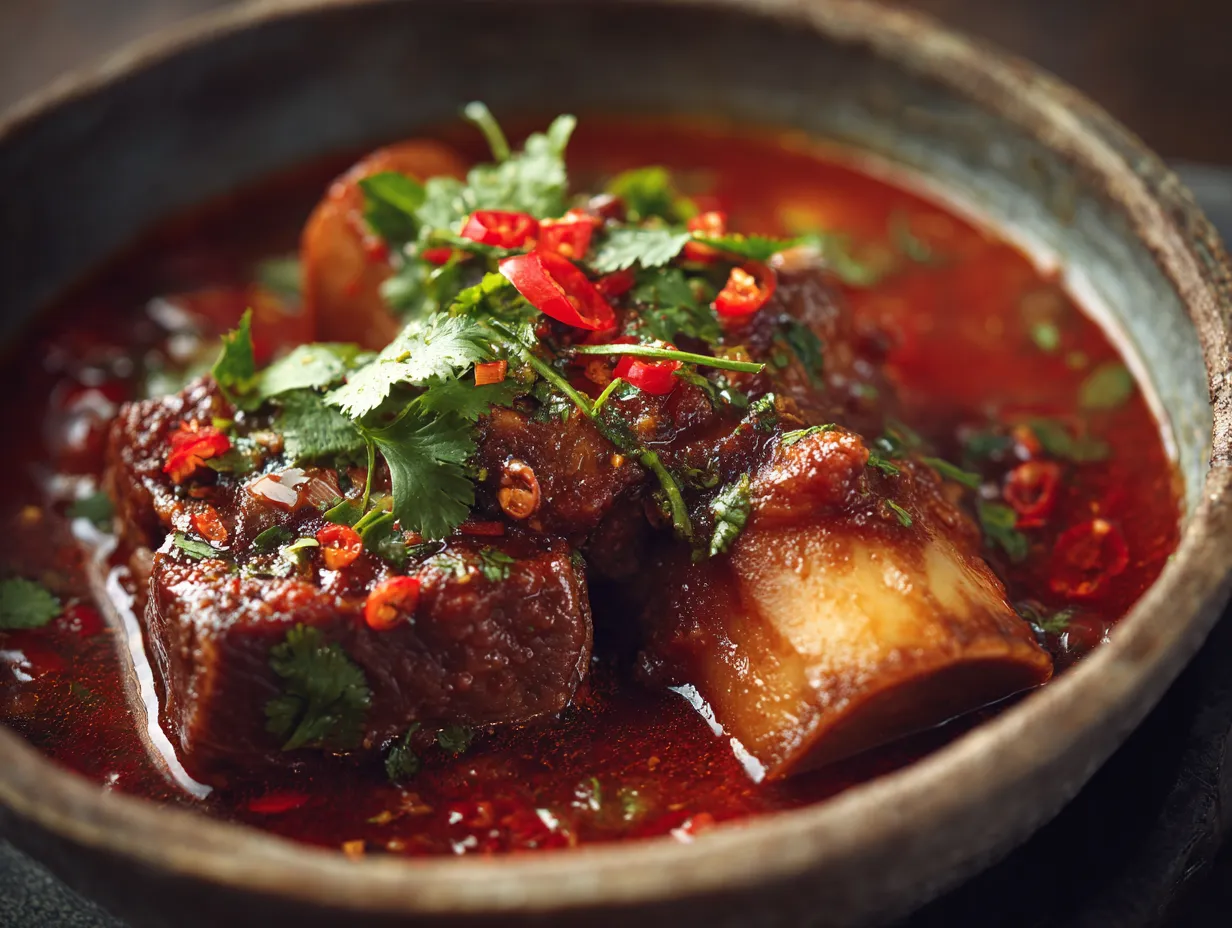
Singapore-style Tulang Merah: a rich, braised mutton bone marrow stew slow-simmered in a spicy-tomato, lemongrass and belacan-infused gravy — perfect for family sharing or late-night zi char suppers.
About this dish
Tulang Merah is a comforting, flavour-forward mutton bone marrow stew that feels right at home in Singapore’s hawker and zi char culture. Imagine a big pot of red, aromatic gravy studded with marrow-filled mutton bones, fragrant with lemongrass and belacan, simmered low until the meat is tender and the marrow is silky — the kind of dish you’d share at a heartland kopitiam or order for a big family dinner in an East Coast or Tiong Bahru flat. It’s hearty, slightly spicy, and deeply savoury.
This version leans on classic Southeast Asian pantry flavours — dried chillies and chilli padi for heat, belacan (shrimp paste) for umami, tamarind for brightness and tomato for body — with an optional splash of coconut milk for a creamier finish. It’s versatile: serve it with steamed rice, hot mantou for dipping, or a crusty baguette to scoop up the marrow. Busy Singapore home cooks can make this on a weekend, or speed things up with a pressure cooker for a weeknight feast.
Texture-wise you get a silky, almost buttery mouthfeel from the marrow, contrasted with the chunky bones and melt-in-the-mouth bits of mutton; the gravy is rich, slightly tangy and well-balanced with aromatics. Perfect for supper runs, family-style sharing at potlucks, or as a special dish for festive gatherings where everyone gathers round a big plate and digs in.
Ingredients
- 1.5 kg mutton bones with marrow (tulang), cut into 5–8 cm pieces
- 300 g mutton shoulder or neck, trimmed and cut into chunks (optional for more meat)
- 2 tbsp vegetable oil or lard
- 2 medium onions (about 200 g), sliced thin
- 6 cloves garlic, peeled and roughly chopped
- 1 thumb (30 g) ginger, sliced
- 1 stalk lemongrass, white part bruised and chopped into 5 cm pieces
- 50 g dried red chillies (soaked and seeded) or 6 fresh red chillies for a fresher heat
- 6–8 bird's eye chillies (chilli padi), whole or chopped (adjust to taste)
- 2 tbsp belacan (shrimp paste), toasted and pounded (optional but recommended)
- 250 g ripe tomatoes, chopped (or 2 tbsp tomato paste + 100 g chopped tomatoes)
- 1 tsp ground turmeric
- 1 tbsp coriander powder
- 1 tsp ground cumin
- 1 tbsp tamarind paste dissolved in 100 ml warm water (asam jawa) or 2 tbsp fresh lime juice
- 500–700 ml mutton or beef stock (or water)
- 200–400 ml coconut milk (optional for creaminess)
- 2 medium potatoes, peeled and cut into large chunks (optional)
- 1 tbsp light soy sauce
- 1 tbsp fish sauce
- 1 tsp palm sugar or brown sugar (adjust to taste)
- Salt and freshly ground black pepper to taste
- To garnish: chopped coriander (cilantro), sliced red chillies, spring onion, fried shallots, lime wedges
- To serve: steamed jasmine rice or toasted mantou
Step-by-Step Method
- Prepare the bones: place mutton bones in a large pot, cover with cold water and bring to a rapid simmer for 5–8 minutes to remove blood and impurities; drain, rinse the bones and clean the pot.
- Make the spice paste: in a blender, combine soaked dried chillies (or fresh chillies), garlic, shallots (if using), toasted belacan, ginger and a pinch of salt; blend with a little water into a coarse paste.
- Brown the bones: heat 2 tbsp oil in a heavy-bottomed pot or wok over high heat. Add the drained bones and sear on all sides until browned (about 6–8 minutes) to develop flavour. Remove and set aside.
- Sauté aromatics and paste: lower heat to medium. In the same pot add sliced onions and bruised lemongrass; stir-fry until soft (4–5 minutes). Add the chilli-belaka paste and fry on medium heat until fragrant and the oil separates, about 6–8 minutes — watch so it does not burn.
- Build the stew: add chopped tomatoes (or tomato paste), turmeric, coriander and cumin; cook until tomatoes break down (3–4 minutes). Return the seared bones (and any meat) to the pot, add stock (enough to just cover bones), tamarind water, light soy and fish sauce.
- Simmer gently: bring to a boil then reduce to a low simmer. Cover and cook for 90–120 minutes until the marrow is soft and the meat is tender. If using a pressure cooker, cook for 35–45 minutes on high pressure.
- Add potatoes and coconut (optional): 20–30 minutes before the end of cooking add potato chunks and coconut milk if using; simmer uncovered until potatoes are cooked and the gravy thickens to your liking.
- Finish and season: taste and adjust seasoning with sugar, salt, lime or extra tamarind for brightness. Skim excess oil if desired. If the gravy is too thin, increase heat and reduce uncovered until it coats the back of a spoon.
- Serve hot: transfer bones and gravy to a large bowl for sharing. Garnish with chopped coriander, sliced chillies, spring onion and fried shallots. Serve with steamed rice or toasted mantou and lime wedges to squeeze over the marrow.
- Eat mindfully: use a spoon or small knife to scoop the marrow from the bones and spread on toast or rice; the marrow should be soft and buttery — if it’s chalky, it needs longer simmering.
- Storage and reheating: cool quickly and refrigerate in an airtight container for up to 3 days; reheat gently on low heat or in a covered pan — marrow will re-solidify when cold but melts again on warming.
Tips & Serving Ideas
- Buy marrow bones from your local wet market or supermarket (NTUC FairPrice, Cold Storage, Sheng Siong). Ask the butcher for cross-cut bones so the marrow is exposed.
- Parboil the bones first and rinse thoroughly to remove scum — this gives you a clearer, cleaner-tasting stew like those served at hawker centres.
- If short on time, use a pressure cooker or Instant Pot on high pressure for 35–45 minutes to achieve tender marrow and soft meat.
- Adjust spice to local tastes: reduce bird's eye chillies for kids or increase them for a more authentic hawker heat; balance with palm sugar and tamarind if the chilli is too sharp.
- For extra depth add a spoon of toasted belacan or a splash of fish sauce — common umami boosters in Singapore kitchens.
- Make-ahead: flavours often improve the next day. Cool, refrigerate and reheat gently; skim fat if you prefer a lighter sauce before reheating.
- Serve with toasted mantou or crusty bread to scoop up the rich marrow, or with plain steamed rice to soak up the gravy zi char-style.
You might also like
More recipes to save for later.