Traditional Tripe Soup
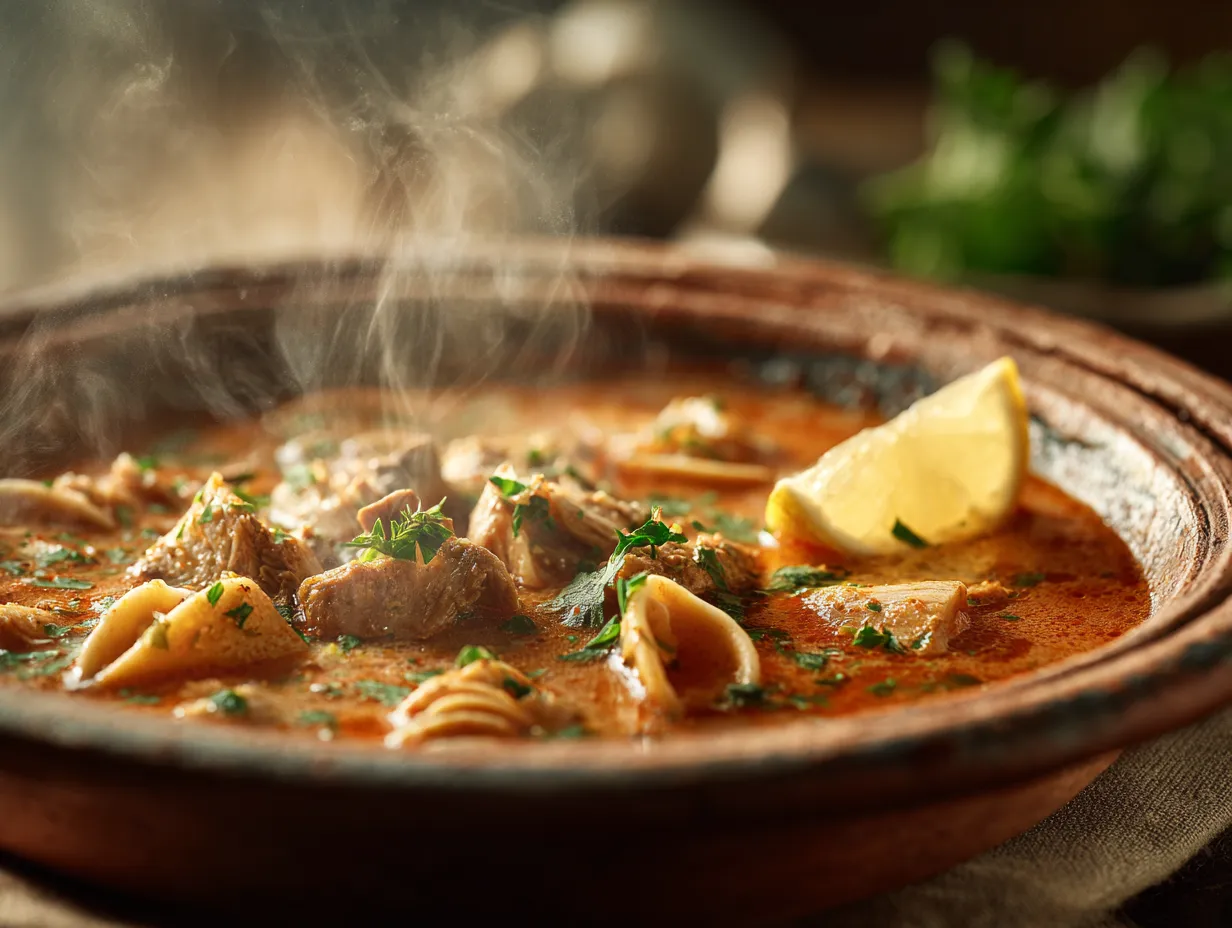
Singapore-style take on a hearty, slow-simmered Traditional Tripe Soup — tender beef tripe simmered in a paprika and marjoram broth, perfect for supper or a comforting family makan.
About this dish
Traditional Tripe Soup is a rustic, comforting bowl that travels surprisingly well to Singapore’s food scene — imagine a piping-hot bowl after a late-night stroll through Geylang or as a warming family dish in a Tiong Bahru flat. This recipe keeps the Central European spirit (paprika, marjoram, a silky, slightly tangy broth) but is adapted for the typical Singapore kitchen: pressure-cooker options, easy-to-find ingredients at NTUC or Sheng Siong, and simple chilli-sambal accompaniments for those who like heat.
The soup delivers tender, chewy slices of beef tripe in a rich, paprika-scented stock built from beef bones and vegetables. Expect layers of flavour: savoury stock, sweet carrot and onion, the smoky-sweet lift of sweet paprika, and a bright finish of vinegar or a squeeze of calamansi — ideal for cutting through the richness. Texture is important here: the tripe should be soft but with a pleasant bite, while the broth should be smooth and slightly thickened.
In Singapore this becomes a versatile dish — serve it as a late-night supper at a kopitiam-style table, as part of a family-style zi char spread, or a comforting main for a rainy East Coast evening. Locals often pair it with steamed rice, toasted mantou or a side of achar and chilli padi for extra kick. The method below includes notes for both stovetop slow-simmering and a quicker pressure-cooker approach so busy CBD workers and home cooks in the heartlands can both enjoy it.
Ingredients
- 800 g beef tripe, cleaned and cut into 2–3 cm strips
- 1 kg beef marrow bones or oxtail (for stock)
- 1 large onion (about 200 g), peeled and halved
- 3 cloves garlic, crushed
- 2 medium carrots (about 200 g), peeled and chopped
- 2 celery stalks, chopped (optional)
- 1 large potato (200 g), peeled and diced (optional, for body)
- 2 tbsp vegetable oil
- 2 tbsp plain flour (for light roux) or cornstarch slurry as alternative
- 2 tbsp sweet paprika (preferably Hungarian) plus 1 tsp smoked paprika (optional)
- 1 tsp dried marjoram (or 1 tbsp fresh chopped)
- 2 bay leaves
- 1.5–2 L water or beef stock
- 2 tbsp white vinegar or 2 tbsp rice vinegar (adjust to taste)
- 1 tsp sugar
- 1 tsp sea salt, plus more to taste
- 1/2 tsp freshly ground white or black pepper
- 2 egg yolks mixed with 50 ml cream (optional, for a silky finish)
- 3 spring onions, finely sliced for garnish
- Fresh parsley or coriander leaves to garnish
- Lime or calamansi wedges, to serve
- Chilli padi or sambal oelek, to serve (optional local spicy kick)
Step-by-Step Method
- Clean the tripe well: rinse under cold water, rub with a little salt and vinegar, then rinse again. Blanch tripe in boiling water for 5 minutes, drain and discard the blanching water to remove impurities.
- Prepare the stock: in a large pot, add beef bones or oxtail, halved onion, carrots, celery, bay leaves and 1.5–2 L water. Bring to a boil, skim scum, then reduce to a gentle simmer and cook 1.5–2 hours until flavourful. (Use a pressure cooker to reduce to 30–45 minutes.)
- While the stock simmers, if you have time, simmer the blanched tripe separately in lightly salted water until tender — about 1.5–2 hours stovetop or 25–40 minutes in a pressure cooker. Trim any excess fat and slice into strips when cool enough to handle.
- Strain the stock and return it to a clean pot. If using potatoes, add diced potato to the stock now and simmer until just tender (10–15 minutes).
- Heat 2 tbsp vegetable oil in a small pan over medium heat. Add plain flour and cook to make a light roux, stirring until pale golden. Remove from heat and quickly stir in the sweet paprika to bloom the flavour — be careful not to burn the paprika.
- Temporarily remove 200 ml of hot stock into a bowl and whisk into the roux to make a smooth paste. Return this mixture to the main pot of stock and stir to thicken slightly. (Alternatively, use a cornstarch slurry if you prefer a clearer broth.)
- Add the sliced tripe to the stock along with minced garlic, marjoram, smoked paprika if using, sugar and pepper. Simmer gently for 15–30 minutes to marry flavours. Keep heat at low to medium — you want the broth hot but not boiling aggressively.
- Season to taste with salt and white pepper. For the classic tangy finish, add 2 tbsp vinegar a little at a time, tasting as you go until the acidity balances the richness (Singapore palates often prefer a brighter finish).
- For a richer, silkier soup, temper the egg yolk and cream mixture: whisk a ladle of hot soup into the yolks to warm, then slowly stir back into the pot off the heat. Return to very low heat for 1–2 minutes — do not boil to avoid curdling.
- Ladle into bowls, garnish with sliced spring onions and parsley or coriander. Serve immediately with lime or calamansi wedges and chilli padi or sambal on the side. In Singapore, this goes well with steamed white rice, toasted mantou, or a small plate of achar for contrast.
Tips & Serving Ideas
- Buy fresh cleaned tripe from Cold Storage, NTUC FairPrice or Sheng Siong; some butchers will clean it for you if you ask — always give it an extra rinse at home.
- Use a pressure cooker to cut cooking time dramatically: tripe often softens in 25–40 minutes under pressure compared to 1.5–2 hours stovetop.
- Bloom paprika in the fat or roux off heat to avoid bitterness; a teaspoon of smoked paprika adds depth if you prefer a smoky note.
- Adjust acidity with vinegar or calamansi at the end — Singapore tastes usually favour a brighter finish, so add slowly and taste as you go.
- If you like heat, serve with sliced chilli padi or sambal on the side so each diner can customise their bowl, hawker-centre style.
- Make ahead: the flavour improves a day later — cool quickly and refrigerate. Reheat gently and add a splash of water or stock if thickened.
- To thicken without roux, use a small potato diced and simmered in the soup, then mash slightly to give body without flour.
You might also like
More recipes to save for later.