Singapore Hokkien Mee (Wet Style Fried Prawn Noodles)
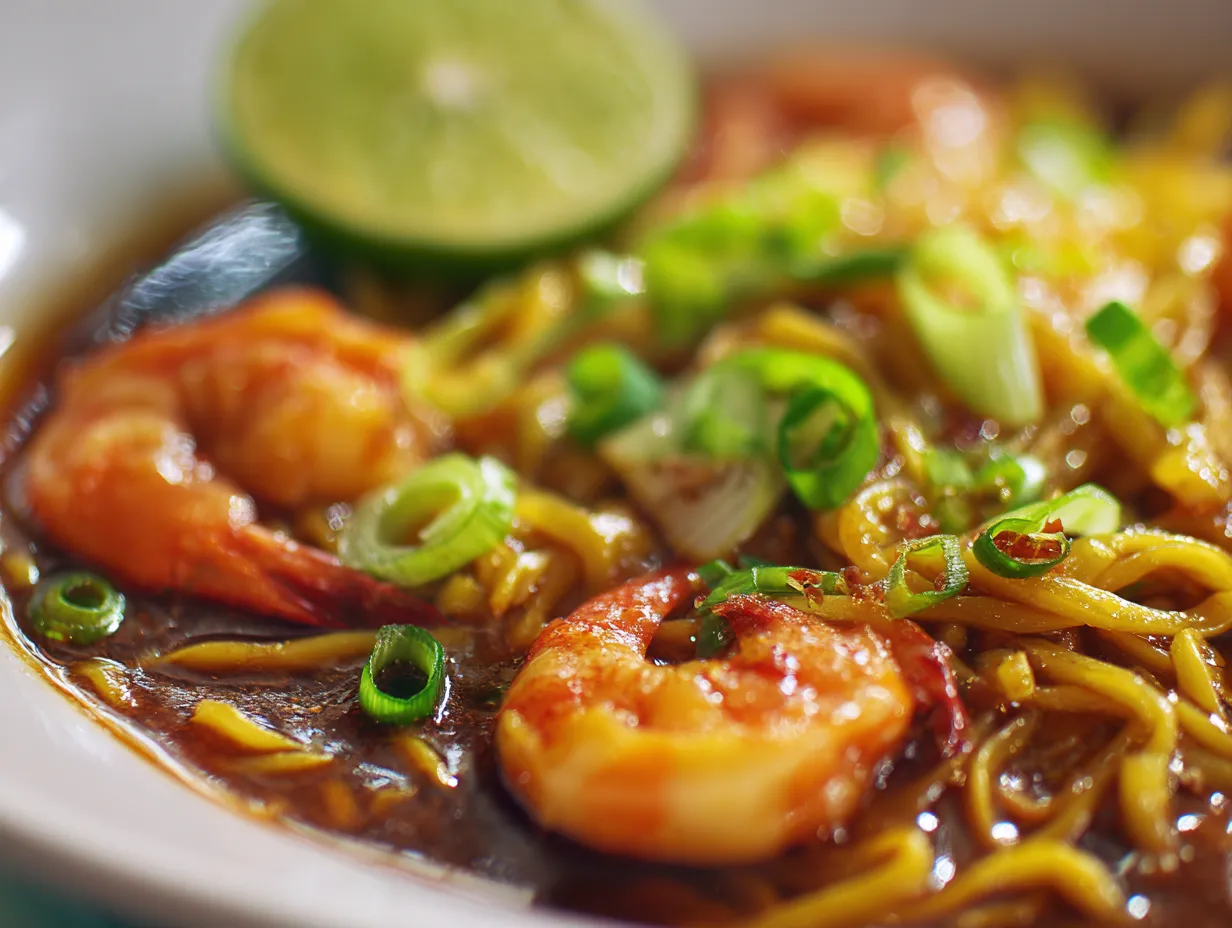
Singapore-style wet Hokkien mee — wok-fried prawns, pork and yellow noodles finished in a silky prawn broth for that hawker-centre comfort taste.
About this dish
Hokkien mee is a staple at Singapore hawker centres and zi char stalls from the heartlands to Tiong Bahru and East Coast parks — this wet style (soupy, glossy) celebrates big prawn flavour and smoky wok-fried notes. At a hawker stall you’ll see sizzling woks, generous prawns and a cloud of fragrant steam; at home it’s perfect for family dinners, supper runs, potlucks or a rainy-night craving.
The dish combines two noodle textures — yellow egg noodles and rice vermicelli (bee hoon) — stir-fried with pork and prawns, then finished with a rich prawn + pork stock so the noodles sit in a light, umami-packed gravy. Expect sweet prawn aroma, savoury pork richness, a hit of wok hei (smoky char), soft silky noodles and a crunchy snap from bean sprouts and spring onions.
Serve it exactly like a kopitiam or hawker would: with sambal chilli or belachan on the side and a squeeze of lime or calamansi for brightness. This version keeps things achievable in a typical Singapore home kitchen — use NTUC FairPrice or Cold Storage ingredients, save prawn shells for the stock, and tweak the spice to suit family palates. The result is unmistakably Singapore — communal, comforting and perfect for sharing.
Ingredients
- 300 g yellow egg noodles (fresh or dried, separated)
- 150 g rice vermicelli (bee hoon), soaked in warm water and drained
- 300 g fresh prawns, shells reserved and peeled (tails on for plating if desired)
- 150 g pork belly, thinly sliced
- 2 tbsp pork lard (or 3 tbsp vegetable oil for less porky flavour)
- 4 cloves garlic, finely minced
- 2 shallots, thinly sliced
- 2 eggs, lightly beaten
- 800 ml stock (made from prawn shells + pork/chicken bones) — see steps
- 2 tbsp light soy sauce
- 1 tbsp fish sauce
- 1 tsp dark soy sauce (optional, for colour)
- 1 tsp caster sugar
- 100 g bean sprouts, rinsed
- 3 stalks spring onions, white parts sliced thin, greens cut on bias for garnish
- 1 tbsp cornstarch mixed with 2 tbsp water (optional, for a slightly thicker glaze)
- Sambal chilli or belachan sambal, to serve
- 1 lime or 4 calamansi, cut into wedges
- Crispy fried shallots or pork lard crisps for garnish (optional)
- Salt and white pepper to taste
Step-by-Step Method
- Make the stock: sauté prawn shells with 1 tbsp oil in a pot until fragrant, add 1 litre water and a handful of pork or chicken bones, simmer gently for 20–30 minutes. Strain and keep 800 ml of warm stock for the recipe; discard shells.
- Prep noodles: separate yellow noodles and drain the soaked bee hoon. Pat prawns dry, season lightly with salt and white pepper. Slice pork belly thinly. Have your aromatics, eggs and garnishes ready beside the wok (mise en place).
- Heat the wok on high until smoking slightly — this is key for wok hei. Add pork lard (or vegetable oil). Fry the sliced pork belly until lightly browned and some fat renders, about 2–3 minutes.
- Add minced garlic and sliced shallots, stir-fry quickly until aromatic (30–40 seconds) but don’t let them burn. Push ingredients to one side of the wok.
- Increase heat, add prawns and sear for 30–60 seconds on each side until nearly cooked. Remove prawns and set aside to avoid overcooking; keep the juices in the wok for flavour.
- Add yellow noodles and bee hoon to the wok, toss briefly over high heat to warm through. Pour in about half the stock (400 ml) and add light soy sauce, fish sauce, sugar and optional dark soy. Toss and let the noodles absorb the broth for 1–2 minutes.
- Return pork and most of the prawns to the wok. Add bean sprouts and the white parts of spring onions. Pour in remaining stock; if you prefer a glossier finish, stir in the cornstarch slurry now. Stir gently but quickly to combine, maintaining high heat until the broth comes together.
- Make a well and pour the beaten eggs over the noodles (or drizzle while tossing) so the egg cooks into ribbons and helps bind the sauce — toss quickly for 30–45 seconds until the egg is set but still silky.
- Taste and adjust: add more light soy for saltiness, a pinch of sugar for balance, or a dash of fish sauce for umami — like at a zi char stall, balance is key. Finish with a crack of white pepper.
- Plate immediately into warm serving plates. Garnish with spring onion greens, the reserved prawns on top, crispy shallots or lard crisps, and serve hot with sambal chilli and lime or calamansi wedges on the side.
Tips & Serving Ideas
- Save prawn shells and peelings to make the stock — this gives authentic prawn umami you get at hawker stalls. If short on time, use good-quality seafood stock from the supermarket.
- High heat is essential for wok hei: preheat the wok until it’s smoking slightly and work quickly, tossing in batches if your wok is small.
- If you can’t buy pork lard, use neutral vegetable oil plus a knob of butter or a splash of sesame oil for richness; for a halal version use chicken stock and replace pork with extra prawns or chicken thigh.
- Adjust spice by offering sambal belachan on the side — each diner can add sambal chilli or sliced chilli padi to taste.
- Make-ahead: keep the stock refrigerated for up to 2 days. Reheat and assemble just before serving; leftovers reheat well gently in a pan with a splash of water or stock to loosen the noodles.
- For a deeper colour, add a little dark soy, but do so sparingly so you don’t overwhelm the prawn flavour.
- If using frozen prawns, thaw completely and pat dry to avoid watering down the gravy; reserve shells before thawing if possible to make stock.
You might also like
More recipes to save for later.