Kway Chap (Braised Pork and Rice Sheets)
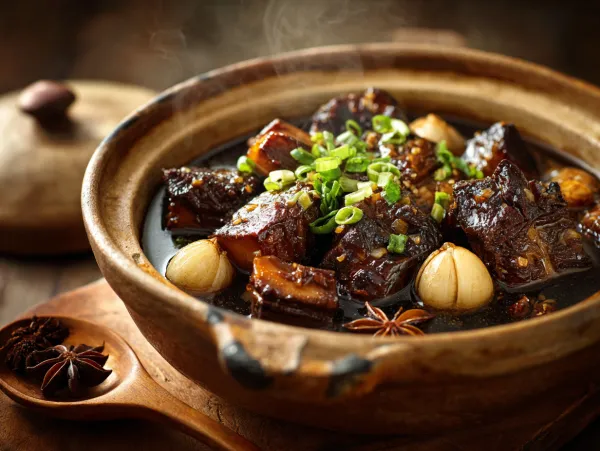
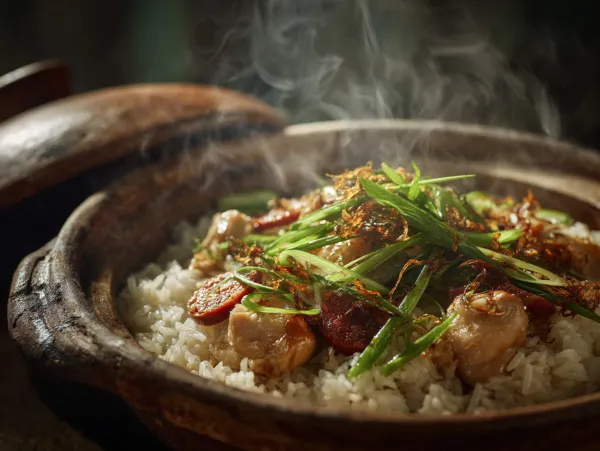
Singapore-style Kway Chap: tender braised pork, offal and slippery rice sheets simmered in a fragrant soy-spice braise — a comforting hawker classic.
About this dish
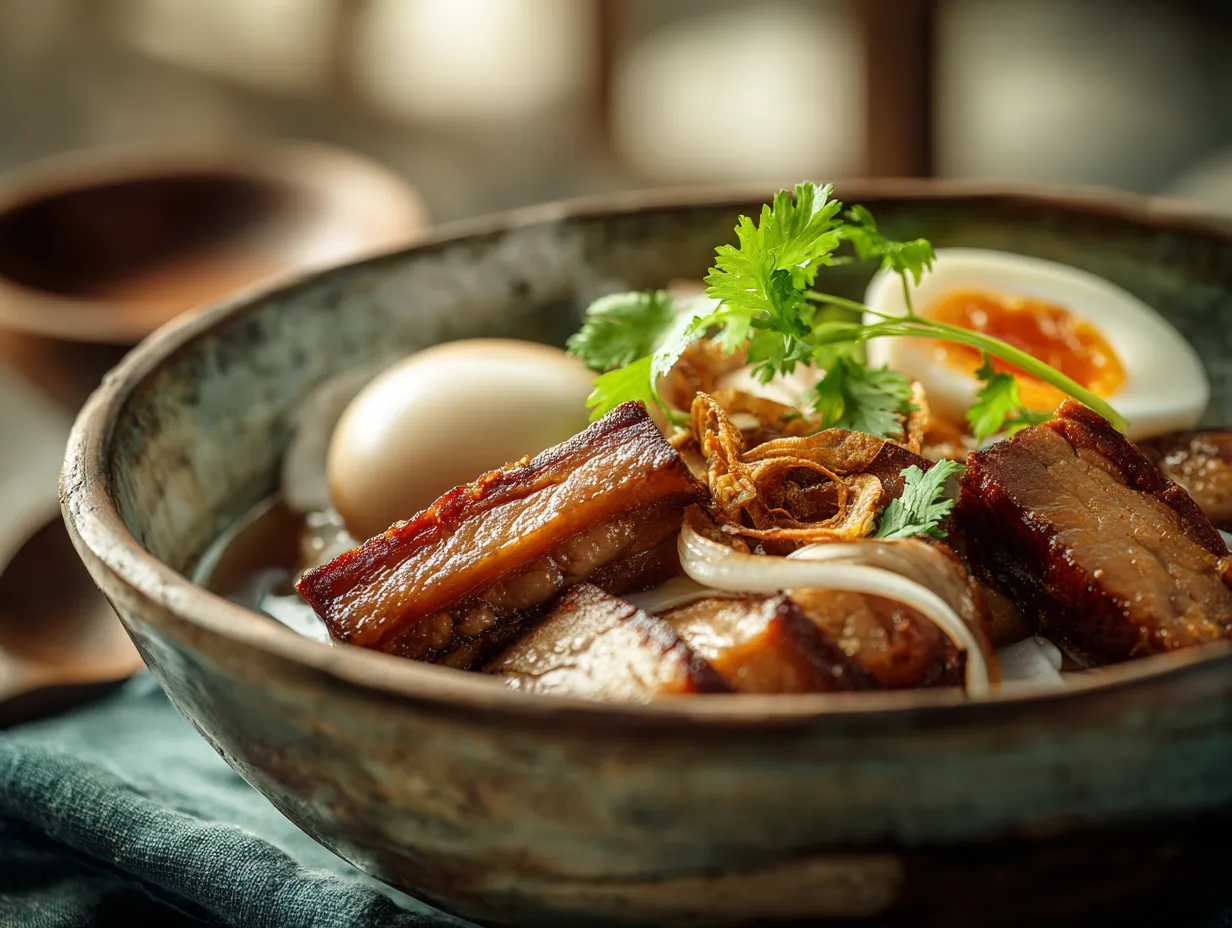
Kway Chap is a beloved Singapore hawker classic you’ll find at kopitiams and heartland hawker centres from Tiong Bahru to Geylang; this version recreates the zi char stall favourite at home using a deeply flavoured soy-spice braising liquid. The dish pairs soft, broad rice sheets (kway) with braised pork belly, braised egg, tau pok and optional offal — all slowly cooked until the flavours meld and the broth becomes rich and savoury.
In Singapore households this is often a family-style, communal meal — perfect for rainy evenings, late-night supper runs or a weekend brunch when you want something warming and fuss-free. The texture play is part of the appeal: unctuous pork, melt-in-your-mouth offal (optional), bouncy rice sheets that soak up the broth, and the clean bite of fresh coriander and sliced chillis.
Flavours are built on light and dark soy, star anise, cinnamon and a touch of rock sugar for balance; add a spoonful of sambal or sliced chilli padi on the side for the Singapore chilli kick. This recipe keeps things practical for a typical home kitchen while staying true to the hawker-centre spirit — think big-batch braise, simple prep, and generous bowls to share.
Ingredients
- 800 g pork belly, skin-on, cut into 5 cm chunks
- 300 g mixed braising cuts (optional): pig trotters, pork collar or small intestines, cleaned and halved
- 4 hard-boiled eggs, peeled
- 200 g wide rice sheets (kway), fresh or thawed if frozen
- 150 g tau pok (fried tofu puffs) or firm tofu, halved
- 1.5 litres water or low-salt chicken stock
- 120 ml light soy sauce
- 40 ml dark soy sauce (for colour)
- 2 tbsp oyster sauce
- 3 tbsp Shaoxing wine or dry sherry (optional)
- 3 tbsp rock sugar or brown sugar
- 6 cloves garlic, lightly crushed
- 4 shallots, peeled and halved
- 3 star anise, 1 cinnamon stick, 4 cloves, 1 tsp white peppercorns (spice sachet)
- 2 tsp five-spice powder
- 2 tbsp vegetable oil
- 1 tbsp sesame oil
- Salt to taste
- Fresh coriander leaves and sliced green chilli or chilli padi for garnish
- Optional: sliced spring onion, fried shallots, sambal chilli or sliced fresh red chillis to serve
Step-by-Step Method
- Prepare aromatics and spice bag: tie star anise, cinnamon stick, cloves and white peppercorns in a piece of muslin or use a spice infuser. Peel garlic and shallots.
- Brown the pork: heat 2 tbsp vegetable oil in a large heavy-bottomed pot or Dutch oven over medium-high heat. Brown pork belly pieces on all sides (about 5–7 minutes) to render some fat — aim for colour but not burnt.
- Optional offal step: if using intestines or trotters, blanch in boiling water for 3–5 minutes to remove impurities, rinse under cold water, then add to the pot after browning the pork.
- Add sauces and liquid: lower heat to medium, add garlic and shallots and sauté for 1 minute, then pour in light soy, dark soy, oyster sauce, Shaoxing wine and 1.5 litres water or stock. Add rock sugar, five-spice powder and the spice sachet; bring to a gentle boil.
- Simmer gently: reduce heat to low and simmer, covered, for 90–120 minutes until pork is tender and the broth is richly flavoured. Skim any foam occasionally. Taste and adjust with a pinch of salt or a little more light soy if it needs brightness — like a zi char stall, balance sweet, salty and savoury.
- Add tofu and eggs: in the last 20–30 minutes of cooking, add tau pok (fried tofu puffs) so they soak up the braise, and the peeled hard-boiled eggs to colour and absorb flavour.
- Prepare rice sheets: if using fresh rice sheets, separate carefully and warm by briefly steaming or dipping in hot water for 20–30 seconds until pliable. For frozen, follow package thawing instructions. Keep them moist to avoid sticking.
- Assemble to serve: slice pork into serving pieces, arrange rice sheets in bowls, top with braised pork, a halved egg, pieces of tau pok and any braised offal. Ladle hot braising liquid over the rice sheets so they soak up the flavour.
- Garnish and finish: drizzle 1 tbsp sesame oil if desired, sprinkle fried shallots, chopped coriander and sliced chilli padi or spring onion. Serve hot with sambal and achar on the side for a true Singapore hawker feel.
- Leftover reheating tip: reheat gently over low heat with a splash of water or stock — avoid vigorous boiling which can toughen meat. Rice sheets re-steam briefly before serving.
Tips & Serving Ideas
- Buy fresh kway (rice sheets) from wet market stalls or the chilled section at NTUC/Cold Storage; warm them by steaming or briefly dipping in hot water to keep them supple.
- If using intestines or trotters, clean thoroughly and blanch first — local wet market vendors can help prepare these cuts if you’re unsure.
- Adjust the seasoning slowly: Singapore hawkers often balance a little rock sugar with light soy for that rounded taste; add more light soy if it needs saltiness, or a pinch of sugar to tame acidity.
- Make ahead: the braise tastes even better the next day once flavours meld — refrigerate and gently reheat; great for batch cooking and weekly lunches.
- For a quicker weeknight version, use pork collar and reduce braise time to 60–75 minutes, but the long slow braise gives the best melt-in-the-mouth texture.
- Serve sambal or sliced chilli padi on the side to let guests dial up the heat — Singaporeans often like a sharp spicy hit alongside the rich soy flavours.
- Source spice ingredients and Shaoxing wine from local supermarkets like Sheng Siong or specialty Chinese grocers for authentic depth.
You might also like
More recipes to save for later.