
Singapore Wet Hokkien Mee (Prawn Noodles)
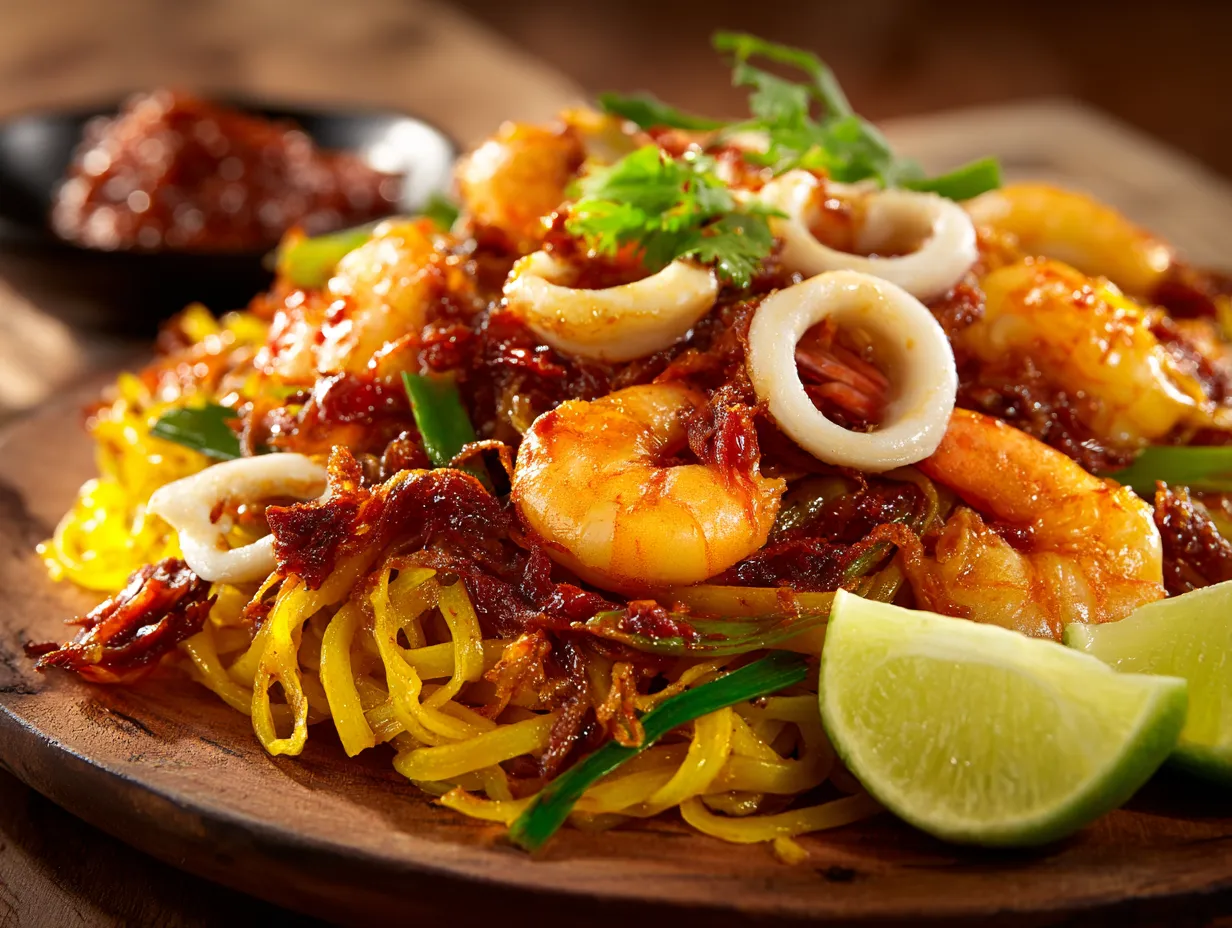
Singapore-style Wet Hokkien Mee — wok-stirred prawns, squid and two-type noodles tossed in a glossy prawn broth for a saucy, umami-rich hawker favourite.
About this dish
Wet Hokkien Mee (prawn noodles) is a quintessential Singapore hawker-centre comfort dish — slippery yellow noodles and rice vermicelli braised in a fragrant prawn-and-pork stock, studded with succulent prawns, tender squid and bean sprouts. Locals love it for supper runs at heartland kopitiams and late-night sessions at East Coast hawker centres, where the wok-hei and a dollop of sambal complete the experience.
At home this dish is perfect for weekend family dinners or sharing at a zi char-style spread. The dish balances briny seafood sweetness from prawn heads and shells, savoury depth from pork and light soy, a hit of white pepper and the bright lift of calamansi or lime. Texture is key — silky sauce that clings to each strand, occasional charred edges from a blistering hot wok, and crunchy bean sprouts adding freshness.
This recipe mirrors what you’d find at a good Singapore stall but tuned for a home kitchen: make a quick prawn stock with shells, use a heavy wok on high heat to get wok hei, and finish with pork lard or neutral oil for richness. Serve with sambal chilli and lime on the side so everyone can adjust the heat and tang — very much how families and friends makan together in HDB dining rooms or around a kopitiam table.
Ingredients
- 300 g fresh yellow Hokkien noodles (or fresh egg noodles)
- 200 g rice vermicelli (bee hoon), soaked briefly until pliable and drained
- 300 g raw prawns, shelled and deveined (reserve heads and shells for stock)
- 150 g cleaned squid, sliced into rings
- 150 g pork belly, thinly sliced
- 2 tbsp pork lard or vegetable oil (plus extra for finishing)
- 4 large garlic cloves, finely minced
- 2 shallots, thinly sliced
- 3 eggs, lightly beaten
- 800 ml prawn-and-pork stock (see step for making from shells and pork bones)
- 1–2 tbsp light soy sauce
- 1 tsp fish sauce (optional, for extra umami)
- 1 tsp sugar
- 1/2 tsp white pepper
- 100 g bean sprouts, trimmed
- 3 stalks spring onions, cut into 4 cm lengths (whites and greens separated)
- 2–3 tablespoons sambal chilli (serve on side)
- 2 limes or calamansi, halved (to serve)
- Salt to taste
- Optional: 30 g crispy pork lard bits or garlic oil for garnish
Step-by-Step Method
- Make the prawn stock: heat a saucepan over medium heat, add prawn heads and shells plus 400 ml water and 200 g pork bones (or 400 ml chicken stock). Lightly crush shells, simmer 20–25 minutes to extract flavour, then strain and reserve about 800 ml total liquid. Keep warm.
- Prep ingredients: peel prawns (keep tails if you like presentation), clean and cut squid into rings, slice pork belly thinly, separate spring onion whites and greens, rinse and drain bean sprouts, and loosen the noodles so they’re ready to go.
- Blanch noodles: bring a pot of water to a boil, briefly blanch yellow noodles and rice vermicelli separately for 20–30 seconds until loosened, drain well and toss with a little oil to prevent sticking. Set aside.
- Heat the wok: place a heavy wok over high heat until very hot. Add pork lard or oil (about 2 tbsp). When it’s shimmering, add minced garlic and sliced shallots and stir-fry quickly until aromatic (10–20 seconds) — don’t let them burn.
- Cook proteins: add pork belly and stir-fry on high for 1–2 minutes until starting to brown. Push to the side and add prawns; cook until they just turn pink. Add squid rings, toss for 30–40 seconds — squid should be just cooked and tender, not rubbery.
- Add stock and seasoning: pour in 500–600 ml of the warm prawn stock and bring to a quick boil. Season with light soy, fish sauce (if using), sugar and white pepper. Taste and adjust — flavours should be savoury, slightly sweet with pronounced prawn umami.
- Combine noodles and eggs: add both types of noodles to the wok and toss to coat in the sauce. Push noodles to the side, add beaten eggs to the empty space, scramble briefly and then mix through so eggs coat the noodles, creating a silky texture.
- Finish with sprouts and spring onions: add bean sprouts and the white parts of the spring onions, stir-fry on high for 30–60 seconds — keep the heat high to achieve a slight char and wok hei while maintaining crunch in the sprouts.
- Reduce to saucy consistency: add more stock if needed to achieve a glossy, slightly saucy finish typical of wet-style Hokkien mee. Simmer very briefly until sauce clings to noodles. Adjust seasoning if needed.
- Plate and garnish: turn off heat, toss in spring onion greens, drizzle a little extra pork lard or oil if desired, and transfer to a large plate. Serve immediately with sambal chilli and lime/calamansi wedges on the side — squeeze lime to taste before eating.
Tips & Serving Ideas
- Make prawn stock from shells and heads for the most authentic umami — shells are cheap and widely available at NTUC or wet markets.
- Use a very hot wok and keep the heat high to get wok hei; work quickly and have everything prepped and nearby like a hawker cook.
- If you don’t have pork lard, a neutral oil with a small knob of butter can add richness; crispy pork lard bits from cold storage make a great garnish.
- Adjust sambal chilli to taste — Singapore stalls usually serve sambal on the side so diners can control heat; use sambal belacan for more depth.
- To prevent soggy noodles, blanch briefly and toss with a little oil. Add bean sprouts at the end to retain crunch.
- Leftovers reheat best in a hot non-stick pan with a splash of stock or water to loosen the sauce; avoid microwaving which can turn squid rubbery.
- Substitutions: use supermarket prawns and frozen squid if fresh is hard to find; prawns from Sheng Siong or Cold Storage work fine for home cooks.
- For a lighter version, reduce pork belly and increase prawns and squid, and use a clear seafood stock instead of pork-based stock.
You might also like
More recipes to save for later.