Braised Duck with Yam Rice
Singapore-style braised duck served with fragrant yam rice — a homey, savoury braise and coconut-scented rice that tastes like zi char comfort food.
About this dish
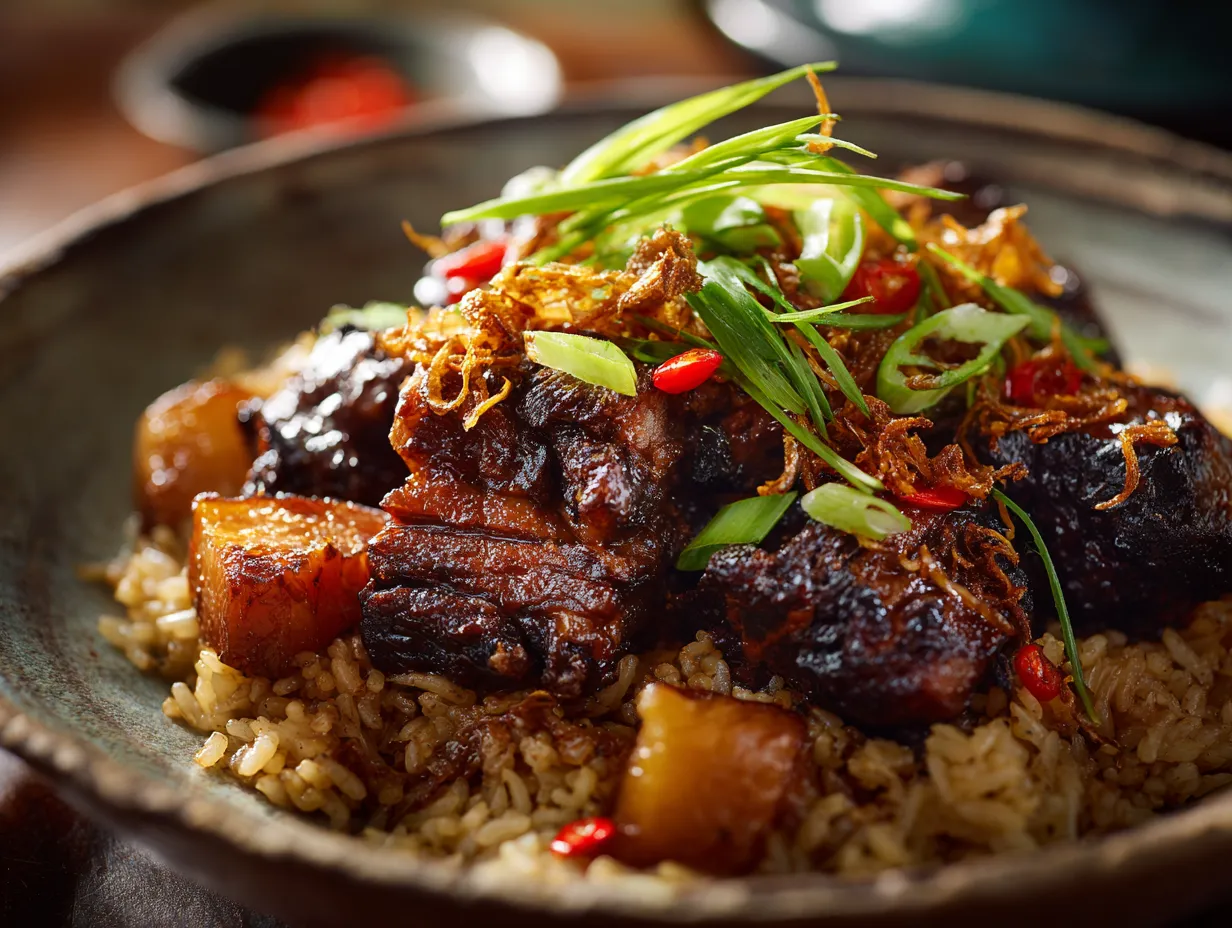
Braised Duck with Yam Rice is the kind of dish you’ll find at family zi char dinners and weekend kopitiam-style spreads across Singapore — think heartland neighbourhoods, Tiong Bahru flats and East Coast family tables. The duck is slowly braised in a dark, aromatic soy-spice sauce until tender, while the yam (taro) is cooked into the rice to give each grain a starchy, nutty note reminiscent of hawker claypot rice but with richer, braised flavours.
This recipe balances savoury, slightly sweet braising liquid with aromatics like star anise, cinnamon and Shaoxing wine; pandan and a little sesame oil lift the yam rice into something distinctly Singaporean. It’s a crowd-pleaser for family-style dinners, potlucks, or a celebratory spread during festive gatherings — pairs perfectly with achar, sambal and some greens for a full hawker-style meal.
Texture is key: tender, falling-off-the-bone duck with crisped skin (optional) contrasted with soft, fragrant yam rice studded with fried shallots and dried shrimp for umami bites. Whether you’re cooking this for weekend guests or prepping for next-day bentos, the braise flavours deepen overnight, so it’s forgiving and great for make-ahead cooking in a typical Singapore home kitchen.
Ingredients
- 1.6–2.0 kg whole duck, jointed into portions (or 4 duck legs + 4 breast pieces)
- 400 g uncooked jasmine rice, rinsed until water runs clear
- 400 g yam (taro), peeled and cut into 2 cm cubes
- 4–6 shallots, thinly sliced (keep some for frying)
- 4 cloves garlic, smashed and lightly chopped
- 2 cm piece ginger, sliced into thin strips
- 2 tbsp light soy sauce
- 2 tbsp dark soy sauce
- 2 tbsp oyster sauce
- 2 tbsp Shaoxing wine (or dry sherry)
- 2 tbsp brown sugar or rock sugar
- 1 tsp five-spice powder
- 2 star anise and 1 small cinnamon stick
- 700–800 ml chicken stock (reserve some from the braise if possible)
- 2 tbsp cooking oil (vegetable or peanut)
- 2 pandan leaves, knotted (optional, for the rice)
- 30 g dried shrimp, rinsed and drained (optional, for extra umami in rice)
- 1 tsp sesame oil
- Salt and white pepper to taste
- Sambal or sliced chilli padi, to serve
- Fried shallots and chopped spring onion, to garnish
- Optional: 100 ml light coconut milk (for creamier yam rice, add to rice cooker)
Step-by-Step Method
- 1. Prep the duck: Rinse and pat dry. If whole, joint into portions. Rub a little salt and white pepper over the skin and let rest 10–15 minutes while you prep aromatics.
- 2. Brown the duck: Heat 1 tbsp oil in a large wok over high heat until just smoking. Sear the duck pieces skin-side down to render fat and get good colour, 3–4 minutes each side. Work in batches and set browned pieces aside.
- 3. Build the braise: In the same wok, lower heat to medium, add a touch more oil if needed, then sauté shallots, garlic and ginger until fragrant. Add light soy, dark soy, oyster sauce, Shaoxing wine, brown sugar, five-spice, star anise and cinnamon. Stir to combine and let the sugar melt.
- 4. Simmer the duck: Return duck to the wok or transfer everything to a heavy pot. Add enough chicken stock (or water) to nearly cover the duck (about 700–800 ml). Bring to a boil, then reduce to low and simmer gently, covered, for 45–55 minutes until duck is tender and flavours have melded.
- 5. Reduce and adjust: Remove duck and keep warm. Strain the braising liquid into a saucepan and boil to reduce to about 350–400 ml for a concentrated sauce (taste and adjust salt/sugar like a zi char stall — add a bit more light soy if needed). Reserve some liquid for the rice.
- 6. Prepare the yam rice: While braise is simmering, fry the sliced shallots in 1 tbsp oil until golden and crisp; set aside. In the rice cooker pot, add rinsed rice, diced yam, dried shrimp, pandan leaves, sesame oil and 400–450 ml of the reduced braising liquid mixed with stock (top up with water if needed) or 100 ml coconut milk plus stock for extra creaminess. Stir gently.
- 7. Cook the rice: Set rice cooker to normal cook. If using a pot, bring to a simmer then cover and cook on low for 15–18 minutes until rice is done and yam is tender. Let rest covered for 10 minutes before fluffing.
- 8. Crisp the skin (optional): For a hawker-style finish, quickly pan-fry or grill the braised duck skin-side down over medium-high heat for 2–3 minutes to crisp, or place under a hot broiler for 3–5 minutes. Watch closely to avoid burning.
- 9. Plate and finish: Fluff the yam rice and mound onto a serving platter or individual bowls. Arrange sliced braised duck on top, drizzle some of the reduced braising sauce, scatter fried shallots and chopped spring onion, and serve with sambal or achar on the side.
- 10. Taste & tweak: Encourage diners to taste and adjust with extra light soy, a squeeze of lime, or more sambal — just like at a favourite zi char stall.
Tips & Serving Ideas
- Buy whole duck from NTUC FairPrice, Cold Storage or your local wet market; ask the butcher to joint it for easier home braising.
- To save time, use a pressure cooker or Instant Pot: braise the duck on high pressure for 20–25 minutes, then reduce sauce separately.
- If you can’t find fresh yam, use frozen taro cubes from the supermarket, but add them later to avoid overcooking.
- For deeper flavour, braise the duck a day ahead and refrigerate; reheat gently and crisp the skin just before serving — flavours develop overnight like many zi char dishes.
- Adjust spice for heat tolerance: serve sambal on the side and let guests add chilli padi themselves (common in Singapore households).
- If rice texture is too dry after adding reduced sauce, add 50–100 ml extra hot stock before cooking; if too wet, cook uncovered a few minutes to evaporate.
- Leftovers keep well: separate rice and duck in airtight containers and reheat in the microwave or steam; rice also makes excellent next-day lunchboxes.
You might also like
More recipes to save for later.