Dry Laksa (Goreng) with Prawns
A Singapore-style, wok-fried dry laksa (goreng) with prawns — coconutty, spicy and tangy noodles inspired by hawker-centre flavours.
About this dish
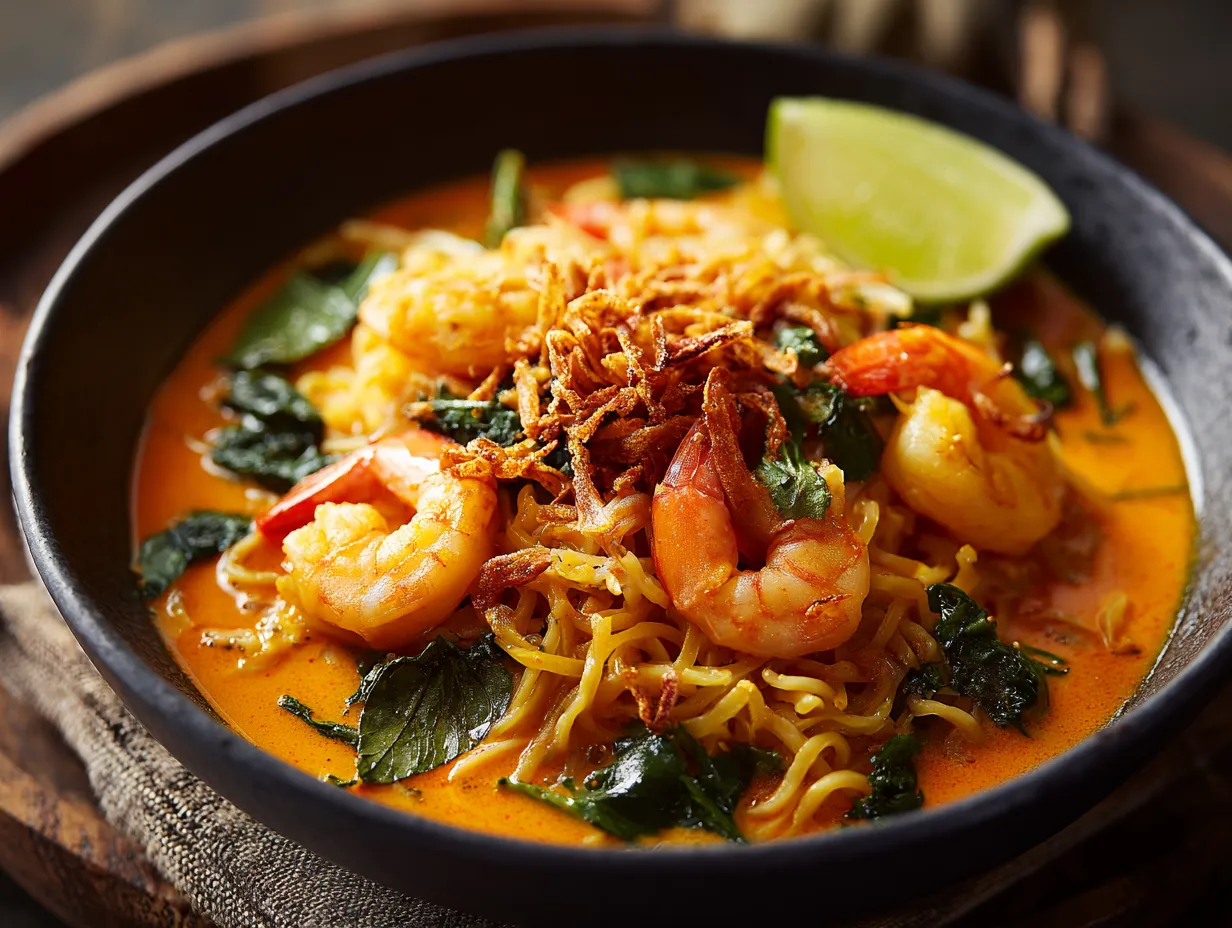
Dry Laksa (Goreng) with Prawns is a home-friendly take on the classic Peranakan laksa, made stir-fry style so you get concentrated laksa flavours coating every strand of noodle. Think of the punchy coconut-curry aroma of a kopitiam or zi char stall, but in a drier, toss-and-serve format that’s great for weeknight dinners or supper runs around the heartlands.
This version uses a fragrant laksa spice paste, a splash of coconut milk for creaminess, tamarind for a bright tang, and umami from belacan (shrimp paste) and dried prawns — balanced with juicy prawns, crunchy bean sprouts and lots of fresh laksa leaf (Vietnamese coriander) if you can find it at Tekka Centre or your local wet market. It’s ideal for sharing at family dinners, bringing to potlucks, or serving as a hearty plate at an after-work makan session in the CBD.
Texture-wise expect springy rice vermicelli or laksa noodles coated in a silky, slightly sticky sauce, with the crunch of bean sprouts and the pop of toasted shallots. Spice levels are adaptable — dial up the sambal if you like it kopitiam-hot, or tone it down for kids and elderly family members. Leftovers reheat well for lunchboxes and taste even better the next day as the flavours deepen.
Ingredients
- 300 g thick rice vermicelli or fresh laksa noodles, soaked briefly in hot water (if dried, soak according to packet) and drained
- 300 g prawns, shelled and deveined (keep heads for stock if desired)
- 150 g firm tofu puffs, halved
- 100 g fish cake, sliced
- 150 g bean sprouts, trimmed and rinsed
- 3 tbsp vegetable oil (or neutral oil) for stir-frying
- 4 shallots, peeled and thinly sliced
- 4 cloves garlic, peeled and minced
- 1 stalk lemongrass, white part finely sliced or pounded
- 1 thumb (20 g) galangal or ginger, peeled and finely chopped
- 2 tbsp dried shrimp (soaked for 10 minutes, drained) or 1 tbsp dried shrimp paste
- 2 tbsp belacan (shrimp paste) toasted or 1 tbsp substitute fish sauce
- 3 to 4 tbsp laksa spice paste (store-bought) or homemade paste from shallots, chillies, candlenuts and turmeric
- 150 ml coconut milk (full-fat) for creaminess
- 1 tbsp tamarind paste (or 1 tbsp lime juice) for acidity
- 1 tsp sugar (palm sugar preferred) and salt to taste
- 2 to 3 tbsp sambal oelek or chilli paste (adjust to heat preference)
- 10–12 laksa leaves (Vietnamese coriander) or a small bunch of coriander and Thai basil as substitute, torn
- 2 tbsp fried shallots for garnish
- 2 tbsp chopped spring onions, for garnish
- Lime wedges, to serve
Step-by-Step Method
- Prepare noodles: soak rice vermicelli or fresh laksa noodles according to packet instructions until pliable but not mushy; drain well and toss with a little oil to prevent sticking. Set aside.
- Make or prep laksa paste: if using store-bought paste, measure 3–4 tbsp; for homemade, blend shallots, garlic, lemongrass, galangal, chillies and candlenuts into a smooth paste.
- Toast belacan and dried shrimp: on medium heat in a dry pan, toast belacan briefly until fragrant, then pound or finely chop; rehydrate dried shrimp in hot water for 10 minutes and drain — this builds umami like many hawker stalls.
- Heat the wok: add oil and bring to high heat until shimmering (for that wak hei effect). Add sliced shallots and fry until translucent, then add garlic and laksa paste; stir-fry 2–3 minutes until aromatic and the oil separates.
- Add prawns and proteins: push paste to the side, add prawns and tofu puffs, stir-fry 1–2 minutes until prawns start to turn pink. Add fish cake slices and drained dried shrimp, toss to coat.
- Build the laksa sauce: pour in coconut milk and tamarind paste, stir to combine, bring to a gentle simmer for 1–2 minutes — the sauce should become slightly thick but saucy enough to coat noodles.
- Add noodles and bean sprouts: increase heat to high, add drained noodles and bean sprouts to the wok. Toss vigorously for 2–3 minutes so the laksa sauce clings to the noodles; use tongs to lift and toss for even coating.
- Season and finish: add toasted belacan, sugar, sambal and a splash of water if too dry. Taste and adjust seasoning with salt, more tamarind or sugar to balance sweet-sour-spicy, like at a zi char stall.
- Add fresh herbs and serve: toss in torn laksa leaves and spring onions off heat, give a final quick toss, then plate. Garnish with fried shallots and serve immediately with lime wedges and extra sambal on the side.
Tips & Serving Ideas
- Buy pre-made laksa paste at NTUC FairPrice, Cold Storage or a wet market if short on time — a good paste makes a big difference.
- For wok hei, get the wok very hot and toss quickly on high heat; don't overcrowd the wok or the noodles will steam instead of fry.
- If you can't find laksa leaf (daun kesum), use a mix of coriander and Thai basil as a local-substitute flavour; add fresh herbs at the end off the heat.
- Adjust spice by starting with 1 tbsp sambal and increasing to taste — chilli levels at hawker stalls can be much hotter than home-cooked versions.
- Use fresh or frozen prawns (thawed) — keep prawn shells to make a quick stock for extra flavour, then strain and use the stock instead of water.
- Soak dried rice vermicelli just until pliable; over-soaking makes them mushy when stir-fried. Toss with a teaspoon of oil to prevent sticking.
- Make-ahead: prepare the laksa paste and protein ahead of time; combine and toss through freshly cooked noodles just before serving for best texture.
You might also like
More recipes to save for later.