
Neighbourhood kopitiam vibes
Tiong Bahru Hawker
A bustling neighbourhood hawker centre in Tiong Bahru known for classic Singapore street food and kopitiam-style breakfa...
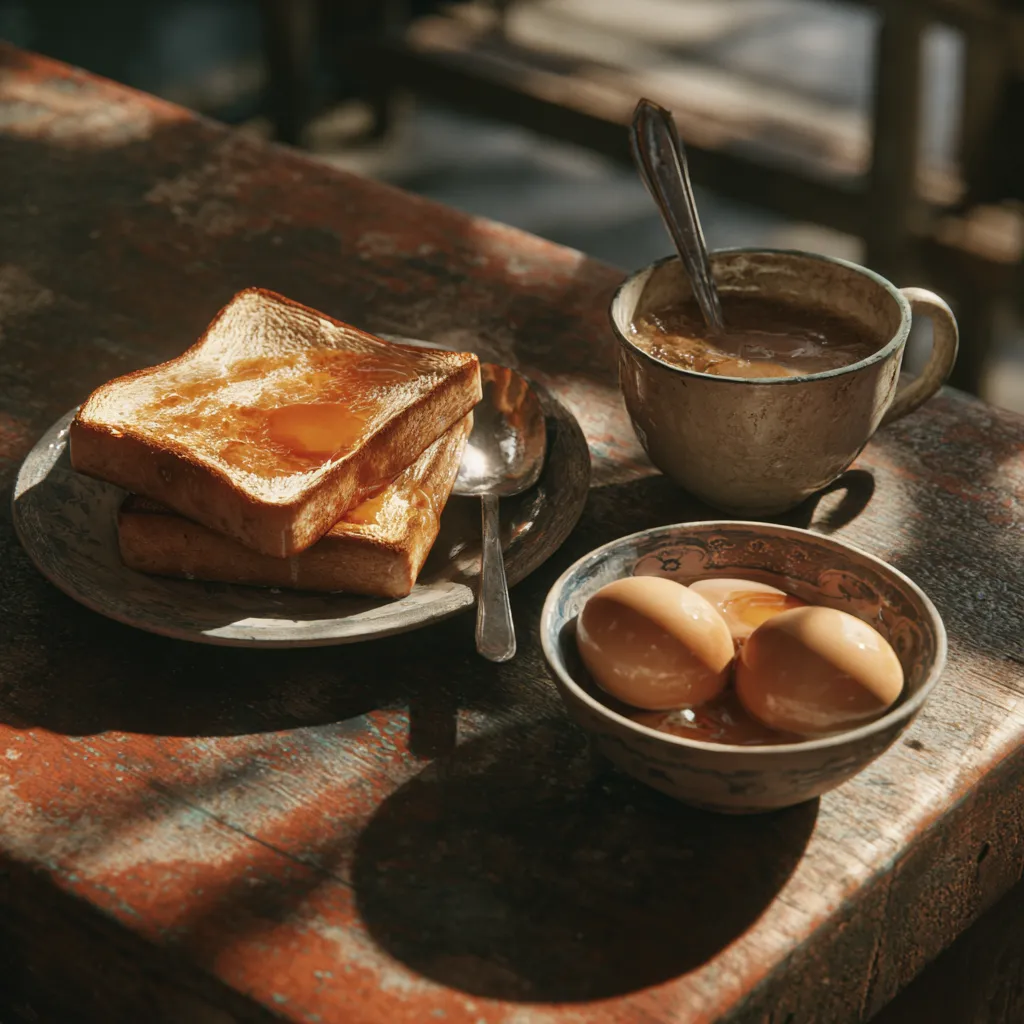
A concise Singapore guide to the beloved breakfast ritual of kaya toast and soft-boiled eggs — where to makan, how to order like a local, and quick tips to recreate it at home.
Kaya toast is small, simple, and utterly Singaporean — a comfort food that doubles as a morning ritual.
The trick to a perfect set is timing: hot toast, melting butter, and eggs with a golden, runny centre.
Kaya toast and soft-boiled eggs are more than breakfast — they’re a way to start the day in Singapore. From CBD kopi runs to heartland kopitiams, this simple combination of charred bread, coconut-egg jam and runny eggs has fuelled generations of office workers, students and late-night supper crowds.
The ritual is democratic: you’ll see it in Tiong Bahru cafes, at hawker stalls in Changi Village, and at neighbourhood kopitiams where the morning queue is as reliable as the MRT timetable. Eating it properly involves kopi (local coffee), a fork and spoon, and a little table manner that locals know by instinct.

Kaya is a spongy, fragrant jam made from coconut milk, eggs, sugar and pandan. It comes in textures from silky to slightly grainy and in colours that range from pale gold to deep green (pandan-infused). Spread generously between slices of toasted bread — often charred slightly on the edges — and joined with a thick slab of butter, it becomes the iconic kaya toast.
Soft-boiled eggs in Singapore are typically cooked so the white is set but the yolk remains runny; you crack them into small porcelain bowls, season with light soy sauce and white pepper, then scoop with a spoon. Pair these with kopi (often kopi-o or kopi-c) and you have the classic breakfast set.

If you want the full experience, head to classic kopitiams and hawker centres. Tiong Bahru’s neighbourhood cafes offer a modernised take; head east to Katong or East Coast for old-school kopitiam setups; Changi Village is famous with locals for a breezy, community-style breakfast.
Mornings are peak time — chatter, newspapers, kopi steam and the smell of toast create the atmosphere. Look out for stalls that still toast bread on a griller and keep charcoal or gas to get that slightly charred edge that makes the butter-s kaya combination sing.
Keep it simple: say the set (kaya toast set), specify your coffee (kopi, kopi-o, kopi-c, kopi-k) and whether you want the eggs cooked 'soft-boiled'. In many kopitiams a staff member will bring the set to your table once the eggs are ready.
Etiquette tips: find a free table quickly, clear trays if you can, use the porcelain spoon for eggs and a fork for toast, and keep the table tidy — locals appreciate considerate behaviour during busy mornings.

You don’t need a kopitiam to enjoy the ritual. Use thick-cut white bread, toast until the surface is crisp but still soft inside, then slather with a good-quality kaya and a cold slab of butter. If you can, lightly char the edges on a griddle for that nostalgic slight smokiness.
For soft-boiled eggs, bring water to a gentle simmer and time between 5:30–6:30 minutes depending on size. Shock in cold water briefly, then crack into a small bowl and season with a dash of light soy sauce and white pepper. Serve immediately with kopi or strong black tea.