Orh Nee (Teochew Yam Paste)
Singapore-style Orh Nee (Teochew yam paste) — a silky, slow-cooked mashed yam dessert gently sweetened with gula melaka and coconut milk, finished with fragrant pandan and optional lard or butter.
About this dish
Orh Nee is a classic Teochew dessert that turns humble yam (taro) into a luxuriously silky paste — the kind you’ll find at festive tables in HDB living rooms and at specialty dessert stalls in heartland hawker centres. In Singapore, this dish often makes an appearance during Chinese New Year, birthday banquets and family dinners; it’s comfort food that’s both nostalgic and celebratory.
This version balances tradition and modern home-kitchen convenience. Steamed or boiled taro is dry-fried to develop sweetness, then mashed and slow-simmered with coconut milk and gula melaka (palm sugar) for a caramel-like depth. A little lard gives authentic richness, but butter or neutral oil keeps things vegetarian-friendly without losing creaminess. Pandan leaves and a pinch of salt round out the flavours to make the paste fragrant and balanced.
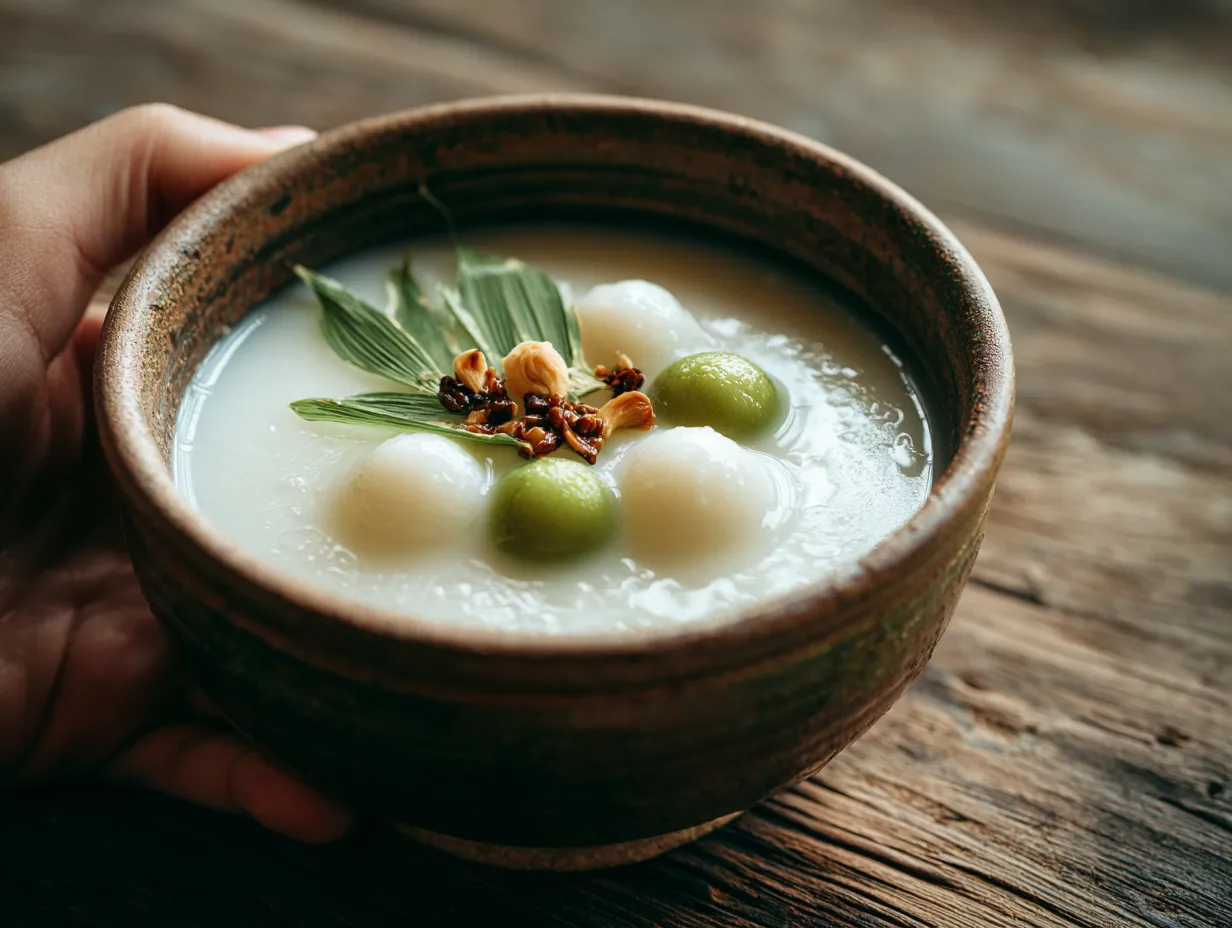
Texturally, Orh Nee should be smooth, thick and slightly sticky — scoopable rather than runny. Serve warm or at room temperature with a few gingko nuts, roasted sesame or a small spoonful of coconut cream. It’s a comforting supper item after a late-night zi char session, a mellow addition to a kopitiam kopi break, and a small-batch dessert that stores well for next-day lunchbox treats.
Ingredients
- 800 g taro (yam), peeled and cut into 3–4 cm cubes
- 2 tbsp vegetable oil or 1 tbsp pork lard (optional for authentic flavour)
- 50 g unsalted butter (optional, for extra silkiness)
- 100 g gula melaka (palm sugar) or 120 g caster sugar (adjust to taste)
- 200 ml coconut milk (full-fat)
- 100 ml coconut cream (optional, for finishing)
- 150 ml water (plus more for steaming/boiling)
- 2 pandan leaves, tied in a knot
- 1/4 tsp fine salt
- 1 tbsp tapioca starch mixed with 1 tbsp water (optional, to thicken)
- 50 g canned ginkgo nuts, blanched (for garnish)
- 1–2 tbsp roasted sesame seeds or crushed roasted peanuts (for garnish)
- 1 tsp vanilla extract or 1 pandan leaf finely shredded (optional)
Step-by-Step Method
- Prepare the taro: peel and cut the taro into 3–4 cm cubes. To avoid itchiness, wear gloves or rinse hands often; some taro varieties can cause mild irritation.
- Steam or boil the taro until very soft: steam in a steamer basket for 25–30 minutes or simmer in a pot with enough water for 20–25 minutes until a fork slides through easily. Drain well.
- Dry-fry the taro: heat a wok over medium-high heat, add oil or lard, then add drained taro. Dry-fry for 6–8 minutes while tossing gently — this concentrates the flavour and removes excess moisture. Lower heat if browning too quickly.
- Mash to a paste: transfer the taro to a large bowl or food processor. Mash thoroughly with a potato masher or pulse in the processor for a smoother texture. For silky orh nee, puree in short bursts and scrape down the sides.
- Cook with sugar and pandan: return mashed taro to the wok over medium heat. Add gula melaka or caster sugar and the tied pandan leaves. Stir continuously until the sugar dissolves and the mixture becomes aromatic, about 4–6 minutes.
- Add coconut milk and simmer: pour in 200 ml coconut milk and 150 ml water, bring to a gentle simmer on low heat. Stir frequently to avoid sticking — the paste should loosen then thicken. Simmer 8–12 minutes until creamy.
- Finish for texture: stir in butter (if using) and a pinch of salt. If the paste seems too loose, mix tapioca starch slurry and add a little at a time, cooking 1–2 minutes until desired thickness.
- Adjust sweetness and aroma: taste and adjust with more sugar or a splash of vanilla or pandan essence. Remove pandan leaves. For a richer finish, fold in 1–2 tbsp coconut cream just before serving.
- Garnish and serve: spoon Orh Nee into small bowls. Top each serving with a few blanched ginkgo nuts and a sprinkle of roasted sesame or crushed peanuts. Serve warm or at room temperature.
- Storage and reheating: cool completely before refrigerating in an airtight container for up to 3 days. Reheat gently over low heat with a little coconut milk or water, stirring frequently to restore silky texture.
Tips & Serving Ideas
- Choose firm taro (yam) with dry skin from NTUC FairPrice, Cold Storage or Sheng Siong; wet or damp taro can make the paste watery.
- For authentic flavour, use a small amount of pork lard when dry-frying; substitute with unsalted butter or neutral oil for a vegetarian version.
- If you prefer an ultra-smooth texture like dessert shops, blitz the steamed taro in a food processor with a little coconut milk before finishing on the wok.
- Adjust sweetness with gula melaka for caramel notes or caster sugar for cleaner sweetness — taste as you go to suit local palates.
- Don’t rush the dry-fry step: it removes excess moisture and deepens flavour, helping achieve a thick, scoopable paste rather than a watery porridge.
- Make-ahead tip: Orh Nee keeps well in the fridge for 2–3 days; reheat gently with a splash of coconut milk and stir vigorously to restore silkiness.
- If using canned ginkgo nuts, rinse and blanch them briefly to remove any canned taste before garnishing.
- To serve at Chinese New Year or potlucks, portion into small ceramic bowls and keep warm in a low oven, adding a little coconut cream before serving.
You might also like
More recipes to save for later.