Watermelon Jelly Cubes
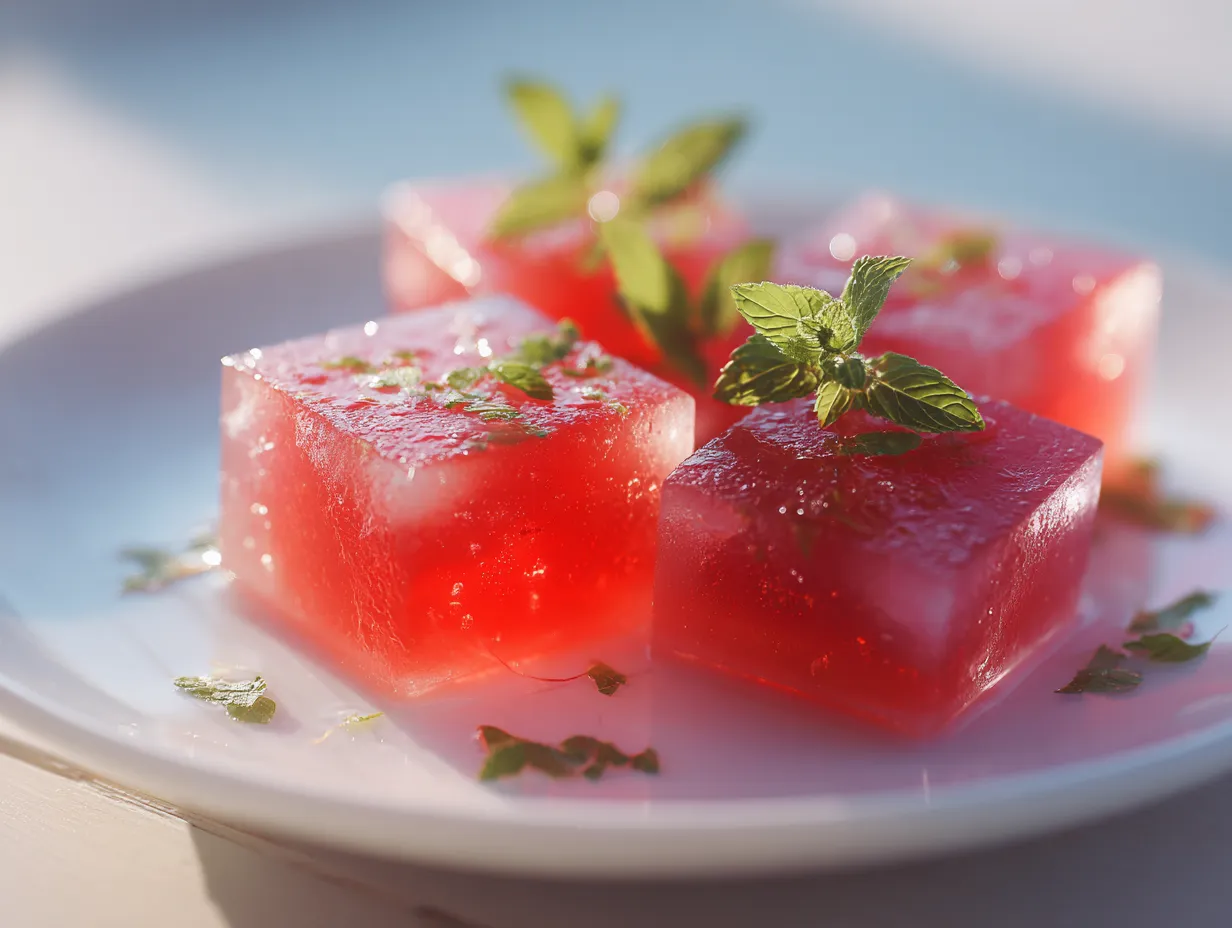
Light Singapore-style watermelon jelly cubes made from strained watermelon juice and agar-agar, stovetop-heated and chilled into bite-sized, refreshing treats.
About this dish
These watermelon jelly cubes are a simple, crowd-pleasing chilled dessert that feels like summer in every bite — perfect for Singapore’s humid days and neighbourhood gatherings. They are commonly made at home for kid’s parties, potlucks, or as a light finish after a spicy zi char meal; you might even spot hawker-style variations using coconut or pandan in kopitiam dessert stalls. The recipe uses agar-agar, a plant-based gelling agent widely available at NTUC FairPrice, Cold Storage or neighbourhood provision shops.
Ingredients
- 600 ml watermelon juice (freshly blended and strained through a fine sieve or muslin)
- 2–3 tbsp caster sugar, to taste (start with 2 tbsp and adjust)
- 8 g agar-agar powder (about 2 tsp; follow packet instructions — agar brands vary)
- 1 tsp fresh lime juice (to brighten the flavour)
- Pinch of fine salt (balances the sweetness)
- 1 tbsp coconut milk (optional, for a creamy swirl or marbled effect)
- 50–100 ml lychee juice or strained strawberry juice (optional — swap up to half the watermelon for a fruit twist)
- Zest of 1 lime (optional, for extra fragrance)
- Small fresh mint leaves or pandan chiffonade, to garnish
- 1 tbsp melted gula Melaka (palm sugar) or simple syrup (optional drizzle for a local touch)
- Ice cubes and cold water (for an ice bath to speed cooling, optional)
Step-by-Step Method
- Prepare a small square or rectangular tin (about 15 × 20 cm) by rinsing it with cold water — do not dry: a thin film helps the jelly release later.
- Strain blended watermelon through a fine sieve or muslin into a jug to remove pulp and seeds; measure out 600 ml of clear juice for the recipe.
- In a medium saucepan, whisk together the watermelon juice, caster sugar, agar-agar powder and a pinch of salt until there are no dry lumps.
- Place over medium heat and bring to a gentle boil, stirring frequently. Once boiling, reduce to a simmer and cook for 1–2 minutes (or according to agar packet) to fully dissolve the agar — you should see the liquid clarify slightly.
- Turn off the heat, stir in the lime juice and (if using) lime zest. If doing a coconut swirl, stir the coconut milk into a small portion of the hot jelly and pour alternately into the tin for a marbled effect.
- Skim off any foam from the surface, then pour the hot mixture into the prepared tin. Leave to cool at room temperature for 20–30 minutes before moving to the fridge.
- Chill in the refrigerator for at least 2 hours, or until fully set. For faster chilling, place the tin in an ice bath in the sink while it cools before refrigerating.
- To unmould, run a thin knife around the edges, invert onto a cutting board and cut into neat cubes or use small silicone moulds for individual portions.
- Garnish each cube with a tiny mint leaf or a dot of gula Melaka, serve well chilled. Store leftovers in an airtight container in the fridge for up to 2–3 days.
Tips & Serving Ideas
- Agar-agar firms more than gelatin — if you prefer a softer wobble, reduce the agar by 1–2 g but always follow the packet guidance for best results.
- For crystal-clear cubes, strain the blended watermelon through a muslin cloth and avoid over-boiling which can create foam; skim any foam before pouring.
- You can buy agar-agar powder and local gula Melaka at NTUC FairPrice, Cold Storage, Sheng Siong or at Chinatown/tekka market stalls; pandan leaves and fresh lime are found at wet markets for the most fragrant results.
- If serving at a potluck, set jelly the day before and cut into silicone moulds for easy transport — keep chilled in a cooler until serving.
- Adjust sweetness for children or elder family members by reducing sugar; counteract excessive sweetness with a little extra lime juice.
- To add a local twist, swirl in a little coconut milk or drizzle with melted gula Melaka for a Peranakan flavour nod.
- Leftovers keep well in an airtight container in the fridge for 2–3 days — avoid freezing as texture will change.
You might also like
More recipes to save for later.