Traditional Lor Mee (Braised Flat Noodles with Vinegar)
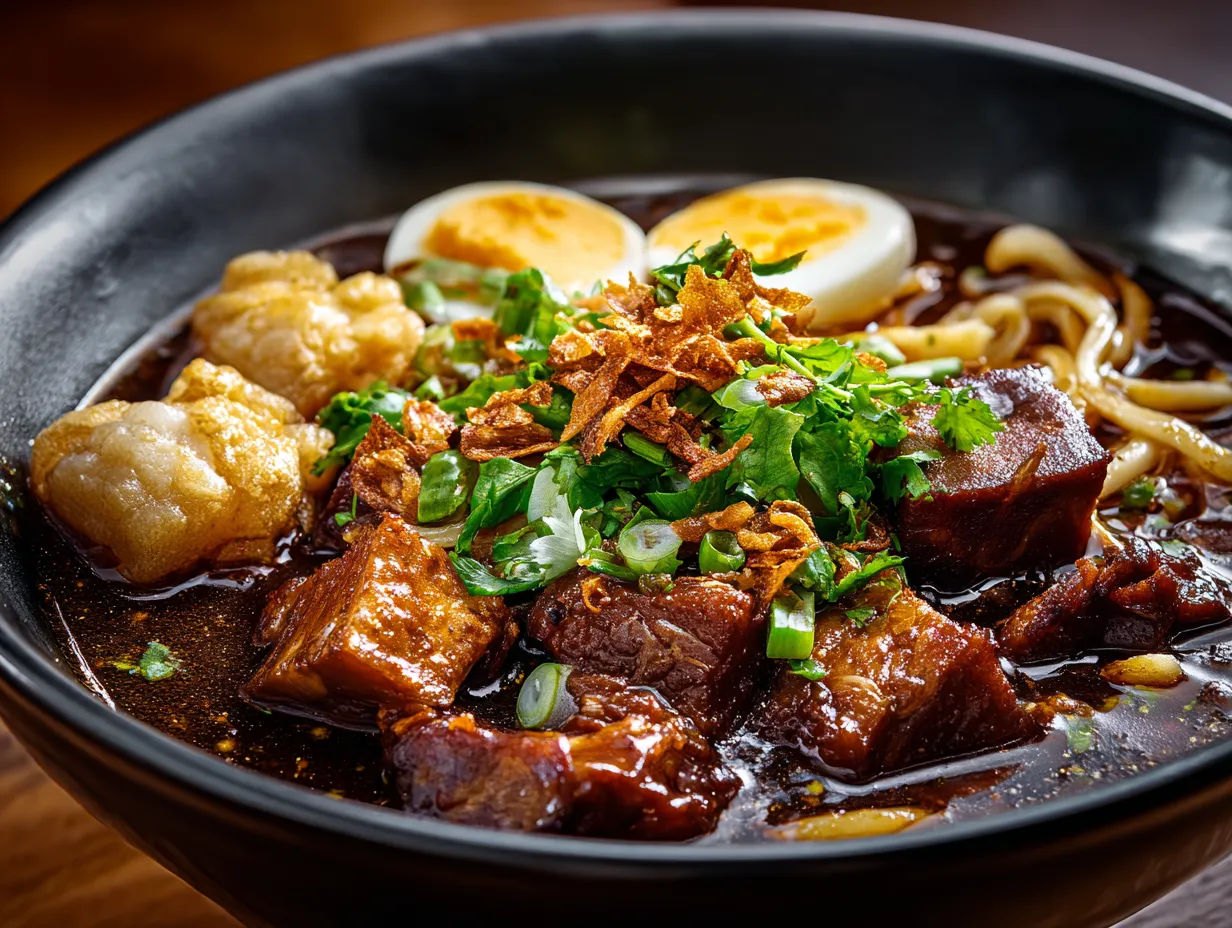
Singapore-style Traditional Lor Mee — braised, vinegar-kissed thick gravy ladled over chewy flat egg noodles with braised pork and classic hawker toppings.
About this dish
Lor Mee is a beloved comfort bowl in Singapore's hawker centres and kopitiams — a thick, savoury gravy braised with pork and aromatics, brightened with black vinegar and finished over chewy flat noodles. In many heartland zi char stalls and Chinatown kopitiams you’ll find versions piled high with braised egg, fried ngoh hiang or fish cake, crisp youtiao pieces and a dollop of chilli padi for an extra kick.
This home-friendly recipe recreates that hawker-centre vibe: slow-braised pork for deep umami, a glossy cornflour-thickened lor gravy, and the sharp lift of Chinkiang (black) vinegar to cut through the richness. It’s perfect for weeknight family dinners, a rainy-night supper, or a weekend cook when you want to impress guests at a simple potluck — serve family-style with extra vinegar and sambal on the side, Singapore-style.
Expect a rich, slightly sticky sauce that clings to each ribbon of flat egg noodle, contrasted by the tang of vinegar, the heat of chilli and the crunch of fried shallots and youtiao. Local twists include adding a spoonful of sambal or a drizzle of kecap manis for sweetness; use fresh wet noodles from the market or the packaged yellow flat noodles from NTUC for an authentic chew. Like many hawker classics, lor mee rewards time and tasting: adjust the balance of soy, vinegar and sugar to match your taste and the Singapore palate.
Ingredients
- 400 g fresh flat egg noodles (or 300 g dried flat yellow noodles)
- 300 g pork belly, cut into 2–3 cm chunks
- 2 tbsp vegetable oil
- 6 cloves garlic, minced
- 3 shallots, thinly sliced
- 1 thumb (25 g) ginger, sliced
- 1 star anise and 1 small cinnamon stick
- 1/2 tsp five-spice powder
- 2 tbsp light soy sauce
- 1 tbsp dark soy sauce
- 1 tbsp oyster sauce
- 1.2 L chicken stock (or water + 2 chicken stock cubes)
- 2 tbsp Chinkiang black vinegar (adjust to taste) plus extra to serve
- 1 tbsp sugar (palm sugar or caster)
- 3 tbsp cornstarch mixed with 6 tbsp cold water (slurry)
- 2 hard-boiled eggs, peeled and halved (for braising)
- 100 g fish cake or sliced fish ball (optional)
- 100 g ngoh hiang or fried beancurd roll, sliced (optional)
- 1 youtiao (Chinese fried dough), broken into pieces (for topping)
- 2 tbsp fried shallots, for garnish
- 2 stalks spring onion, finely sliced (for garnish)
- Fresh coriander leaves and sliced red chillies or sambal, to serve
Step-by-Step Method
- 1. Blanch the pork: bring a pot of water to boil, add pork chunks and blanch 2 minutes to remove scum; drain and set aside.
- 2. In a heavy pot or wok set over medium heat, add oil and sauté shallots, garlic and ginger until fragrant and translucent (about 2–3 minutes).
- 3. Add star anise, cinnamon and five-spice powder, then add the blanched pork. Stir on medium-high for 2–3 minutes to lightly brown the pork edges.
- 4. Add light soy, dark soy, oyster sauce and sugar; toss to coat. Pour in chicken stock, bring to a boil, then reduce to a low simmer and braise uncovered for 45–60 minutes until pork is tender.
- 5. During the last 20 minutes of braising, add the peeled hard-boiled eggs and fish cake or ngoh hiang if using, to absorb flavour. Taste and adjust seasoning with more light soy or a pinch of sugar as needed.
- 6. When pork is tender, remove about 300–400 ml of the braising liquid into a ladle or separate saucepan and bring to a simmer on medium-high to reduce slightly if needed.
- 7. Stir cornstarch slurry, then gradually whisk it into the simmering gravy until it thickens to a glossy, coat-the-spoon consistency. Lower heat to gentle simmer and stir in 2 tbsp Chinkiang black vinegar; taste and add more vinegar if you prefer a tangier lor.
- 8. Cook the noodles according to package or fresh-noodle instructions in a separate pot; drain well. If using fresh noodles, blanch 30–45 seconds; for dried, follow packet timing.
- 9. Assemble: divide noodles among bowls, top with braised pork, halved egg, sliced ngoh hiang/fish cake and youtiao pieces. Ladle hot lor gravy over everything so it just covers the noodles.
- 10. Garnish with fried shallots, spring onion, coriander and a spoonful of sambal or sliced chilli padi. Serve immediately with extra black vinegar and chilli at the table, Singapore hawker-style.
Tips & Serving Ideas
- Black vinegar is key: use Chinkiang (Zhenjiang) black vinegar for the authentic tang; if unavailable at Sheng Siong or NTUC, use a mix of balsamic and a splash of rice vinegar as a substitute and add a little extra sugar to balance.
- Buy fresh wet flat egg noodles from the pasar or wet market for the best chew; packaged yellow flat noodles from Cold Storage or NTUC also work well and save time.
- If you need faster cooking, use pork shoulder instead of belly and pressure-cook for 20 minutes to get tender meat quickly.
- Adjust thickness: for a thinner gravy like some zi char stalls, reduce the cornstarch slurry by half; for that signature sticky lor, add a little more slurry until it coats a spoon.
- Make-ahead: the braised pork and gravy keep well in the fridge for 3 days — reheat gently and whisk in a little extra stock before serving. Noodles are best cooked fresh.
- Spice level: serve sambal and sliced chilli padi on the side so diners can tailor heat. For families with kids, remove chilli from the pot and let adults add at the table.
- For extra wok hei perfume, briefly toss drained noodles in a very hot wok with a dash of sesame oil before topping with gravy — a trick inspired by zi char stalls.
You might also like
More recipes to save for later.