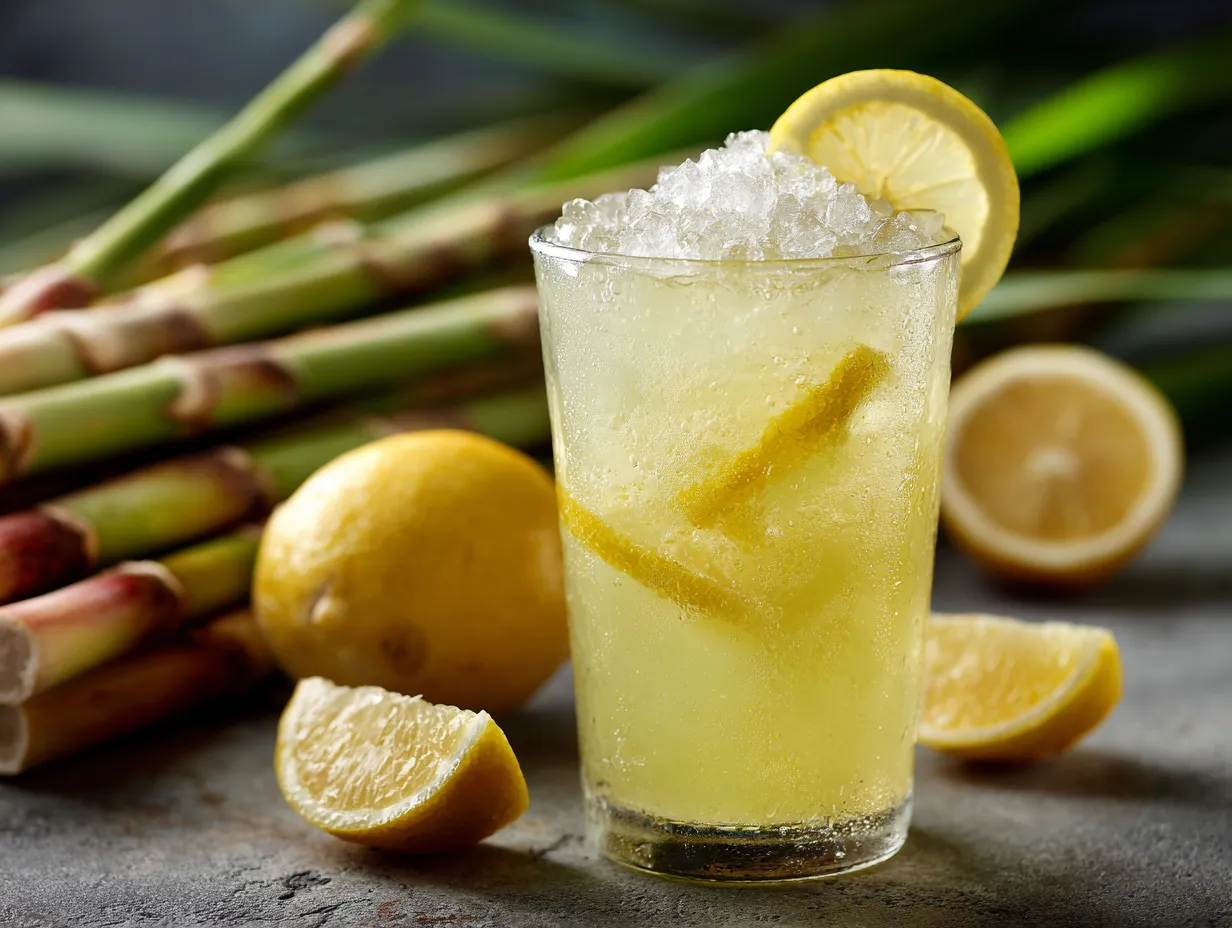
Homemade Sugar Cane with Lemon
A refreshing Singapore-style homemade sugar cane drink brightened with fresh lemon — simple pressed or blended for a hawker-centre nostalgia in your own kitchen.
About this dish
Fresh sugar cane juice is a nostalgic street-drink in Singapore — think pasar malam stalls, East Coast parkside vendors and neighbourhood kopitiam sellers squeezing sweet, grassy juice on hot afternoons. This homemade sugar cane with lemon recipe recreates that hawker-centre vibe at home, using either a small sugarcane press or a blender-and-strain method so you can enjoy that bright, revitalising drink even if you live in a HDB flat.
The flavour is clean, vegetal-sweet with a citrus lift from lemon (or limau/kalamansi if you prefer), and a faint grassy complexity unique to sugar cane. Texture-wise aim for a silky, not fibrous result — strain well or run through a fine chinois or cheesecloth to remove fibres. Add a pinch of salt, a hint of ginger or a pandan infusion for local twists that recall zi char or hawker variations.
Perfect for an afternoon pick-me-up after cycling at East Coast Park, as a crowd-pleasing jug at a family makan, or chilled in a flask for humid Singapore commutes. The recipe includes options for convenience (sugar cane syrup or store-bought pressed juice) and tips on sourcing sugar cane from wet markets, Chinatown grocers or larger supermarkets like NTUC FairPrice and Sheng Siong.
Ingredients
- 500 g fresh sugar cane stalks (about 2 medium stalks), peeled and cut into 3–4 cm pieces
- 2 large lemons (about 60 ml juice), plus extra slices to serve
- 250 ml cold water (or adjust for blending/extraction)
- 200 g crushed ice or ice cubes to serve
- 2–3 tbsp caster sugar or rock sugar (adjust to taste)
- 1 tbsp simple syrup (optional, for smoother sweetness)
- 1 small thumb (10–20 g) ginger, peeled and thinly sliced (optional for a warm note)
- 1 pandan leaf, bruised (optional for aroma)
- Pinch of fine sea salt to enhance sweetness
- 2 tbsp sugar cane syrup or store-bought cane juice (optional shortcut)
- Fresh mint sprigs for garnish (optional)
- 1–2 calamansi or limes for an alternative tang (optional)
- Cheesecloth or fine sieve for straining
- Ice (extra for chilling pitcher)
Step-by-Step Method
- Prepare the sugar cane: use a sharp cleaver or heavy knife to split and peel the outer tough skin, then chop the tender inner cane into 3–4 cm pieces. Be careful — sugar cane is fibrous and hard, wear gloves if needed.
- Choose your extraction method: A) If you have a sugar cane press or juicer, feed the pieces through according to the manufacturer's instructions and collect the juice. B) If using a blender, add the chopped cane and 250 ml water (warm water helps if your blender is not high-power) and blitz until pulpy, working in batches if needed.
- Strain the blended pulp through a fine sieve or cheesecloth into a large bowl. Press or squeeze to extract as much liquid as possible; aim for a smooth, fibre-free juice. Discard the dry pulp or compost it.
- Make optional aromatics: if using pandan and ginger, simmer the pandan leaf and sliced ginger in 100 ml water for 3–4 minutes on low heat to make a quick infusion, then cool and add to the sugar cane juice for fragrance and warmth.
- Add lemon juice: squeeze in the juice of 2 lemons (about 60 ml) and stir. Taste and adjust acidity with extra calamansi or lime if you prefer a sharper tang like many hawker variations.
- Sweeten and season: stir in caster sugar or rock sugar to taste (2–3 tbsp to start). Add 1 tbsp simple syrup if you want a silkier mouthfeel. Finish with a pinch of fine sea salt to lift the flavours.
- Chill and chill again: refrigerate the juice for at least 15 minutes or serve immediately over crushed ice. If the juice feels too intense, dilute with cold water to taste; hawker stalls often serve it lightly diluted for balance.
- Serve: pour into tall glasses over ice, garnish with lemon slices and a sprig of mint or a pandan leaf. For a hawker-style touch, offer extra lime wedges and a straw.
- Convenience shortcuts: if you can't find fresh cane, use 200–250 ml of good-quality store-bought cane juice or 2 tbsp sugar cane syrup and follow the same lemon, salt and ice steps.
- Storage: keep leftover fresh cane juice chilled in a sealed jug for up to 24 hours; it tastes best fresh. Give it a quick stir before serving — separation is natural.
- Tips for fibre-free texture: double-strain through cheesecloth and avoid over-blending with too little water, which can make the juice stringy. Aim for a silky feel like street-pressed sugar cane.
Tips & Serving Ideas
- Buy sugar cane from wet markets, Chinatown grocers or bigger supermarkets (NTUC FairPrice, Sheng Siong) and ask the vendor to cut and peel the stalks — they often help if you mention it's for juicing.
- If you don't have a heavy-duty blender or press, buy pre-pressed sugar cane juice or sugar cane syrup as a shortcut and adjust lemon and salt to taste.
- To extract the cleanest juice, double-strain through a fine sieve then a cheesecloth. This removes fibres and gives a silky mouthfeel similar to hawker-pressed juice.
- Adjust sweetness and acidity for local tastes: Singaporeans often like a balanced sweet-and-tart drink. Add more lemon or a dash of calamansi for zing, or a pinch of salt to amplify sweetness.
- For pandan aroma, steep bruised pandan leaf briefly in hot water and cool before adding to the juice — a subtle local twist that recalls kopi and zi char fragrances.
- Control spice and warmth by adding ginger sparingly (10–20 g). Start small and increase if you enjoy a gingery kick like some hawker variations.
- Make-ahead: you can make the juice and keep chilled for up to 24 hours in the fridge. Stir well before serving and add fresh ice to keep it refreshing on humid Singapore days.
- Leftovers make a great mixer: combine chilled sugar cane lemon juice with soda water for a fizzy drink or use as a base in cocktails for a local twist.
You might also like
More recipes to save for later.