Singapore Laksa (Lemak Style)
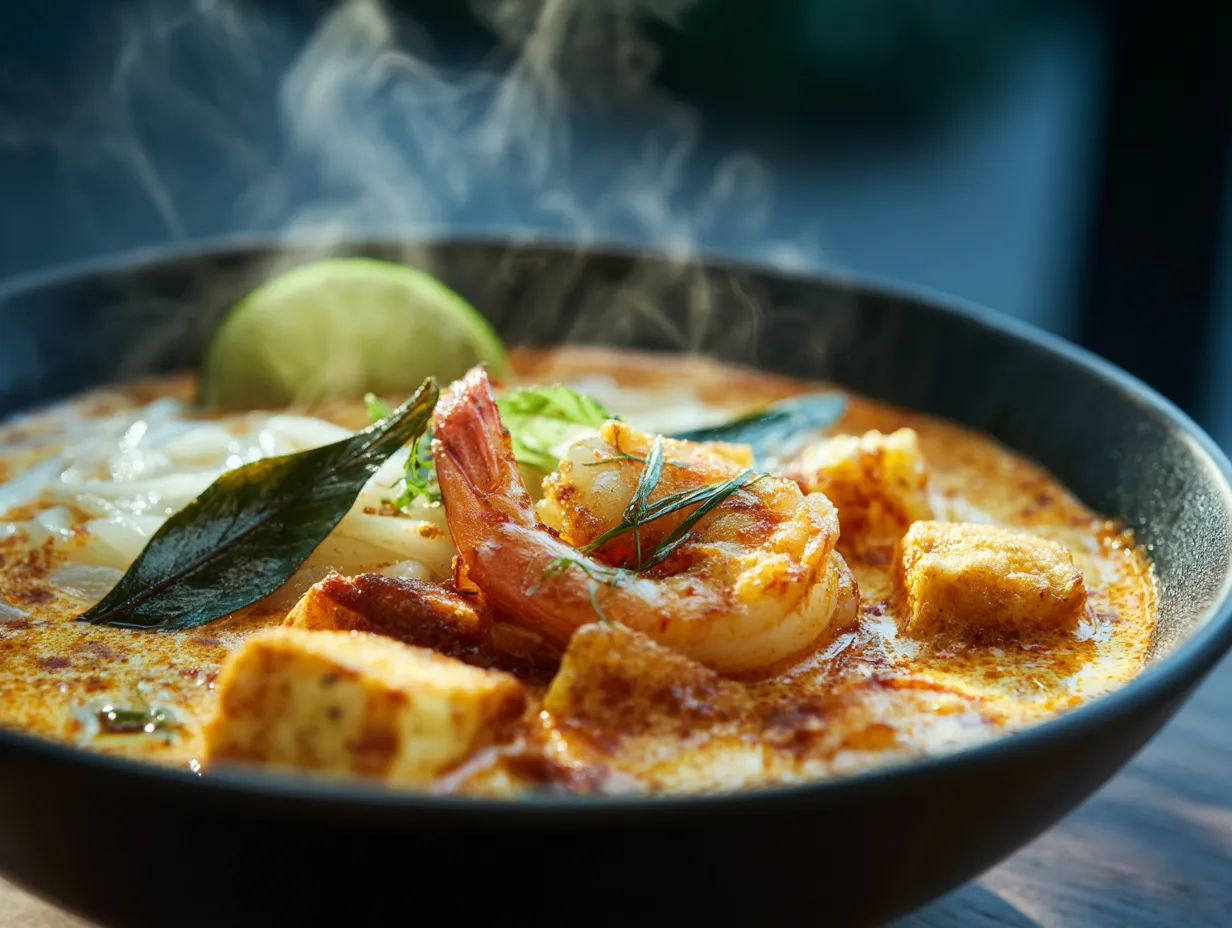
Singapore-style lemak laksa — a rich, coconut-milk noodle soup simmered with prawns, fish cake and aromatic laksa paste for a creamy, spicy hawker-centre favourite.
About this dish
This Singapore Laksa (Lemak Style) is a home-friendly take on the beloved Peranakan and Malay laksa you’ll find in Kopitiams and hawker centres from Katong to the heartland. The word lemak signals a rich coconut base — expect a silky, aromatic broth laced with lemongrass, galangal and toasted shrimp paste that coats rice vermicelli and tender seafood. It’s the kind of comfort-food soup that Singaporeans order for breakfast, lunch, supper or a cosy family dinner.
In Singapore households this version is often cooked for weekend family meals or shared at potlucks and festive gatherings; it’s hearty enough to be the main course, yet flexible for weeknight cooking if you use store-bought laksa paste and pre-cleaned seafood. The flavour profile is creamy, spicy, slightly tangy (from tamarind or calamansi) with fragrant notes from laksa leaf (Vietnamese coriander) and prawn umami from dried shrimp or belacan. Textures are equally important: silky bee hoon, springy prawns, soft tofu puffs that soak up the soup, and crunchy bean sprouts on top.
Think of this as a hawker-inspired recipe that you can tweak to your heat tolerance or pantry: use sambal or sliced chilli padi for a kick, add cockles for authenticity, or keep it simple with prawns and fish cake for a weekday bowl. Serve with calamansi or lime, extra sambal on the side, and a cold glass of barley water or kopi kosong for the full Singapore makan experience.
Ingredients
- 300 g rice vermicelli (laksa bee hoon), soaked in hot water for 3–5 minutes and drained
- 400 ml coconut milk (full fat) + 300 ml chicken or prawn stock
- 250 g prawns, shelled and deveined (keep heads for stock if using)
- 150 g fish cake or fishball slices
- 6 tofu puffs (tau pok), halved
- 1 small handful bean sprouts, blanched
- 6–8 laksa leaves (Vietnamese coriander) or coriander if unavailable
- 2 tbsp vegetable oil
- 1 tbsp tamarind paste (or 1 tbsp lime/calamansi juice) for tang
- 4 tbsp store-bought laksa paste OR homemade laksa paste (see below)
- 1 tbsp toasted belacan (shrimp paste) or 1 tsp dried shrimp powder (optional but recommended)
- 2 pandan leaves, tied in a knot (optional)
- 1 stalk lemongrass (white part only), bruised and sliced)
- 1 tbsp fish sauce (or light soy sauce for a milder option)
- 1 tsp palm sugar or brown sugar
- Salt to taste
- Garnishes: sliced red chilli or bird's eye chilli, extra laksa leaf, calamansi or lime wedges, fried shallots
Step-by-Step Method
- Prepare ingredients: soak rice vermicelli in hot water for 3–5 minutes until softened, drain and set aside; wash laksa leaves and slice garnishes. If using prawns with shells, reserve shells for stock and discard later.
- If making a quick stock: simmer prawn shells (or chicken bones) with 1 L water for 15–20 minutes, strain and use 300 ml for the soup; discard solids. For a lighter broth use store-bought stock.
- If using store-bought laksa paste, skip to step 5. To make homemade laksa paste: blend 6 dried chillies (soaked), 4 shallots, 4 garlic cloves, 2 cm galangal, 1 stalk lemongrass (white part), 2 candlenuts (or macadamia), 1 tbsp toasted coriander seeds, 1 tsp turmeric (fresh or powder), and 1 tbsp belacan into a smooth paste.
- Heat 2 tbsp oil in a wok over medium-high heat until shimmering. Add laksa paste (store-bought or homemade) and sauté for 2–3 minutes until fragrant and the oil starts to separate; lower heat if it begins to brown too quickly.
- Add bruised pandan leaves and lemongrass, pour in the prepared stock and bring to a gentle simmer. Cook for 8–10 minutes so the flavours meld; keep the heat at medium-low to avoid boiling the coconut milk later.
- Stir in coconut milk and tamarind paste (or calamansi), and return to a very gentle simmer. Taste and season with fish sauce and palm sugar; adjust balance so it is creamy, savoury and slightly tangy. Avoid boiling vigorously after adding coconut milk to prevent curdling.
- Add prawns, fish cake and tofu puffs, simmer for 2–4 minutes until prawns turn pink and are cooked through. If using cockles or bean sprouts, add them in the last minute to keep them crisp.
- To serve, divide softened rice vermicelli among bowls, ladle hot lemak laksa broth and seafood over the noodles. Top with laksa leaves, sliced chilli, fried shallots and a lime/calamansi wedge. Offer extra sambal on the side for those who like it hotter.
- Leftovers: cool soup quickly and refrigerate in an airtight container for up to 2 days. Reheat gently over low heat and add a splash of water or stock to loosen the broth before serving.
Tips & Serving Ideas
- Buy laksa paste from Cold Storage, NTUC FairPrice or Sheng Siong for a faster weekday version; enhance store paste with a spoon of belacan and fresh lime.
- To deepen flavour, use prawn shells to make a quick stock — roast shells first for extra umami like hawker stalls do.
- Keep the heat low after adding coconut milk to prevent it from separating; a gentle simmer keeps the broth silky.
- Adjust spice: add sambal or sliced bird's eye chillies on the side so each diner can control the heat, a common practice in kopitiams.
- Laksa leaves can be hard to find in some supermarkets — substitute with fresh coriander and a little Vietnamese mint, but try to source laksa leaf at wet markets for authenticity.
- Make-ahead: prepare the paste and stock in advance and refrigerate. Assemble noodles and toppings just before serving to avoid soggy bee hoon.
- If using dried rice vermicelli, don't over-soak — slightly under-soak and let the hot broth finish the softening to avoid mushy noodles.
You might also like
More recipes to save for later.