
Sayur Lodeh (Vegetable Curry)
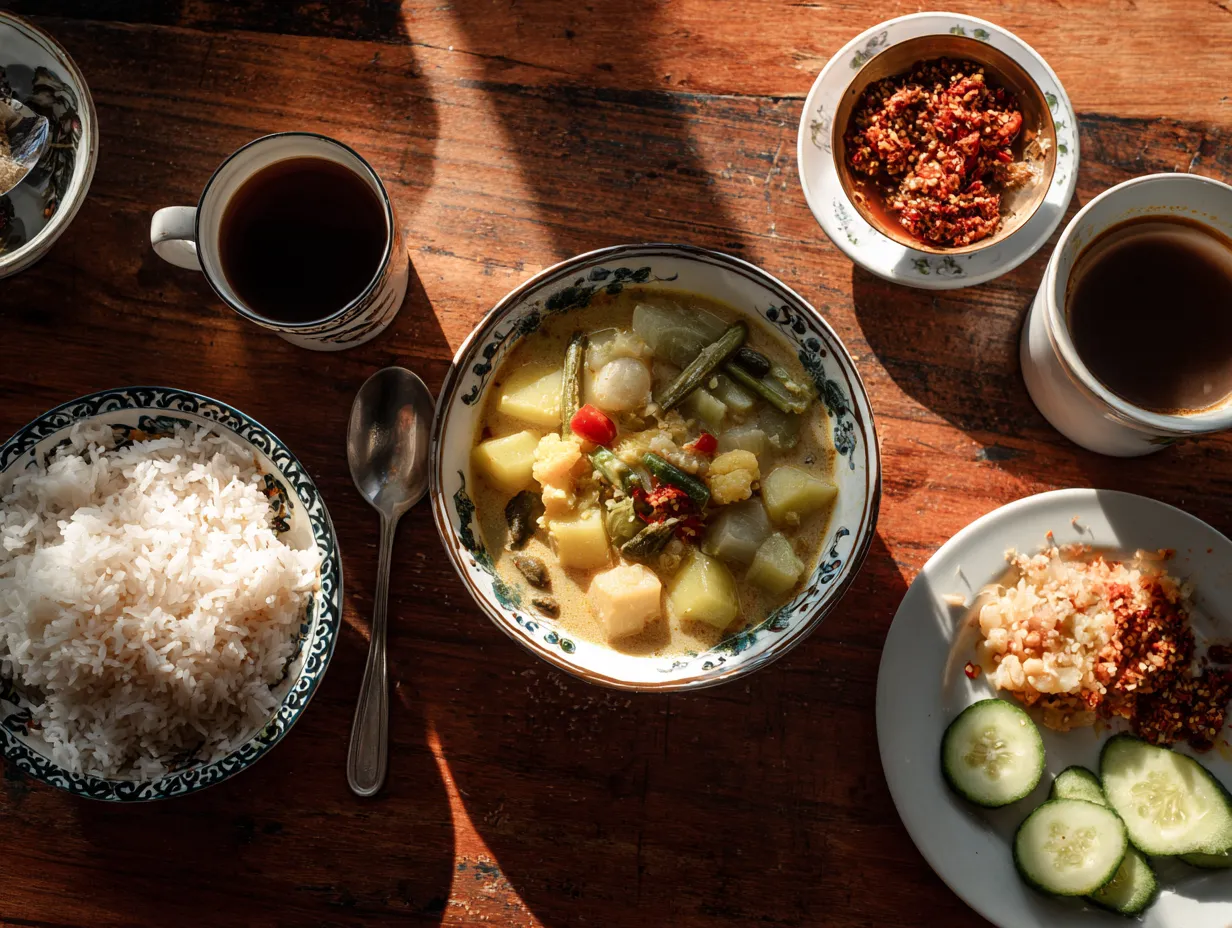
A Singapore-style Sayur Lodeh — a coconut-milk simmered vegetable curry, gently braised in a spiced paste and perfect for family-style makan at home or a kopi shop supper.
About this dish
Sayur Lodeh is a comforting Malay-Peranakan vegetable curry that you’ll find both at home dining tables and as part of a nasi campur plate at hawker centres across Singapore. Creamy coconut milk simmers with a fragrant spice paste of shallots, garlic, turmeric and chilli, coating tender chunks of eggplant, long beans, firm tofu and chayote for a hearty, homely dish.
This Singapore-style version balances richness and brightness so it works as a weeknight family meal or a dish to bring for potlucks and buka puasa during Ramadan. In heartland kopitiams and neighbourhood pasar malam stalls you’ll taste variations — some with belacan for umami, others with extra lime for acidity — and this recipe gives options so you can tweak by preference.
Texturally the dish is silky from coconut milk, with soft braised veg, occasional chew from tempeh or tau pok, and a fresh lift from kaffir lime leaves and lime juice at the end. Serve it family-style with steamed white rice, achar and ikan bilis for the full Singapore makan experience, or tuck it into a bentō box for lunch the next day — flavours deepen overnight, just like many zi char leftovers.
Ingredients
- 2 tbsp vegetable oil or coconut oil
- 6–8 shallots, peeled and halved
- 4 cloves garlic
- 1–2 red chillies (adjust to taste) or 1 tsp chilli paste
- 2 cm fresh turmeric (or 1 tsp ground turmeric)
- 1 stalk lemongrass, white part only, bruised
- 2 kaffir lime leaves, torn
- 200 g firm tofu, cut into 2 cm cubes (optional: tau pok)
- 150 g tempeh, sliced (optional)
- 1 medium eggplant (aubergine), cut into 2–3 cm chunks
- 150 g long beans, cut into 5 cm lengths
- 1 small chayote or 200 g cabbage, roughly chopped
- 400 ml coconut milk (1 can)
- 300 ml water or vegetable stock
- 1 tbsp palm sugar or brown sugar
- 1 tsp salt, to taste (or 1–2 tsp fish sauce/soy sauce for umami)
- 1 tsp belacan (shrimp paste) — optional, for authentic depth
- 2 tbsp tamarind water or 1 tbsp lime juice (to finish)
- 2 sprigs coriander or fresh daun kesum/kemangi for garnish (optional)
- 1 tsp light soy sauce or 1 tbsp ikan bilis stock (optional)
- Fresh chilli slices or sambal on the side for serving
Step-by-Step Method
- Prepare the spice paste by blending shallots, garlic, red chillies, and fresh turmeric (or ground turmeric) with a splash of water until smooth; scrape down the blender as needed.
- Heat 2 tbsp oil in a large wok or heavy-bottomed pot over medium-high heat. Fry the bruised lemongrass and torn kaffir lime leaves for 30 seconds until aromatic.
- Add the spice paste and fry on medium heat for 4–6 minutes, stirring frequently, until the paste darkens slightly and the oil separates — this development gives good flavour (like at a good zi char stall).
- Stir in belacan if using, and cook another 1 minute. Add the coconut milk and water (or stock) and bring to a gentle simmer on medium-low heat; avoid vigorous boiling to prevent coconut milk splitting.
- Add the tougher vegetables first: eggplant, chayote (or cabbage) and tempeh. Simmer for 10–12 minutes until they start to soften and absorb the curry flavours.
- Add tofu and long beans and simmer for another 4–6 minutes so beans stay slightly crisp-tender — you want some bite, not mush. Taste the broth and season with palm sugar, salt and light soy or fish sauce as needed.
- Finish with a squeeze of tamarind water or lime juice to brighten the curry and tear in a couple more kaffir lime leaves or sprinkle chopped coriander/daun kesum.
- Serve hot family-style with steamed white rice, sambal and achar; leftovers taste even better the next day — gently reheat over low heat and add a splash of water if the sauce thickens.
Tips & Serving Ideas
- If you don’t have fresh turmeric, use 1 tsp ground turmeric; fresh gives a brighter aroma but powdered works in a pinch — available at NTUC FairPrice, Cold Storage or local wet markets.
- Control heat by adjusting chillies: remove seeds for mild heat or add bird’s eye chillies for a real sambal-style kick like at a kopitiam.
- To avoid coconut milk splitting, simmer gently on low-medium heat and don’t boil vigorously once the coconut milk is added.
- Swap or add vegetables based on seasonality — cabbage, pumpkin, young jackfruit or French beans all work. Tempeh and tau pok are common local protein add-ins.
- Make-ahead: flavours deepen overnight; cool and refrigerate in an airtight container for up to 3 days. Reheat gently and add a splash of water if the sauce tightens.
- For vegetarian/vegan version omit belacan and fish sauce; boost umami with a teaspoon of mushroom powder or soy sauce.
- If you want a smokier note reminiscent of wok hei from zi char stalls, briefly char eggplant under high heat or in a grill pan before adding to the curry.
You might also like
More recipes to save for later.