Sarawak Kolo Mee
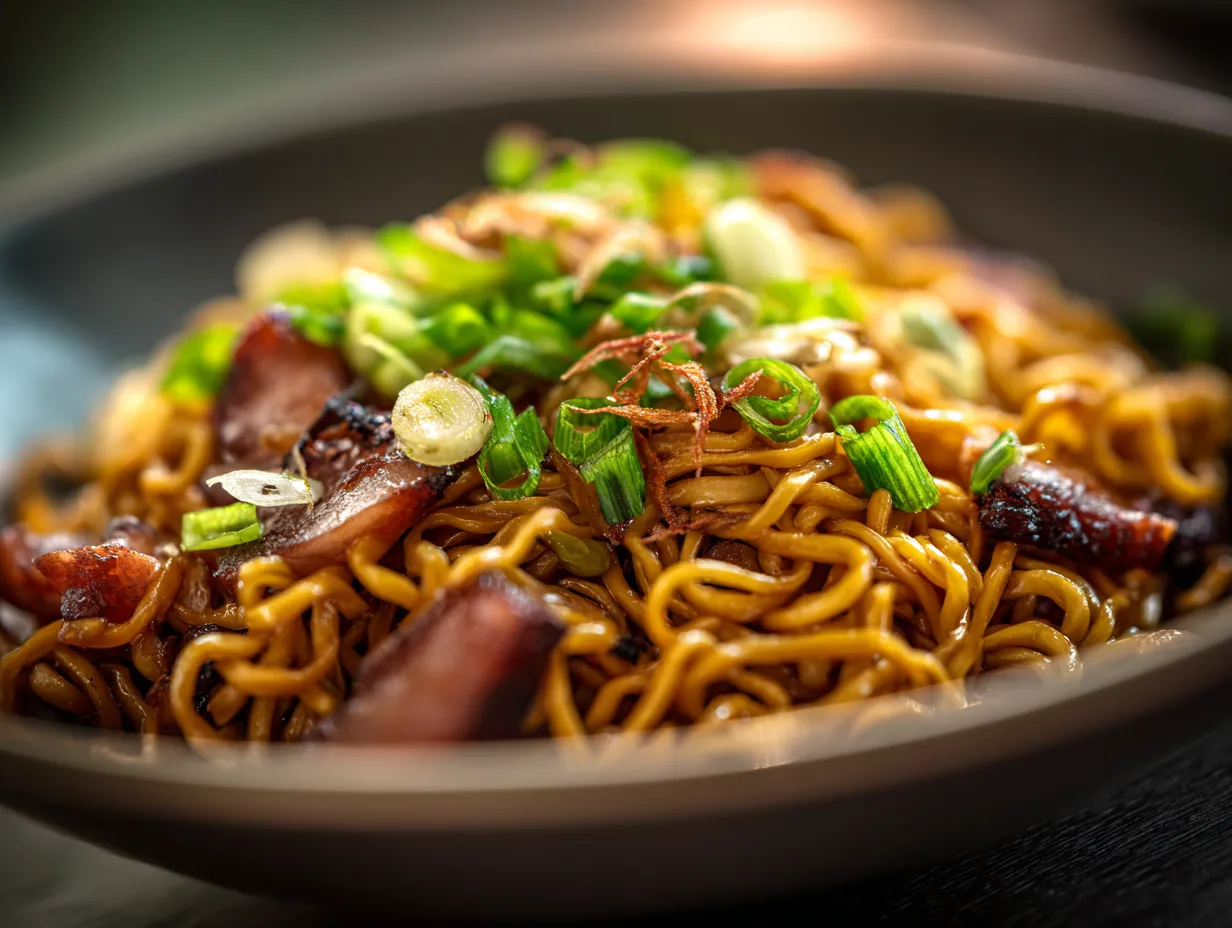
Singapore-style Sarawak Kolo Mee — wok-tossed springy egg noodles with char siu, shallot oil and a light soy dressing for a hawker-style dry noodle experience.
About this dish
Sarawak Kolo Mee is a beloved Borneo noodle dish that has found a cosy corner in Singapore’s hawker centres and kopitiams. Unlike soupy noodle dishes, Kolo Mee is served dry — noodles are blanched, tossed in fragrant shallot oil and light soy, then piled high with slices of char siu and minced pork, a scattering of greens and crisp fried shallots. The result is springy, glossy noodles with a clean savoury finish that Singaporeans love for lunch, supper runs or quick weeknight dinners.
At home in the heartlands or tucked into a CBD lunch crowd, this version leans on familiar Singapore pantry staples — fresh alkaline egg noodles from the wet market or supermarket, light and dark soy for balance, sesame oil and optional pork lard for extra sheen. Finish with pickled green chilli or achar for brightness, and you’ll get the same sweet‑savory-umami contrast you’d chase in a zi char stall or a hawker centre at Tiong Bahru or a late-night kopitiam.
The texture is key: springy noodles, tender char siu, and little pops of crunch from fried shallots. It’s great for family-style sharing, a simple supper with kopi or barley water, or packed into a workday lunchbox (keep the chilli on the side). With a little prep — making shallot oil, slicing char siu — you’ll reproduce that hawker charm in a typical Singapore kitchen using a wok, colander and a kettle of boiling water.
Ingredients
- 400 g fresh alkaline egg noodles (kolo-style or Hong Kong egg noodles)
- 250 g char siu, thinly sliced (store-bought or homemade)
- 150 g minced pork (lightly seasoned)
- 3 tbsp vegetable oil or pork lard (for tossing)
- 4 shallots, thinly sliced
- 2 tbsp light soy sauce
- 1 tsp dark soy sauce (for colour)
- 1 tsp sesame oil
- 1 tsp sugar
- 1/4 tsp white pepper
- 2 tbsp neutral oil (for frying shallots)
- 2 cloves garlic, minced
- 1 tbsp Shaoxing wine or dry sherry (optional, for minced pork)
- 200 ml chicken stock or hot water (for a light sauce/splash)
- 200 g baby bok choy or choy sum, blanched
- 2 stalks spring onion, thinly sliced
- 2 tbsp fried shallots (store-bought or homemade) for garnish
- Pickled green chillies or achar, to serve
- 1 tbsp rice vinegar (optional, to brighten if needed)
- 1 tbsp light chilli oil or chilli padi, to taste (optional)
- Lime wedges, optional for serving
Step-by-Step Method
- Prepare shallot oil: thinly slice 4 shallots. Heat 2 tbsp neutral oil or pork lard in a small saucepan over medium heat and fry shallots until deep golden and crisp (about 6–8 minutes). Strain, reserve oil and keep fried shallots for garnish.
- Season minced pork: mix minced pork with 1 tbsp light soy, 1 tbsp Shaoxing wine (optional), a pinch of white pepper and 1/2 tsp sugar. Set aside to marinate for 10 minutes.
- Make the pork topping: heat 1 tbsp oil in a small pan over medium-high heat, add minced garlic and cook until fragrant, then add marinated minced pork. Stir-fry until just cooked through and slightly caramelised. Set aside.
- Blanch greens: bring a pot of water to a rolling boil, blanch bok choy or choy sum for 20–30 seconds until bright green, then plunge into iced water or drain well. Set aside.
- Cook noodles: bring a large pot of water to boil. Add fresh egg noodles and cook according to package or until al dente (usually 45–90 seconds). Do not overcook — noodles should be springy. Drain well and shake to separate strands.
- Toss noodles: return the drained noodles to the wok or a large mixing bowl. Add reserved shallot oil (about 2–3 tbsp), 2 tbsp light soy, 1 tsp dark soy, 1 tsp sesame oil, 1 tsp sugar and a splash (2–3 tbsp) of hot chicken stock or water. Toss over medium-high heat for 30–60 seconds until noodles are glossy and evenly coated. Keep heat high for a quick toss to mimic wok-seared texture.
- Assemble: divide noodles among serving bowls. Top with slices of char siu, a spoonful of minced pork, blanched greens and scatter with fried shallots and sliced spring onions.
- Serve with sides: offer pickled green chillies or achar, extra chilli oil and lime wedges. For a hawker-style touch, pour a small bowl of clear soup on the side or pair with kopi or barley water.
- Taste and adjust: if the noodles taste flat, add a dash more light soy or a pinch of sugar to balance. If you prefer more gloss and richness, drizzle a little more reserved shallot oil or sesame oil.
Tips & Serving Ideas
- Buy fresh alkaline egg noodles from wet markets or supermarket chilled aisles (NTUC, Cold Storage, Sheng Siong) for the best springy texture; dried noodles won’t give the same chew.
- If you can’t use pork lard, use neutral vegetable oil but finish with a teaspoon of sesame oil for aroma — lard gives extra sheen and authentic flavour if available.
- To get some wok‑hei and prevent clumps, toss noodles on high heat for a short burst — preheat the wok until very hot and work quickly.
- Make fried shallots ahead and store in an airtight jar; they keep well and add instant crunch and aroma to the noodles.
- Adjust spice: serve pickled green chillies on the side so everyone can control heat — chilli padi will be very spicy for some.
- Leftovers: refresh cold Kolo Mee by briefly plunging in boiling water or stir-frying in a hot pan with a splash of oil to restore springiness before packing for lunch.
- For a halal/vegetarian version: replace char siu and minced pork with sliced roasted mushroom, braised tofu or seitan, and use vegetable stock and vegetable oil instead of lard.
You might also like
More recipes to save for later.