Sambal Kangkong with Belacan
A Singapore-style wok-fried sambal kangkong with fragrant belacan—spicy, smoky and quick to make as a zi char-style vegetable side for family meals or hawker-style dinners.
About this dish
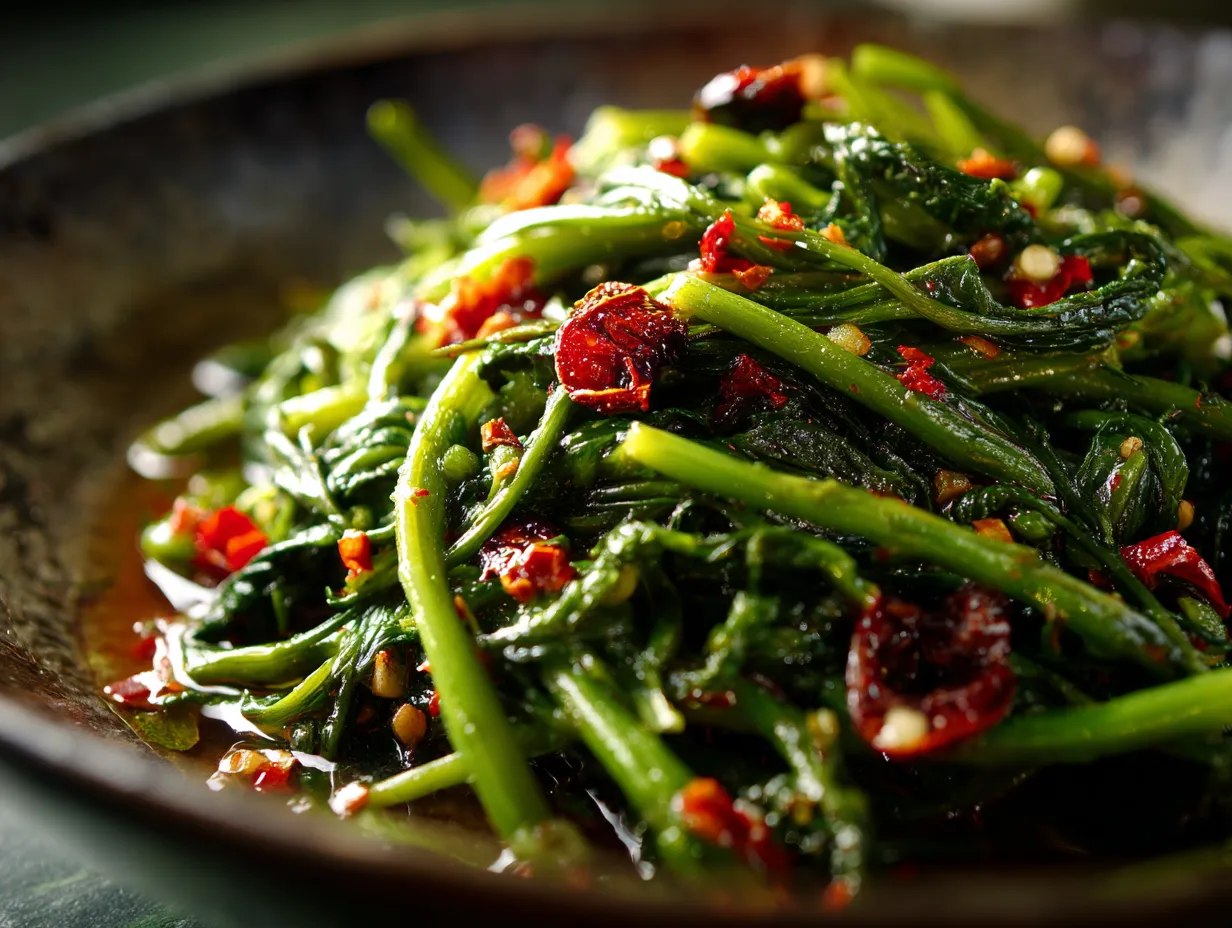
Sambal Kangkong with Belacan is a beloved Singapore home-and-hawker favourite: bright, leafy kangkong (water spinach) wok-tossed in a punchy sambal made with toasted belacan for that unmistakable smoky umami. You’ll find versions of this at zi char stalls, hawker centres in the heartlands and family kitchens across the island—perfect as a shared vegetable dish over plain rice.
The texture is a contrast between tender leafy greens and slightly crisp stems, all coated in a glossy spicy-savoury sauce. The flavour profile balances the heat of red chillies and chilli padi with the fermented depth of belacan, a touch of sugar and a splash of lime or tamarind for brightness—just like the sambal dishes served alongside fried fish or fried rice in a kopitiam or East Coast makan session.
This recipe is ideal for busy weeknight dinners, supper runs, or potluck spreads where you want something quick, nutritious and full of flavour. It’s easy to scale up for gatherings; add a handful of prawns if you want a more substantial zi char-style plate. Tips in the recipe help you source belacan and fresh kangkong from your local wet market, NTUC or Cold Storage, and how to get the right wok heat for the classic smoky finish.
Ingredients
- 400 g kangkong (water spinach), ends trimmed, leaves and stems separated
- 3 tbsp neutral oil (vegetable or peanut) for stir-frying
- 1 tbsp belacan (shrimp paste), toasted and pounded or finely chopped
- 6–8 dried red chillies, soaked to soften (or 3 fresh red chillies for a brighter flavor)
- 4–6 bird's eye chillies (chilli padi), whole or chopped, to taste (optional for extra heat)
- 4 shallots, peeled and roughly chopped
- 3 cloves garlic, peeled
- 1 tsp palm sugar or light brown sugar
- 1 tbsp tamarind water (or 1 tbsp lime juice) to taste
- 1–2 tsp fish sauce or 1 tsp salt (adjust to taste)
- 2 tbsp water (or vegetable stock) to loosen the sambal
- 50 g small dried shrimp (optional), soaked and drained for extra umami
- 1 tbsp oil for blending the paste (extra if using blender)
- Lime wedges, to serve
- Fresh cucumber slices or achar, to serve (optional)
Step-by-Step Method
- Prepare the kangkong: rinse thoroughly to remove grit, then separate leaves from the thicker stems. Chop stems into 3–4 cm lengths so they cook evenly; keep leaves whole or roughly torn.
- Toast and pound belacan: heat a small dry pan over medium heat and toast the belacan for 1–2 minutes until fragrant (careful not to burn). Let cool, then pound with shallots, garlic, red chillies and dried shrimp (if using) in a mortar and pestle, or blitz in a small blender with 1 tbsp oil until a coarse paste forms.
- Make the sambal: in a bowl mix the toasted belacan-chilli paste with palm sugar, tamarind water (or lime), fish sauce and 2 tbsp water. Taste and adjust: it should be spicy, salty and slightly sweet with a hint of sourness.
- Heat the wok: place a wok on high heat until very hot (you should see faint wisps of smoke), then add 2–3 tbsp oil and swirl to coat. High heat gives the classic zi char wok hei.
- Aromatics first: add the sambal paste to the hot oil and stir-fry for 30–60 seconds until fragrant and oil begins to separate. If using whole chilli padi, add them now for extra heat.
- Add stems: toss in the chopped kangkong stems and stir-fry for about 1–2 minutes until they begin to soften but still have bite. Splash 1–2 tbsp water to help cook and create a bit of sauce.
- Add leaves: add the kangkong leaves and continue to toss on high heat for another 1–2 minutes until leaves wilt but remain bright green. Stir constantly to coat with sambal and prevent burning.
- Finish and season: taste and adjust with more fish sauce, sugar or lime if needed. Once the leaves are wilted and stems are tender-crisp, remove from heat. Serve immediately with lime wedges and as part of a family-style meal.
- Optional add-ins: if adding prawns or pre-cooked dried shrimp, toss them in with the stems so they heat through without overcooking. For a richer version, finish with a drizzle of sesame oil or a sprinkle of fried shallots.
Tips & Serving Ideas
- Buy fresh kangkong from your local wet market or supermarket (NTUC/Cold Storage/Sheng Siong) and use within a day for the best crispness; look for bright green leaves and firm stems.
- Toast belacan briefly in a dry pan before using to remove rawness and bring out smoky aroma—this small step makes a big difference.
- Use a very hot wok for wok-hei: preheat until slightly smoking, use high heat for quick stir-frying and keep ingredients moving to prevent burning.
- Adjust heat to local tastes: reduce or omit bird's eye chillies for children or guests sensitive to spice; add extra chilli padi for authentic hawker-heat.
- Make-ahead: the sambal paste can be prepared and refrigerated for 2–3 days to save time. Toss freshly when cooking the kangkong so leaves stay bright and not soggy.
- Leftovers: reheat quickly on high heat in a wok with a splash of water; avoid overcooking to keep stems crisp for next-day lunchboxes.
- Substitutions: if you can’t find belacan, use a small amount of fish sauce plus a pinch of shrimp paste; for a vegetarian option, skip belacan and add extra toasted dried shiitake for umami.
You might also like
More recipes to save for later.