Roti Prata (Homemade Dough)
Flaky Singapore-style roti prata made from homemade dough — soft, layered flatbreads pan-fried in ghee for breakfast, supper or hawker-style makan at home.
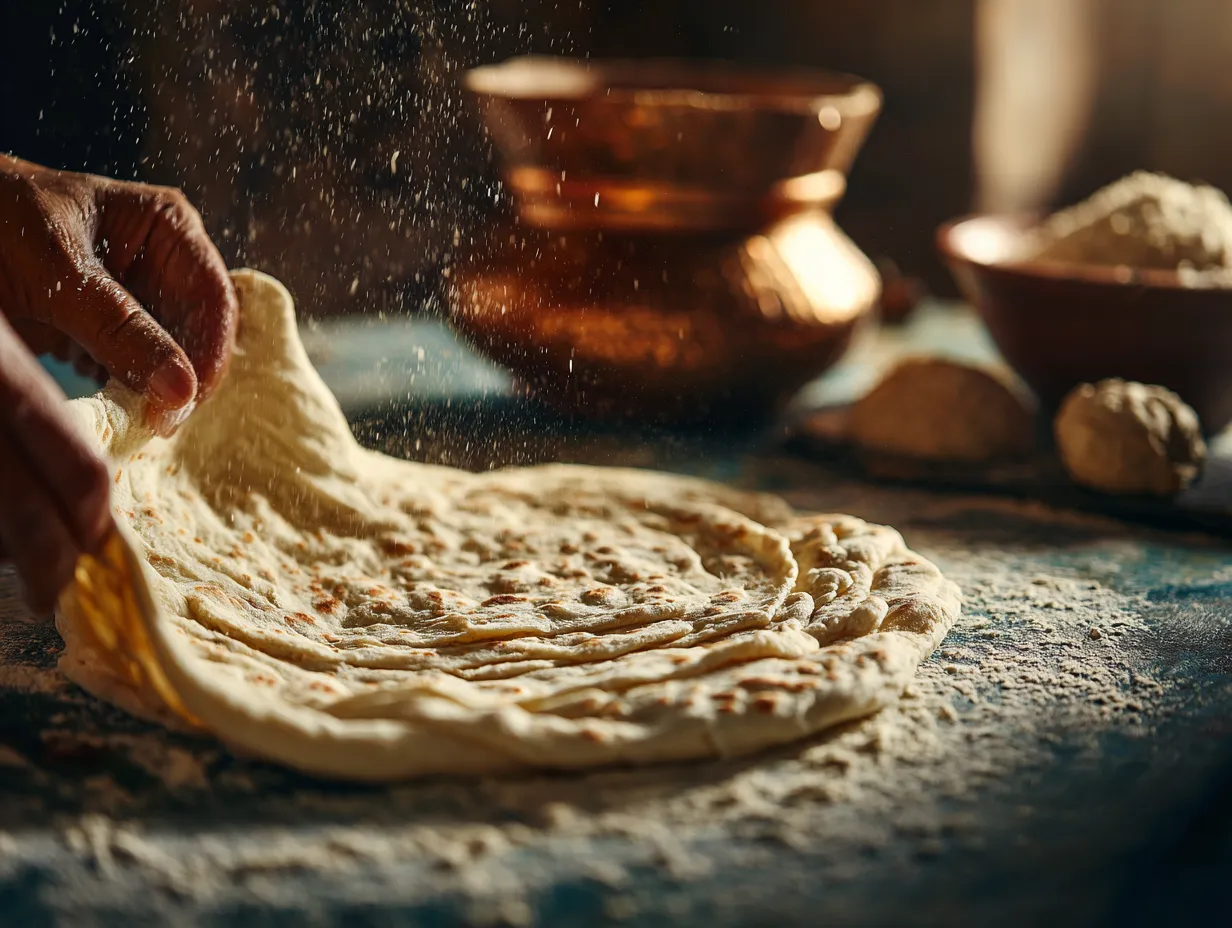
About this dish
Roti prata is a beloved Singapore street breakfast and supper staple — that stretchy, flaky flatbread you dunk into dhal or savoury fish curry at kopitiams and hawker centres from Tiong Bahru to the heartlands. This recipe focuses on a reliable homemade dough you can mix in any typical Singapore kitchen, then stretch, fold and pan-fry to achieve crisp edges and a soft, pillowy centre.
At home, prata works for breakfast with kopi or for late-night makan after work; it’s also a crowd-pleaser at weekend family dinners and potlucks. The technique — a short knead, a patient rest, and then the playful stretching and flipping — recreates that hawker-style texture without specialist equipment. You’ll get buttery layers from ghee or oil and golden blistered spots from a hot flat pan or tawa.
Flavour is mild and comforting: slightly buttery, with pockets of chew and crunchy tips. Serve plain or try local twists — egg prata, onion prata, or a dash of sambal and sugar for a nostalgic kopitiam treat. The dough is forgiving: make ahead and freeze dough balls, or double the batch for weekend guests and festive gatherings like Hari Raya or Deepavali when family-style sharing is the way to go.
Ingredients
- 500 g plain (all-purpose) flour, plus extra for dusting
- 1 tsp fine salt
- 1 tbsp caster sugar
- 2 tbsp fine semolina (optional – for extra crispness)
- 1–2 tsp instant yeast (optional, speeds up resting; omit for traditional no-yeast method)
- 300–320 ml warm water (adjust for humidity)
- 2 tbsp vegetable oil (for dough)
- 3 tbsp ghee or melted butter (in dough) plus extra 1–2 tbsp for frying
- 2 tbsp neutral oil (for coating dough balls during rest)
- 1 large egg (optional – for egg prata variation)
- 1 small red onion, thinly sliced (optional filling)
- Sugar, to serve (optional kopitiam-style)
- Dhal or fish curry, to serve (see pairings)
- Fresh coriander leaves or chopped spring onion, for garnish (optional)
- Lime wedges and sambal (optional accompaniments)
Step-by-Step Method
- Mix dry ingredients: in a large bowl combine 500 g plain flour, 1 tsp salt, 1 tbsp sugar and 2 tbsp semolina (if using). If using yeast, stir it in now.
- Add liquids and knead: make a well, add 300–320 ml warm water, 2 tbsp vegetable oil and 3 tbsp melted ghee; mix until a shaggy dough forms, then knead on a lightly oiled surface for 8–10 minutes until smooth and elastic.
- First rest: place dough in a lightly oiled bowl, cover with cling film or a damp cloth and rest for 30 minutes to 6 hours (use longer rest or fridge overnight for deeper flavour; if you used yeast, 1–2 hours is sufficient).
- Divide and oil: punch down the dough, divide into 8–10 equal pieces (for medium prata), roll each into a smooth ball and coat with a little oil. Cover and rest another 30 minutes to relax the gluten.
- Prepare to stretch: lightly oil your work surface and hands. Flatten a dough ball and, using the heels of your hands, gently stretch and flip the dough until it’s very thin and almost translucent (practice and patience — aim for paper-thin).
- Layer and coil: spread a little ghee or oil over the stretched sheet, fold or pleat edges into the centre to create layers, then roll into a tight coil (like a cinnamon roll). Allow coils to rest 10 minutes, then gently roll out to 15–20 cm rounds.
- Heat pan and fry: preheat a non-stick skillet, cast-iron pan or tawa over medium-high heat until hot. Add 1 tsp ghee or oil, place rolled prata on the pan and cook 1–2 minutes until blistered and golden, press lightly with a spatula; flip and cook another 1–2 minutes.
- Finish and serve: for extra crispness add an extra knob of ghee and press around edges for 10–20 seconds. Stack cooked prata on a plate and keep warm in a low oven (100 °C) while you finish the rest. Serve hot with dhal, fish curry, sambal or sugar.
- Variations: to make egg prata, add a beaten egg on top of the rolled dough while it’s cooking and fold; for onion prata, sprinkle thinly sliced onions before folding. Adjust heat to avoid burning — medium-high for quick blistering, lower to finish through.
Tips & Serving Ideas
- Humidity affects dough: in Singapore’s humid climate you may need slightly less water; add gradually until dough is just soft and not sticky.
- No ghee? Use neutral oil for frying and brush with melted butter after cooking for flavour; ghee gives the most authentic aroma.
- Buy plain flour and semolina at NTUC FairPrice, Cold Storage or Sheng Siong; use instant yeast only if you want a faster, slightly puffier dough.
- Practice the stretch: if the dough tears, fold it back and rest 5–10 minutes — relaxed gluten is easier to stretch thin.
- Make-ahead: shape dough balls and freeze in a ziplock; thaw overnight in the fridge and bring to room temperature before stretching.
- Reheat leftovers on a hot skillet or toaster oven for best texture — microwaving makes prata chewy rather than crisp.
- For crisp edges and soft centers, keep pan hot but manage heat: medium-high to start for blistering, then slightly reduce to finish through without burning.
You might also like
More recipes to save for later.