Roast Beef Tenderloin
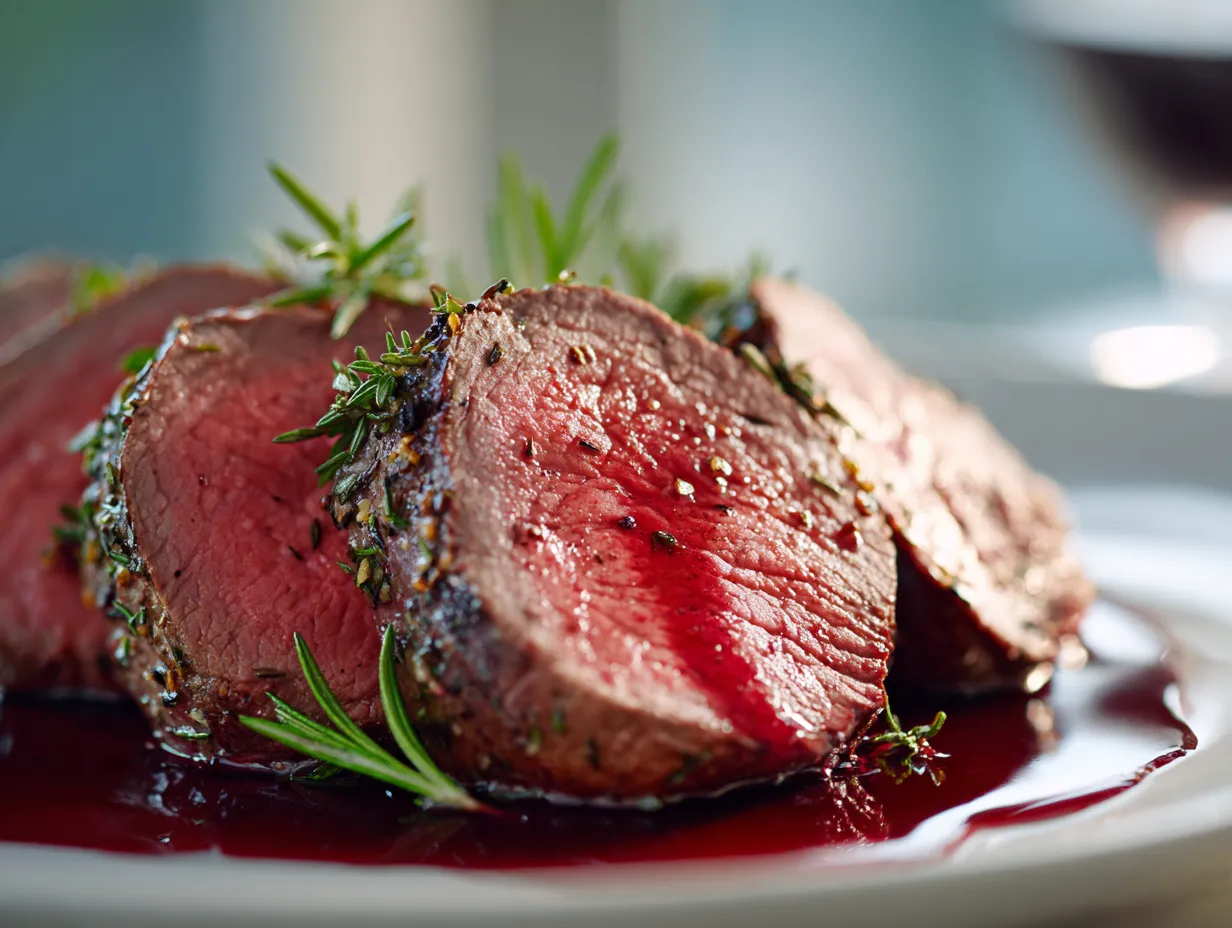
Singapore-style Roast Beef Tenderloin — a juicy, oven-roasted beef tenderloin with garlic-herb sear and red wine jus, perfect for family dinners and festive makan occasions.
About this dish
Roast Beef Tenderloin feels right at home on a Singapore dining table when family and friends gather — whether it’s a Christmas spread in a Tiong Bahru flat, a weekend potluck at an East Coast barbecue, or a reunion dinner in a heartland HDB kopitiam-style gathering. While roast beef isn’t typical hawker fare, the technique of a hot sear and slow roast delivers a tender, pink centre that Singapore home cooks love for special occasions and weekend feasts.
The flavour profile is classic Western — rich beef, fragrant garlic and herbs, and a glossy red wine jus — with a few local tweaks suggested in the recipe (a cheeky sambal glaze or kecap manis glaze for those who like a touch of Singapore sweetness and heat). Texture-wise, the outside gets a caramelised crust from a high-heat sear, while the interior stays buttery and medium-rare if cooked to temperature.
This recipe is written for a typical Singapore home kitchen (metric measurements, pan or wok for searing, and a domestic oven). It suits busy parents who want a restaurant-style roast without fuss, or hosts planning a festive spread — carve thinly for sharing, serve with mashed potato or fragrant steamed rice, and pair with local sides like achar or steamed greens for a balanced, crowd-pleasing meal.
Ingredients
- 1.2 kg beef tenderloin (trimmed and tied)
- 1 tsp fine sea salt, plus extra to taste
- 1 tsp freshly ground black pepper
- 2 tbsp neutral oil (vegetable or canola) for searing
- 30 g unsalted butter
- 4 cloves garlic, smashed
- 4–6 sprigs fresh thyme
- 2 sprigs fresh rosemary
- 1 tbsp Dijon mustard
- 1 tsp Worcestershire sauce
- 150 ml good-quality red wine (cabernet or merlot)
- 250 ml beef stock (low-sodium)
- 1 tsp cornflour mixed with 1 tbsp cold water (optional, for thickening jus)
- 1 tbsp honey or kecap manis (optional local glaze)
- Fresh parsley, chopped, for garnish
- Crème fraîche or horseradish cream, to serve (optional)
- Sea salt flakes, for finishing
Step-by-Step Method
- 1. Bring the beef to room temperature for 30–45 minutes before cooking; pat dry and season all over with 1 tsp fine sea salt and 1 tsp black pepper.
- 2. Preheat oven to 200°C (convection off) and position a rack in the middle. If using a probe thermometer, insert it now to monitor internal temperature.
- 3. Heat a heavy-based frying pan or cast-iron skillet over high heat until very hot. Add 2 tbsp oil and sear the tenderloin on all sides (including the ends) for 1–2 minutes per side until a deep golden crust forms.
- 4. Add 30 g butter, smashed garlic and herb sprigs to the pan and tilt to baste the beef for 30 seconds; brush 1 tbsp Dijon mustard over the seared surface if using, then transfer the pan or the beef to a roasting tray.
- 5. Roast in the preheated oven until the internal temperature reads 50–52°C for medium-rare (about 20–30 minutes for a 1.2 kg fillet) — oven times vary, so use the thermometer. For medium, aim for 57–60°C.
- 6. Remove the beef from the oven, tent loosely with foil and rest for 15 minutes. Resting allows juices to redistribute and results in a juicier roast.
- 7. Meanwhile, make the red wine jus: place the searing pan on medium heat, add the red wine to deglaze, scraping up browned bits, then add beef stock and 1 tsp Worcestershire sauce. Simmer until reduced by about half; whisk in cornflour slurry if you prefer a thicker sauce.
- 8. Taste the jus and adjust seasoning with salt, pepper and 1 tbsp honey or kecap manis for a subtle Singapore-style sweet note if desired. Strain into a small saucepan and keep warm.
- 9. Slice the rested tenderloin against the grain into 5–8 mm slices. Sprinkle with sea salt flakes and chopped parsley for freshness.
- 10. Serve immediately with red wine jus, horseradish cream or crème fraîche, and sides such as mashed potatoes, roasted vegetables, steamed rice or a simple achar for local contrast. Leftovers work great as thinly sliced beef in sandwiches or with chilli padi and kecap for an easy hawker-style twist.
Tips & Serving Ideas
- Buy good-quality beef at NTUC FairPrice, Cold Storage or a halal butcher in Geylang if you need halal-certified meats; a trimmed tenderloin yields the best texture.
- Use a meat thermometer for reliable results — 50–52°C for medium-rare, 57–60°C for medium. Remember carryover cooking while the meat rests.
- Sear in a very hot pan (or use a wok if you don’t have a skillet) to develop a deep crust; a splash of oil with a knob of butter and herbs at the end gives great flavour.
- If you like a Singapore twist, brush a thin glaze of honey mixed with kecap manis or a spoonful of sambal belacan on the roast just before resting for a sweet-spicy finish.
- Make the jus in the same pan to capture fond (browned bits) — deglazing with red wine lifts those flavours. Reduce to concentrate, and thicken with a cornflour slurry if needed.
- Make-ahead: roast and rest the beef, chill, then reheat gently in a low oven (150°C) covered to serve later — slice just before serving to retain juices.
You might also like
More recipes to save for later.