Beef Rendang (Slow Cooked)
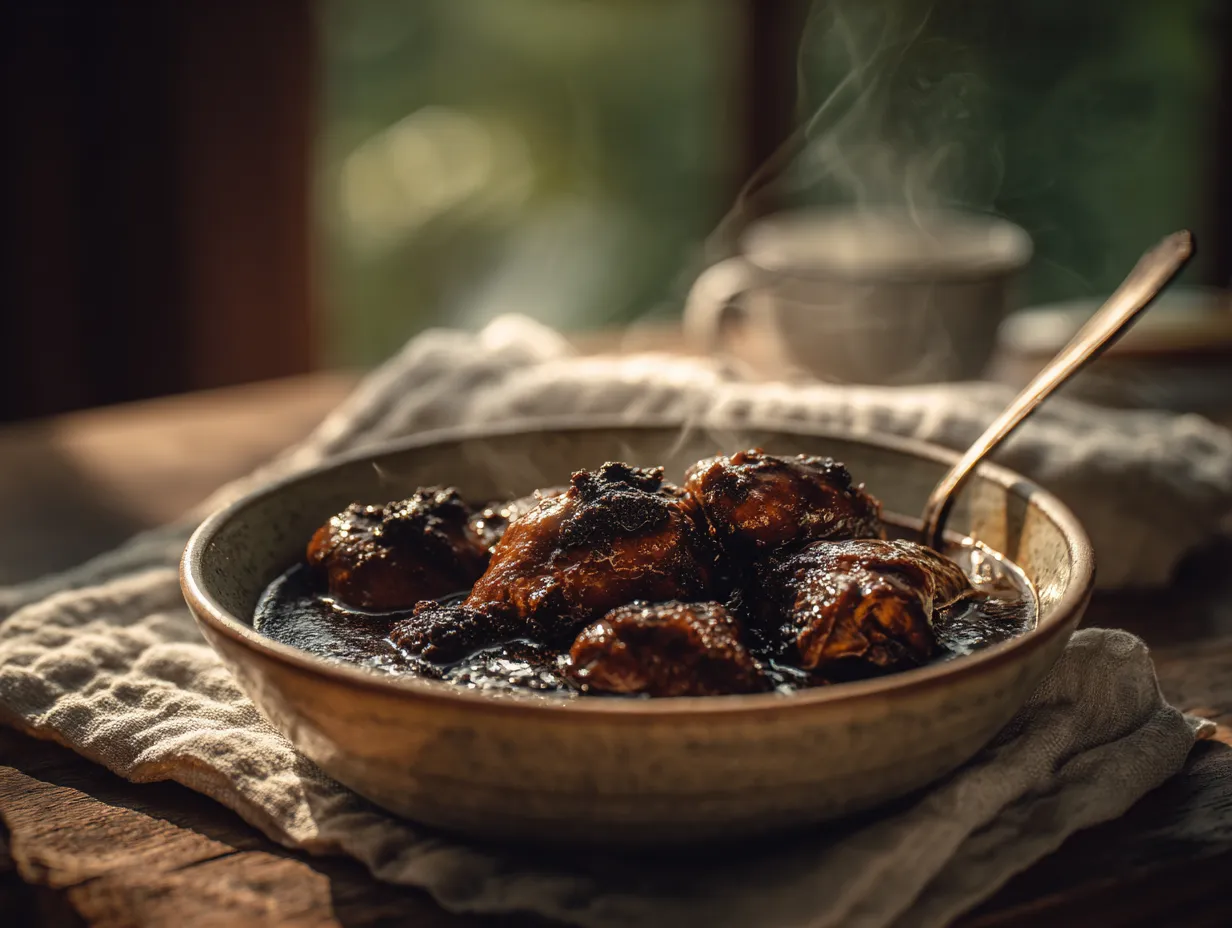
A Singapore-style slow-cooked beef rendang simmered in rich coconut milk and a fragrant spice paste until deeply caramelised and tender.
About this dish
Beef Rendang is a beloved Malay classic that has found a permanent place on Singapore dining tables — from neighbourhood zi char stalls to festive Hari Raya spreads. This slow-cooked version captures the heartland mood: big, bold, and built for sharing with family and friends. Think of it as the kind of dish your kopi kakis might rave about after a long weekend cooking session or what your mum brings to a potluck at the void deck.
The texture is what makes rendang special — long-simmered beef that absorbs a paste of shallots, galangal, lemongrass and dried chillies, then slowly reduces in coconut milk until the oil separates and the sauce clings like a glossy, slightly dry coat. Flavours are layered: earthy turmeric and coriander, toasted kerisik (toasted grated coconut) for nutty depth, a touch of gula Melaka for mellow caramel, and kaffir lime leaves for aromatic lift. Adjust the chilli level to suit Singapore palates — from kopitiam-mild to hawker-centre spicy.
At home in Singapore, this recipe is ideal for weekend cooking, family dinners or festive occasions such as Hari Raya or a Chinese New Year reunion where dishes are shared family-style. Make it a day ahead — like many Singapore cooks do — as the flavours deepen overnight and reheats beautifully for lunchboxes or a late-night supper after a stroll along East Coast Park.
Ingredients
- 1.2 kg beef chuck or brisket, cut into 3 cm cubes
- 2 tbsp vegetable oil or coconut oil
- 8 shallots, roughly chopped
- 6 cloves garlic
- 4 dried red chillies, soaked to soften (or 4 fresh red chillies for milder heat)
- 3 fresh red chillies (or 6 bird's eye chillies to taste), optional for extra heat
- 2 cm galangal (or 1 tbsp galangal paste)
- 2 cm fresh turmeric or 1 tsp ground turmeric
- 2 cm ginger
- 3 candlenuts or 3 tbsp macadamia nuts as substitute
- 2 stalks lemongrass, white parts only, bruised
- 6-8 kaffir lime leaves, torn
- 1 cinnamon stick (about 4 cm)
- 2 star anise
- 1 tsp ground coriander
- 1/2 tsp ground cumin
- 400 ml thick coconut milk
- 200 ml coconut cream or extra coconut milk (to adjust consistency)
- 1 tbsp tamarind paste or 2 tbsp tamarind water
- 2 tbsp palm sugar or gula Melaka (or brown sugar)
- 1-1.5 tsp sea salt (adjust to taste)
- 50 g desiccated coconut or grated fresh coconut, toasted and pounded into kerisik
- Fried shallots and fresh coriander or kaffir lime leaves to garnish
- Lime wedges to serve
Step-by-Step Method
- Prep the spice paste: blend shallots, garlic, softened dried chillies, fresh chillies (if using), galangal, turmeric, ginger and candlenuts with a splash of water into a smooth paste.
- Heat 2 tbsp oil in a heavy-based pot or Dutch oven over medium-high heat until shimmering; sear the beef in batches until browned on all sides, about 3-4 minutes per batch. Remove and set aside.
- Lower heat to medium, add a little more oil if needed, then fry the spice paste in the same pot for 6-8 minutes until fragrant and the oil begins to separate from the paste. Stir frequently to avoid burning.
- Add the bruised lemongrass, torn kaffir lime leaves, cinnamon stick, star anise, ground coriander and cumin. Fry for another 1-2 minutes to bloom the spices.
- Return the browned beef to the pot, pour in the coconut milk and tamarind paste, stir to combine. Bring to a gentle simmer over medium heat, scraping up any browned bits from the base.
- Add palm sugar and season with salt. Reduce heat to low and simmer uncovered for 2 to 2.5 hours, stirring every 15–20 minutes to prevent sticking and to encourage even reduction. Cook until beef is tender and sauce has thickened.
- When the sauce has reduced and most liquid has evaporated, stir in the toasted kerisik (toasted grated coconut) and continue to cook on low, stirring, until the gravy clings to the beef and becomes glossy; this may take another 20–30 minutes.
- Taste and adjust seasoning with a pinch more salt or sugar like at a zi char stall if needed. If the rendang is drying too quickly, add a splash of coconut milk or water and continue to reduce.
- Remove whole spices like cinnamon and star anise if desired. Let the rendang rest for 10–15 minutes; flavours will deepen further if made a day ahead and reheated gently.
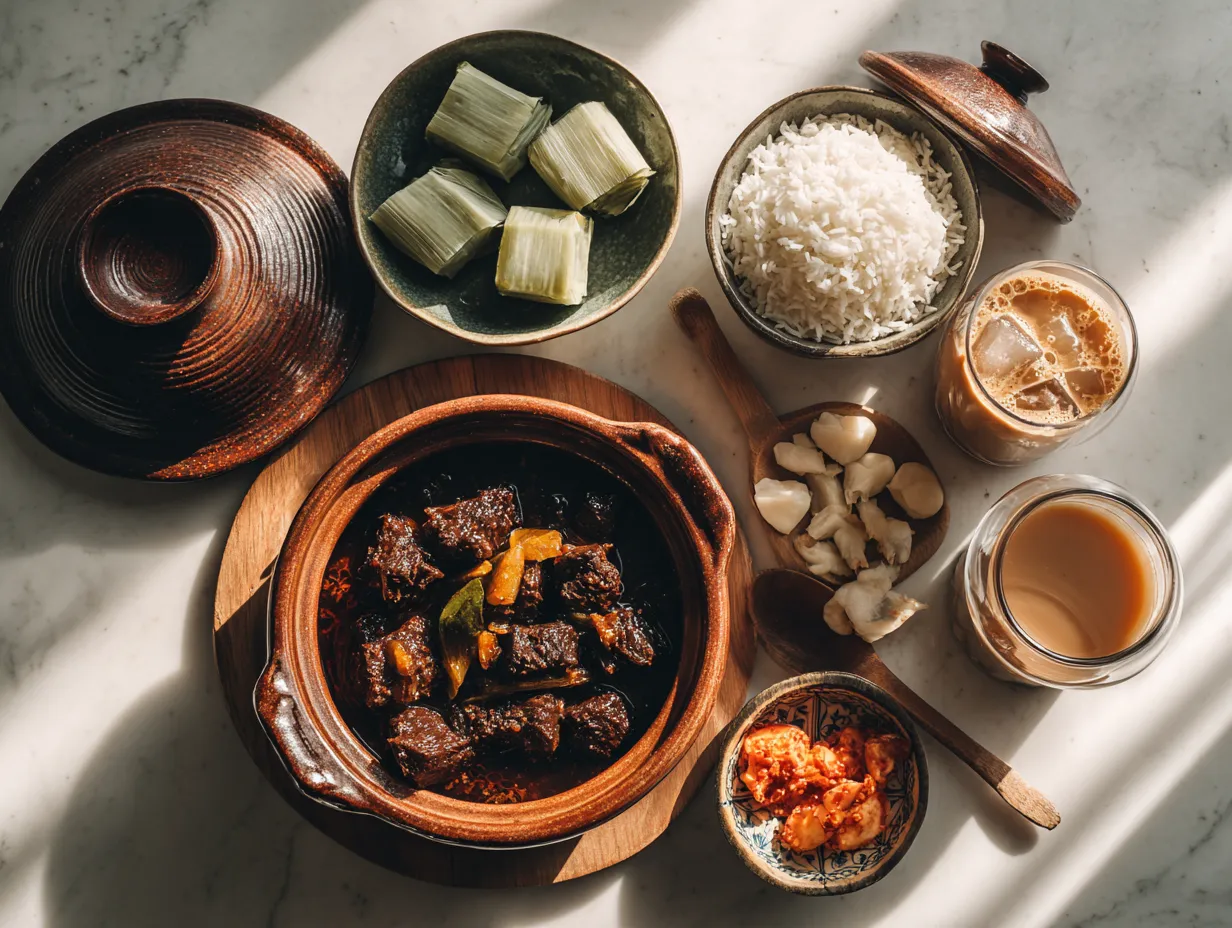
- Serve hot with steamed jasmine rice, ketupat, acar or plain cucumber slices; garnish with fried shallots and a few torn kaffir lime leaves and lime wedges on the side.
Tips & Serving Ideas
- Buy beef chuck or brisket from Sheng Siong, NTUC FairPrice or the neighbourhood wet market for the best balance of flavour and collagen; trim excess fat but leave some for taste.
- Make the spice paste in advance and freeze in portions for quick weeknight cooking; thaw in the fridge overnight.
- Control the heat like a good zi char cook: start medium-high to brown, then lower to a steady gentle simmer to avoid scorching the coconut milk.
- If you prefer a less oily, stew-like rendang, stop reducing earlier and serve as a wet rendang or gulai; for a classic dry rendang, reduce until the oil separates and meat is deeply caramelised.
- Use kerisik (toasted grated coconut) for authentic nutty depth; if pressed for time, toasted desiccated coconut works as a substitute.
- Rendang tastes better the next day — refrigerate overnight and gently reheat with a splash of coconut milk or water. It also freezes well for up to 1 month.
- Adjust chilli level for guests: remove seeds for milder heat or add bird's eye chillies for a kopitiam-spicy kick.
You might also like
More recipes to save for later.