Rainbow Lapis Sagu (Steamed)
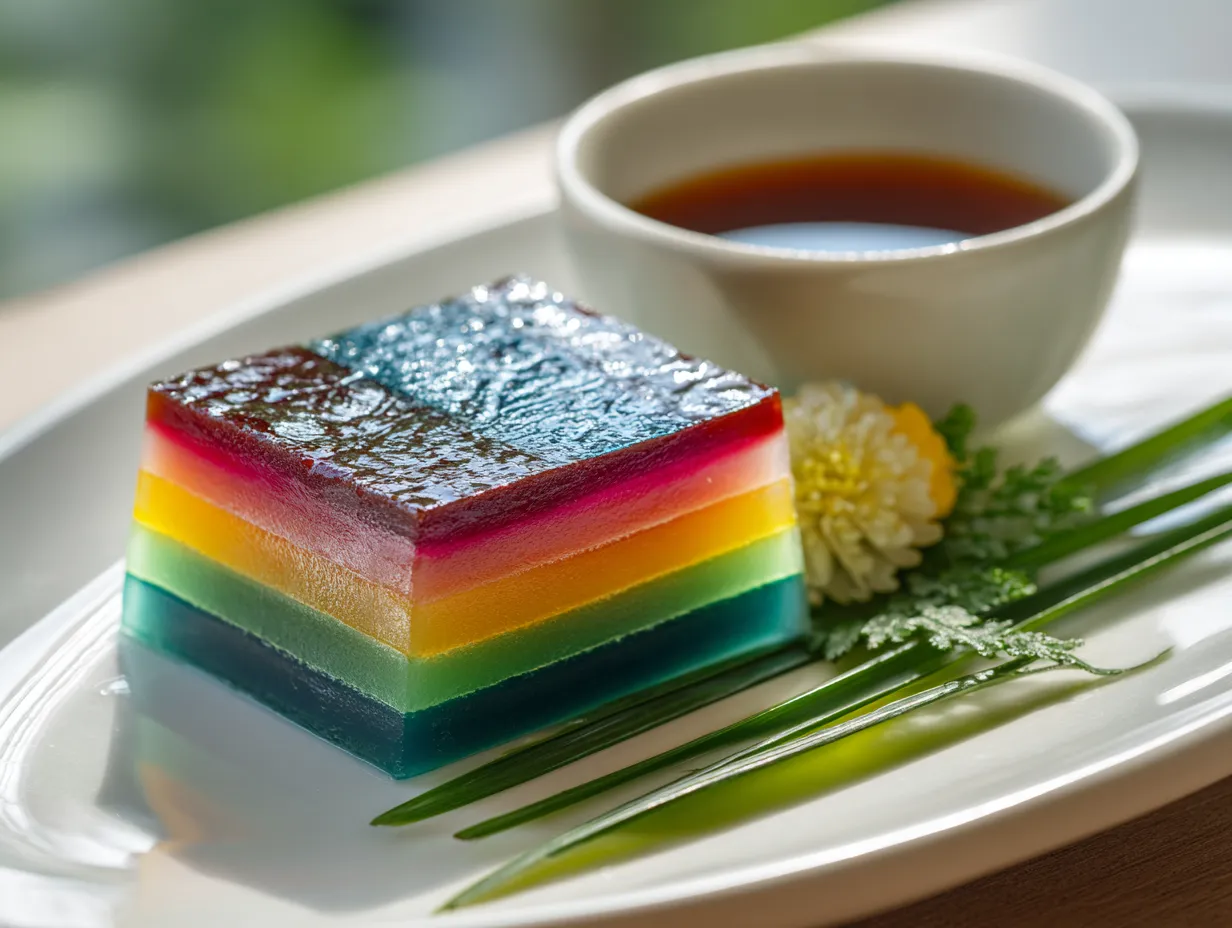
A Singapore-style steamed layered sago cake — Rainbow Lapis Sagu — chewy, coconut-scented and perfect for teatime, potlucks or festive kuih platters.
About this dish
Rainbow Lapis Sagu is a colourful steamed kuih that nods to Peranakan and Malay home kitchens across Singapore — think heartland kopitiams and Tiong Bahru brunch spots serving nostalgic bites. Layers of translucent, chewy sago (tapioca pearls/starch) are set in fragrant coconut milk and gently sweetened, then tinted with natural hues like pandan green, beetroot pink and butterfly pea blue for a cheery, family-friendly dessert.
This steamed lapis sits comfortably on festive tables (CNY, Hari Raya or Deepavali kuih platters) and is just as at home on a weekend potluck or as a late-night supper from a neighbourhood hawker centre. The texture is pleasantly bouncy with a silky coconut finish; each thin layer is steamed until just set, giving a neat slice that shows off the rainbow stripes.
For a local twist, use pandan juice or gula melaka syrup as flavour notes, and serve chilled alongside kopi or teh tarik for contrast. Home cooks in Singapore can find sago/tapioca pearls, pandan leaves and coconut milk at NTUC, Sheng Siong or wet market stalls — and with a simple steamer setup (wok + rack) you’ll get that classic steamed-kuih charm in your own kitchen.
Ingredients
- 200 g small sago pearls (tapioca pearls), soaked and cooked until translucent
- 120 g tapioca starch (kan sui/goreng tapioca flour) or sago flour
- 50 g rice flour
- 400 ml canned coconut milk (full fat)
- 300 ml water (plus extra for soaking/cooking sago)
- 150 g caster sugar (adjust to taste) or 120 g if using gula melaka
- 1/4 tsp fine salt
- 2 pandan leaves, tied into a knot (for aroma)
- 1 tsp pandan paste or 30 ml pandan juice (for green layer) — optional
- 30 ml beetroot juice (for pink layer) — optional or 1 tbsp beetroot powder
- 30 ml carrot juice or 1 tbsp carrot juice concentrate (for orange layer) — optional
- 1 tsp butterfly pea extract or 1 tsp dried butterfly pea soaked and strained (for blue layer) — optional
- 1/4 tsp ground turmeric or a pinch of saffron (for yellow layer) — optional
- 2 tsp vegetable oil or melted coconut oil to grease the tray
- 1 tbsp gula melaka syrup or honey, for drizzling (optional)
- Banana leaf or parchment paper to line the tray (optional, for authentic presentation)
- Optional garnish: toasted shredded coconut or toasted sesame seeds
Step-by-Step Method
- Prepare the sago: rinse 200 g small sago pearls until water runs clear. Soak if needed then cook in plenty of boiling water, stirring so they don’t stick, until the pearls turn fully translucent (about 10–12 minutes). Drain and rinse under cold water; set aside.
- Mix dry flours: in a large bowl, whisk together 120 g tapioca starch and 50 g rice flour so the mixture is even. This helps give the lapis its bouncy, cohesive texture.
- Make coconut batter: in a saucepan combine 400 ml coconut milk, 300 ml water, 150 g caster sugar and 1/4 tsp salt with the knotted pandan leaves. Gently heat until warm (do not boil), stirring to dissolve the sugar. Remove pandan leaves and let cool slightly.
- Combine sago + batter: stir the cooked sago pearls into the coconut mixture, then gradually whisk in the flour mix until smooth and lump-free. The batter should be pourable but with body — if too thick add a little water, if too thin add 1 tbsp tapioca starch. Strain through a sieve if needed for smoothness.
- Divide and colour: split the batter into 4–6 bowls depending on how many colours you want. Colour each bowl with pandan paste (green), beetroot juice (pink), butterfly pea (blue), turmeric/carrot (yellow/orange). Taste and adjust sweetness or aroma — a little pandan juice makes a big difference.
- Prepare steamer and tray: grease an 8-inch square or similar shallow tray with oil and line with banana leaf or parchment if using. Bring a wok or large pot of water to a rolling boil and maintain high steam; preheat the steamer for a few minutes.
- Steam layers: pour a thin layer (about 1 cm) of one coloured batter into the tray and spread evenly. Place in the steamer, cover and steam over medium-high steam for 6–8 minutes until the layer is just set (surface no longer wet). Repeat with remaining colours, steaming each layer until set before adding the next. This gives neat defined stripes like hawker-style lapis.
- Final steam and cool: after the last layer is set, steam the whole tray for an additional 8–10 minutes to ensure the centre is cooked. Remove from steamer and let cool to room temperature, then chill in the fridge for at least 1–2 hours to firm up — cold slices cut cleaner.
- Slice and serve: run a hot, wet knife along the edges and slice into squares or finger pieces. Drizzle with a little gula melaka syrup or scatter toasted coconut if desired. Serve chilled with kopi, teh or iced barley.
- Storage: keep leftovers covered in the fridge for up to 4 days. Reheat slightly by steaming again if you prefer it warm, or eat cold for best texture.
Tips & Serving Ideas
- Use small sago pearls cooked until fully translucent — undercooked sago gives a chalky centre. Buy at NTUC, Cold Storage or your local wet market.
- For natural colouring, use pandan juice, beetroot or carrot juice, butterfly pea tea and a pinch of turmeric; adjust intensity by volume, not sugar.
- Keep the steamer water boiling steadily; medium-high steam gives even setting. Cover pot/lid with a clean tea towel to stop water droplets falling onto the lapis.
- Grease the tray lightly or line with banana leaf to prevent sticking and for an authentic flavour. A wet knife heated under hot water slices cleanly through chilled slices.
- If you don’t have a steamer, use a large wok with a steamer rack or a metal bowl inverted to create a makeshift rack — common in Singapore home kitchens.
- Make-ahead: steam the day before and chill overnight for easier slicing — this is great for potlucks and festive trays.
- Adjust sweetness to your family’s taste — locals may like it less sweet; add a tablespoon of gula melaka to the batter for a caramelised depth.
You might also like
More recipes to save for later.