Rainbow Agar Agar Jelly
A colourful Singapore-style stovetop-set Rainbow Agar Agar Jelly made with coconut milk, pandan and natural juices — a cooling, wobbly dessert perfect for family potlucks and festive spreads.
About this dish
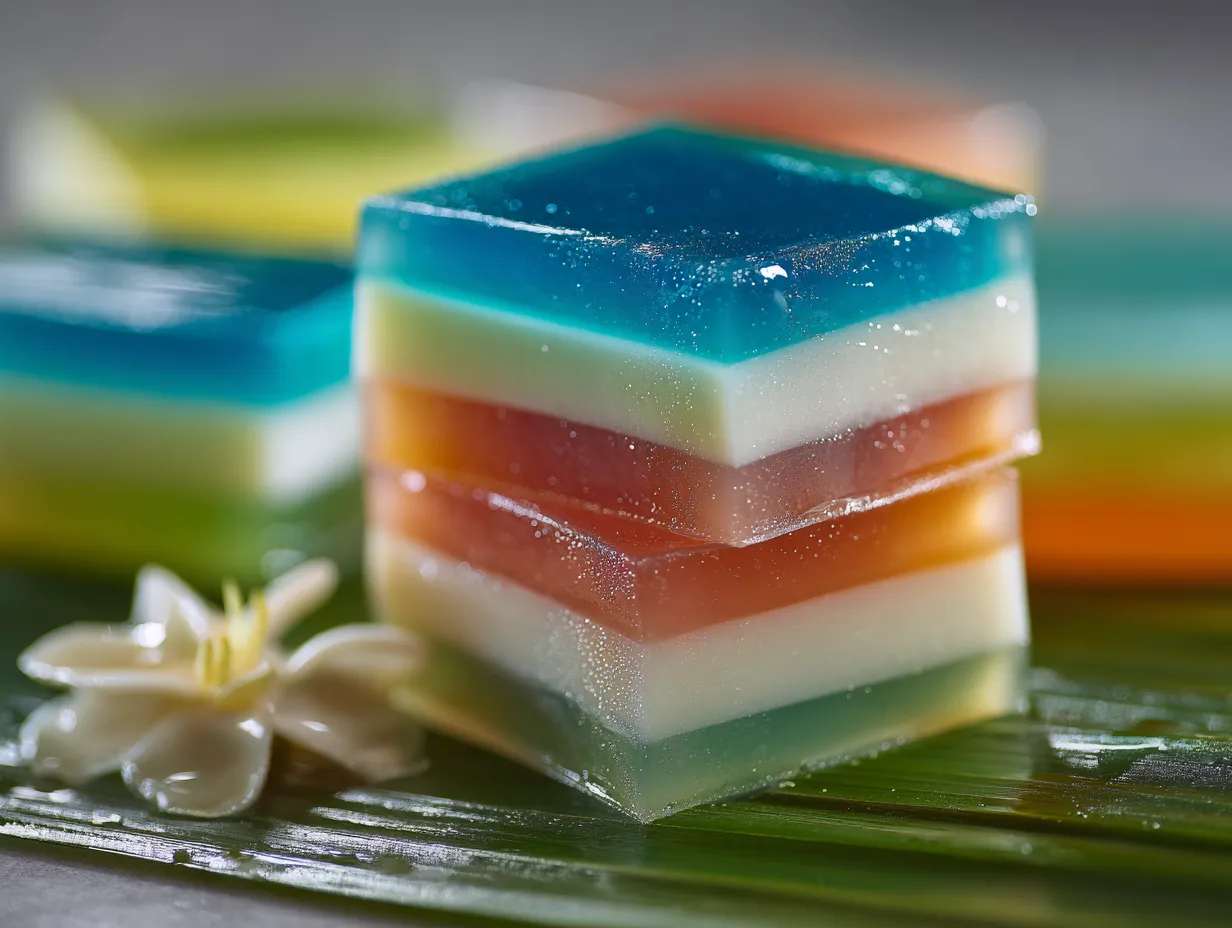
Bright, jiggly and nostalgic, Rainbow Agar Agar Jelly is a Singapore-friendly dessert you’ll see on kopitiam counters, home potluck tables and during festive gatherings across the heartlands. Made with agar-agar powder (vegetarian-friendly) and layered with fragrant coconut milk, pandan, gula melaka and natural fruit juices, this chilled sweet is as much about the colours as it is about the texture — firm enough to hold clean slices yet delightfully springy in the mouth.
In Singapore we love sharing colourful bites at events — think CNY open houses, potlucks at the community centre or pasar malam desserts — and this recipe suits those occasions perfectly. It’s easy to scale up for a zi char-style family spread or to portion into small cups for evening supper. Use local ingredients from NTUC, Cold Storage or Sheng Siong: pandan leaves, gula melaka, butterfly pea flower or fresh beetroot for colouring, and canned coconut milk for a rich layer.
The flavour profile is lightly sweet with creamy coconut notes and a hint of pandan fragrance; add a gula melaka layer for warm caramel complexity or a tangy mango/dragonfruit layer for a tropical lift. Because agar sets firmly at room temperature, the jelly holds up well in Singapore’s humid weather — just keep it chilled until serving and cut into neat squares or small cubes for easy sharing.
Ingredients
- 10 g agar-agar powder (unsweetened)
- 900 ml water, divided
- 200 g caster sugar (adjust to taste)
- 250 ml canned thick coconut milk
- 100 ml coconut cream (optional for extra richness)
- 2 pandan leaves (knotted) or 1 tsp pandan paste
- 50 g gula melaka (palm sugar), chopped, plus 1 tbsp hot water to dissolve
- 100 ml butterfly pea tea (for blue layer) or 1 tsp butterfly pea powder
- 100 ml beetroot juice or strained cooked beetroot (for pink layer)
- 100 ml carrot or mango purée (for orange/yellow layer) or fresh mango blended
- 1 tbsp lime juice (optional, to brighten fruity layers)
- Pinch of fine salt (to balance coconut sweetness)
- 1 tsp vanilla extract (optional)
- Natural food colouring (optional) — a few drops if you want more vivid shades
- Cooking spray or neutral oil (to lightly grease moulds or tray)
Step-by-Step Method
- Prepare ingredients: measure liquids, make butterfly pea tea (steep 1 tbsp dried flowers in 100 ml hot water until blue then strain) and blend or strain fruit purées. Knot pandan leaves and set aside.
- In a medium saucepan, combine 600 ml water and agar-agar powder, whisk until dissolved. Bring to a gentle boil over medium heat, stirring frequently so agar dissolves completely (about 3–5 minutes).
- Once boiling, add 150 g sugar and continue to simmer on low for 2 minutes until sugar dissolves. Remove pandan leaves and divide the hot agar syrup evenly into separate bowls for each colour/layer you plan to make.
- For coconut layers: heat 250 ml coconut milk with a pinch of salt and 1 tsp vanilla in a small pot until warm (do not let it boil). Stir a ladle of hot agar syrup into the coconut milk to temper, then mix back into the rest of the coconut agar to create a creamy white layer.
- Flavour and colour each divided agar mixture: stir butterfly pea tea into one portion for blue, beetroot juice into another for pink, mango or carrot purée into another for orange/yellow. For a brown caramel layer, dissolve 50 g gula melaka with 1 tbsp hot water and add to a portion. Adjust sweetness with remaining sugar if needed.
- Lightly oil your mould or tray and pour the first layer (about 5–8 mm thick). Let it cool at room temperature until it is just set on top but still slightly tacky (about 5–10 minutes) — you should be able to press lightly without disturbing the surface.
- Gently pour the next layer over the back of a spoon to avoid breaking the set layer. Repeat the slight-set-and-pour process for each layer, allowing 5–10 minutes of partial setting between layers so they adhere cleanly.
- After the final layer, let the tray cool to room temperature (about 30 minutes) then transfer to the fridge to chill and firm up for at least 1 hour, or until fully set and easy to cut.
- To serve, run a thin knife around the edge, invert onto a chopping board, and cut into squares or diamonds. Alternatively, unmould slices onto a platter and garnish with toasted desiccated coconut, extra pandan leaves or a drizzle of gula melaka syrup.
- Store leftovers covered in the refrigerator for up to 4 days. Let sit at room temperature 10 minutes before serving for best texture.
Tips & Serving Ideas
- Agar must reach a boil to set properly — keep it simmering for a few minutes until completely dissolved; unlike gelatin, agar sets firmly even in warm climates like Singapore.
- Use natural colourings: butterfly pea for blue, beetroot for pink, pandan for green and mango or carrot for yellow-orange — adjust concentration for deeper shades or add a touch of food colouring if needed.
- When layering, allow each layer to be ‘partially set’ (tacky on top) before pouring the next; pouring too soon will blend colours, while pouring too late may prevent adhesion.
- If you can’t find gula melaka, substitute with dark brown sugar or palm sugar from NTUC or Cold Storage; melt it with a little hot water before adding to an agar portion for a caramel layer.
- For a creamier white layer, use a mix of coconut milk and coconut cream but stir in a small ladle of hot agar to temper first so it doesn’t separate.
- Make ahead for parties — the jelly stores well in the fridge for up to 4 days. Bring out 10–15 minutes before serving so the texture is pleasantly soft.
- If you’re layering small cups for a community potluck, pour thinner layers so guests get a taste of every colour in one serving.
You might also like
More recipes to save for later.