Cantonese Style Pork Porridge
Comforting Singapore-style Cantonese pork porridge (congee) — slow-simmered rice with minced pork, ginger and sesame oil for a silky, hawker-style bowl.
About this dish
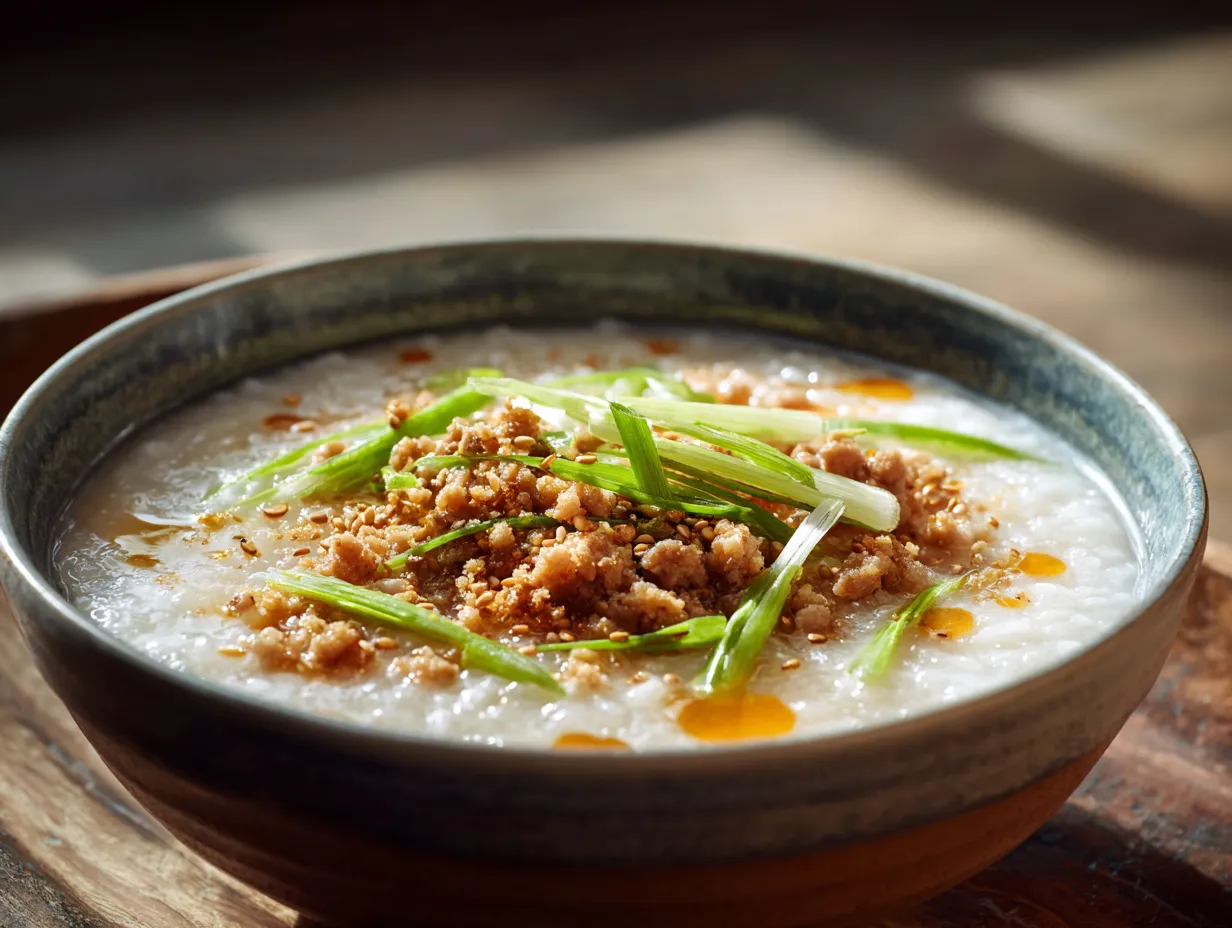
Cantonese Style Pork Porridge is the kind of comfort food you’ll find from kopitiam breakfasts to late-night supper runs in Singapore’s heartlands. This silky congee, made from rice simmered long in chicken stock and finished with seasoned minced pork and fresh ginger, evokes the gentle flavours of a zi char stall or a mum’s bowl of homemade porridge. It’s perfect for rainy evenings in Tiong Bahru, a light family dinner in the HDB flat, or as restorative food when someone’s under the weather.
The texture is the story here: starchy rice transformed into a creamy porridge that coats the spoon, studded with tender pork, fragrant slivers of ginger and bright spring onion. A touch of sesame oil and white pepper keeps the profile quintessentially Cantonese, while optional add-ins like century egg or fried shallots add local hawker flair. Use a rice cooker or a heavy-bottomed pot; both are common in Singapore households — many busy cooks use the rice cooker’s congee setting for hands-off convenience.
Serve it steaming hot as a simple supper, a family-style main with side achar or youtiao, or as part of a postnatal confinement menu. The recipe is adaptable for different tastes and spice levels, and scales easily for potluck gatherings or feeding a small crowd — the kind of bowl that comforts at any hour, from kopitiam breakfast to late-night MRT ride home.
Ingredients
- 200 g jasmine rice, rinsed until water runs clear
- 1.8 L chicken stock or water (use low-sodium stock for better control)
- 300 g minced pork (pork shoulder or lean pork)
- 1 tbsp light soy sauce (for marinading pork)
- 1 tsp Shaoxing wine or dry sherry (optional, for pork marinade)
- 1 tsp cornstarch (mix with pork to give a silky bite)
- 30 g fresh ginger, 2/3 julienned, 1/3 thinly sliced
- 2 stalks spring onion, chopped (separate white and green parts)
- 1 tbsp sesame oil
- 1 tsp white pepper (plus extra to taste)
- 1 tsp salt (adjust later)
- 1 century egg, peeled and quartered (optional, common hawker addition)
- 2 tbsp fried shallots (for garnish)
- Fresh coriander leaves or parsley handful (for garnish)
- Youtiao (Chinese fried dough) or sliced cucumber to serve (optional)
Step-by-Step Method
- Rinse the rice under cold water until the water is mostly clear to remove excess starch. Drain well.
- In a bowl, combine the minced pork with 1 tbsp light soy sauce, 1 tsp Shaoxing wine (if using), 1 tsp cornstarch and the white parts of the chopped spring onions. Mix and set aside to marinate for 10–15 minutes.
- In a large heavy-bottomed pot or casserole, bring the chicken stock (or water) to a boil over high heat. Add the rinsed rice and all the julienned ginger.
- Bring back to a boil, then reduce heat to medium-low and simmer uncovered. Stir occasionally to prevent sticking. Cook for 35–45 minutes until the rice breaks down and the mixture becomes creamy; add more water or stock if it becomes too thick (aim for a porridge consistency you prefer).
- When the porridge is creamy and most rice grains have burst, increase heat to low–medium. Spoon the marinated pork into the simmering porridge in small dollops, stirring gently to disperse. Continue to simmer for 5–8 minutes until the pork is cooked through and tender.
- Season the porridge with 1 tsp salt, 1 tsp white pepper and 1 tbsp sesame oil. Taste and adjust seasoning — add a dash more light soy for umami or a pinch of sugar if needed, like you might tweak at a zi char stall.
- If using century egg, stir in quartered pieces gently or place them on top when serving. Ladle porridge into bowls and garnish with the green spring onion parts, fried shallots and coriander.
- Serve immediately with youtiao on the side or a small plate of achar/cucumber salad. Leftovers thicken in the fridge — reheat with a splash of water or stock and stir over low heat until smooth.
Tips & Serving Ideas
- Use a heavy-bottomed pot for even heat and less sticking; a rice cooker with a congee setting works great for hands-off cooking (common in many Singapore homes).
- Adjust thickness by adding hot stock or water while cooking — Singapore tastes vary; some prefer thin congee, others like it thick and velvety.
- If you’re short on time, pre-soak the rice for 30 minutes to reduce cooking time, or use a pressure cooker for 20–25 minutes.
- Buy minced pork from your local wet market or supermarket (NTUC FairPrice, Cold Storage, Sheng Siong); use pork shoulder for a good balance of flavour and texture.
- Control the saltiness by seasoning at the end — stock and soy sauce add salt, so taste before adding the final teaspoon of salt.
- For a smoother mouthfeel, blend a small portion of the cooked porridge and return it to the pot to thicken and create extra silkiness.
- Adjust heat with a few slices of chilli padi or a drizzle of chilli oil at the table for those who like a spicy kick — typical of late-night hawker custom.
- Make-ahead: keep porridge in the fridge for 2 days; reheat gently with extra stock and stir to restore the creamy texture for lunchboxes.
You might also like
More recipes to save for later.