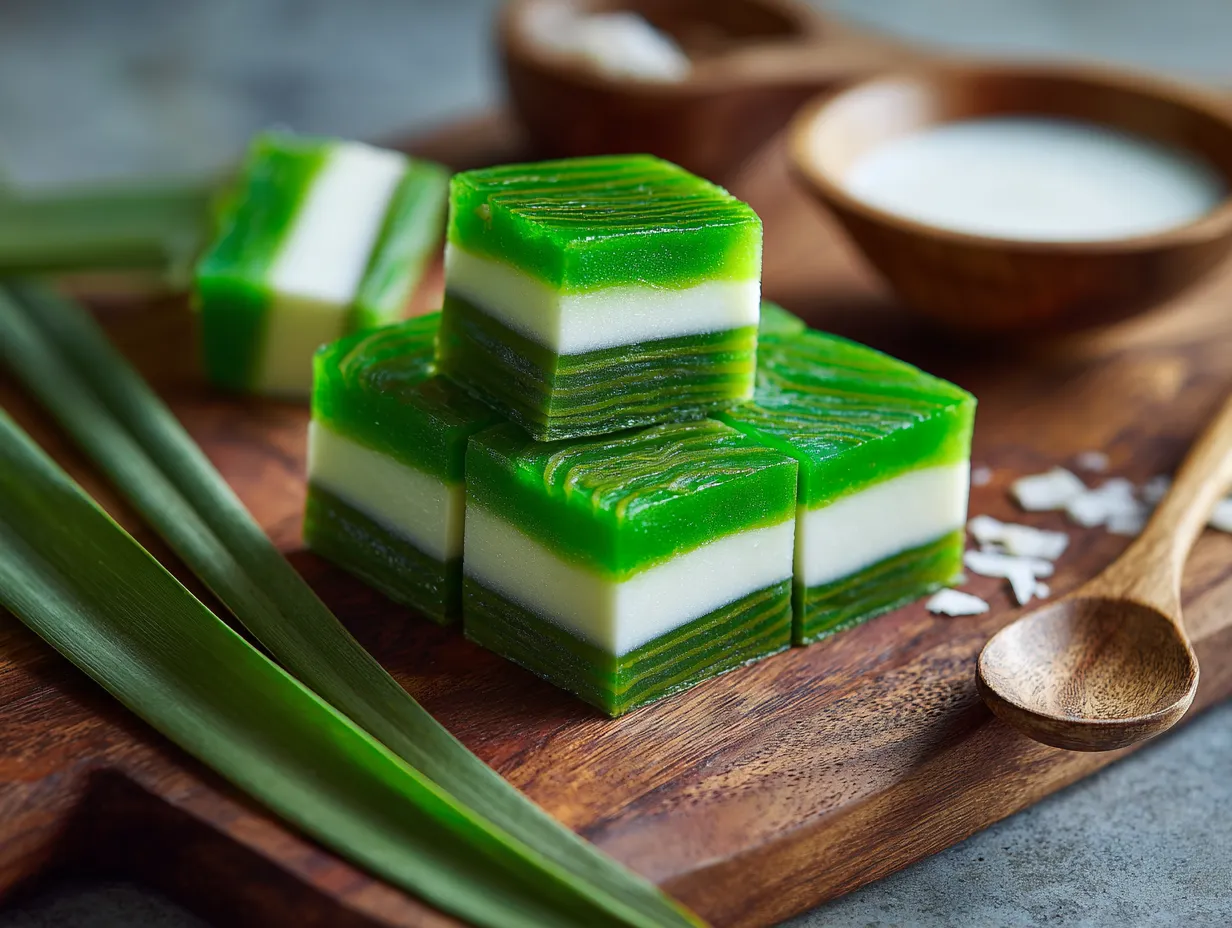
Pandan Kueh Lapis
Singapore-style pandan kueh lapis — a steamed, layered pandan and coconut kueh with soft, springy texture, perfect for kopitiam teatime or festive spreads.
About this dish
Pandan Kueh Lapis is a beloved Southeast Asian kuih that you’ll find at neighbourhood kueh stalls, pasar malams and Peranakan bakeries across Singapore — from Joo Chiat to Tiong Bahru. This Singapore-style version celebrates the fragrant pandan leaf and rich coconut milk, steamed layer by layer to create the attractive green-and-white stripes that are as pleasing to the eye as they are to the palate. It’s the sort of comforting snack you’d pick up at a kopitiam for afternoon kopi, or bring along for family gatherings and festive tables during Chinese New Year or Hari Raya.
The flavour is gently sweet with a pronounced pandan aroma and a creamy coconut finish; the texture sits between jelly and cake — springy, slightly chewy and tender. The method is simple but requires patience: a thin batter is poured into a greased tin and steamed one thin layer at a time until each layer sets. Local home cooks and zi char enthusiasts value that subtle texture and the glossy finish; many Singapore households use pandan paste or fresh pandan juice depending on availability.
This recipe is aimed at the home cook working with ordinary Singapore kitchens — a wok or large steamer, a square tin, and ingredients you can find at NTUC FairPrice, Cold Storage or your local wet market. I’ll also share practical tips familiar to Singapore cooks: how to extract pandan juice from leaves, how to keep a steady steam (high, consistent heat), and quick make-ahead and storage ideas so the kueh keeps well for picnic baskets, potlucks or lunchboxes.
Ingredients
- 250 ml pandan juice (blend 8–12 fresh pandan leaves with 300 ml water, strain) or 200 ml water + 2 tsp pandan paste
- 400 ml full-fat coconut milk (well shaken)
- 200 g rice flour (regular rice flour)
- 120 g tapioca starch
- 30 g plain (all-purpose) flour
- 180 g caster sugar (adjust to taste)
- 1/4 tsp fine salt
- 1 tbsp vegetable oil (plus extra for greasing the tin and brushing between layers)
- 1 tsp pandan paste or 1 drop pandan extract (optional, for stronger colour/aroma)
- a few drops of green gel food colouring (optional, non-essential if using pandan paste/juice)
- pandan leaves tied in a knot (optional, to steam with the tin for extra aroma)
- toasted desiccated coconut or a thin gula Melaka syrup (optional, for serving)
Step-by-Step Method
- Prepare pandan juice: wash pandan leaves, chop and blend with 300 ml water until smooth, then strain through a fine sieve or cheesecloth to get about 250 ml pandan juice. Alternatively use pandan paste diluted in water.
- Mix liquids: combine pandan juice and coconut milk in a bowl, stir in the vegetable oil and pandan paste (if using). Keep this mixture well mixed — coconut milk can separate, so whisk gently.
- Dry ingredients: sieve rice flour, tapioca starch and plain flour into a large bowl. Add caster sugar and salt, whisk to combine so there are no lumps.
- Form batter: slowly pour the pandan-coconut mixture into the dry ingredients, whisking continuously to a smooth, lump-free batter. The batter should be pourable but slightly thick — like cream. If using food colouring, add now a couple of drops and mix.
- Prepare steamer and tin: line or grease a 20 cm square tin lightly with oil. Bring a large wok or steamer with a fitted lid to a rolling steam over high heat. Place a cloth over the lid to stop condensation dripping.
- First layer: pour a thin layer of batter (about 4–5 mm) into the tin. Cover and steam on high for 6–8 minutes until the surface looks set and not wet to the touch. Brush a very light film of oil over the set surface to prevent sticking between layers.
- Alternate layers: continue pouring alternating green (pandan) batter and plain (use same batter with less pandan or leave out pandan paste) layers, steaming each layer 6–8 minutes until set before adding the next. For neat stripes, use a ladle or piping bottle for consistent layer thickness.
- Finish and final steam: after the last layer is poured, steam the whole tin for an additional 12–15 minutes to ensure the centre is fully set. Insert a clean skewer to check — it should come out clean or with only a few moist crumbs.
- Cool and press: remove tin from steamer and allow to cool completely to room temperature (1–2 hours). For cleaner slices, place a weight on top (wrapped) to compress slightly, then refrigerate for 30 minutes before slicing.
- Slice and serve: run a thin, oiled knife around the tin and invert onto a board. Slice into squares or strips using a hot, wet knife for neat edges. Serve at room temperature with optional toasted desiccated coconut or a drizzle of gula Melaka syrup.
Tips & Serving Ideas
- Fresh pandan vs paste: use fresh pandan leaves for the best aroma (available at wet markets and Sheng Siong/NTUC); pandan paste or extract works if leaves are not available.
- Steamer heat: keep a strong, consistent steam on high heat — too low and layers won’t set quickly, causing them to sink or blur.
- Layering trick: use a small ladle or a piping bottle for even, thin layers; brush a thin film of oil between layers to help release and keep a glossy finish.
- Doneness test: each layer should be set and no longer glossy; use a clean skewer in the finished cake — it should come out clean or with a few moist crumbs.
- Make-ahead & storage: cool completely, then refrigerate in an airtight container — kueh keeps 3–4 days chilled. Re-steam slices for 3–5 minutes to revive softness before serving.
- Local ingredient swaps: if rice flour is hard to find, try a mix of glutinous rice flour and tapioca in small tests, but keep proportions similar; many NTUC and Cold Storage stocks necessary flours and pandan paste.
- Slicing tips: use a hot, wet knife (dip in hot water and wipe between cuts) or oil the blade for clean slices that show distinct layers.
You might also like
More recipes to save for later.