Oyster Omelette (Orh Luak)
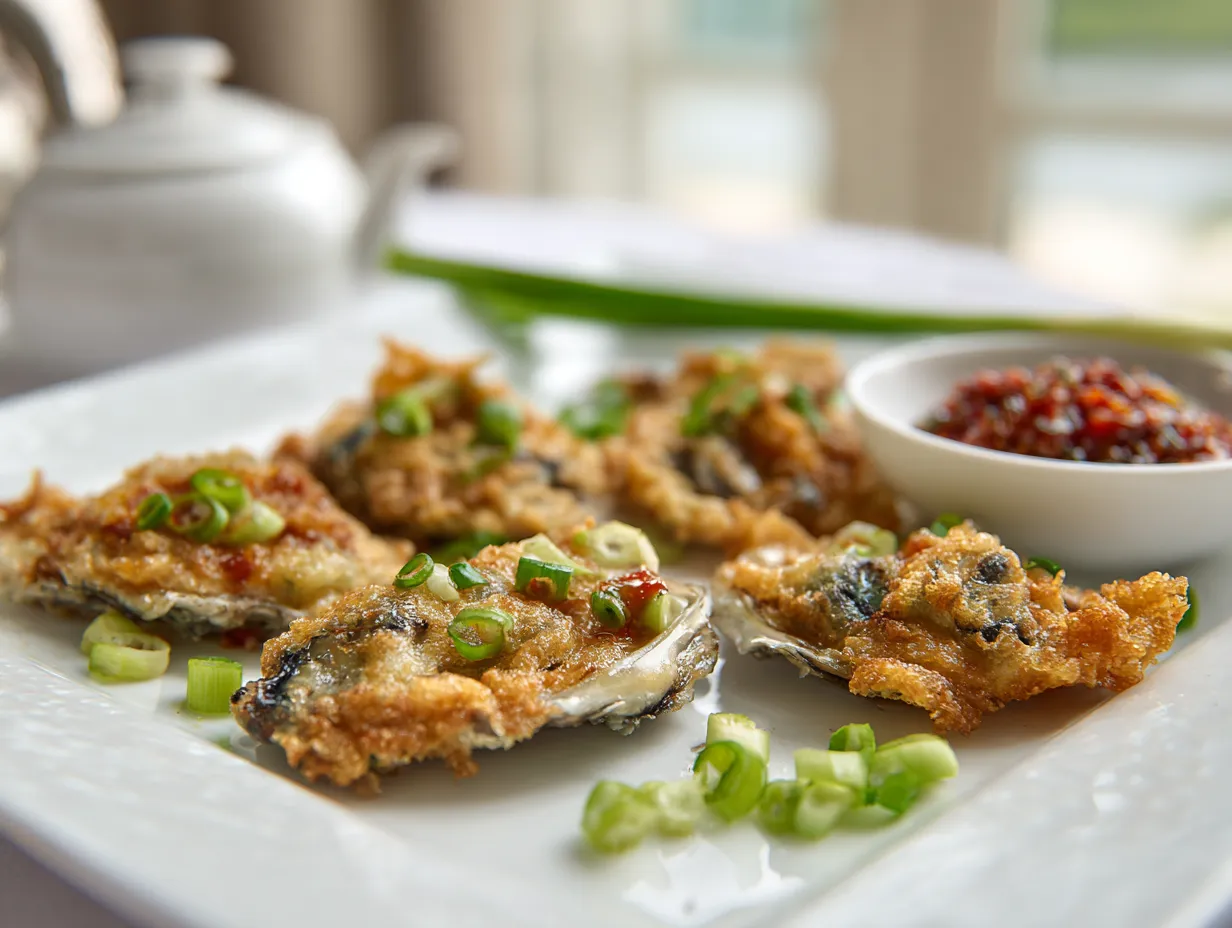
Singapore-style oyster omelette (Orh Luak) — wok-fried eggs and plump oysters with a lacy, crispy tapioca-starch edge, served hawker-centre style.

About this dish
Orh Luak, or oyster omelette, is a beloved hawker-centre special across Singapore — the sort of plate you order late at a kopitiam or from a zi char stall when you want something briny, savoury and comforting. This version captures the classic contrast: silky eggs, tender oysters and a slightly chewy, lacy crust formed by tapioca starch fried at high heat. It’s the kind of dish that suits supper runs, leisurely weekend makan with family, or a shared plate at an East Coast zi char table.
At a Tiong Bahru or Geylang hawker stall you’ll often see it cooked over blistering heat to get those caramelised edges — the local “wok hei” — then finished with chopped spring onion, coriander and a squeeze of lime. In homes, busy parents can put this together quickly for weeknight dinner or transform it into a potluck crowd-pleaser by doubling the recipe. The flavour is seaside-simple: salty, slightly sweet, with bursts of ocean from the oysters and a chilli kick if you pair it with sambal or sliced chilli padi.
Local variations include adding a dash of fish sauce, a spoonful of sambal belacan, or substituting tapioca starch with a mix of rice flour for a different mouthfeel. Serve it with plain steamed rice, achar or a cold barley drink for a true Singapore hawker-centre experience — best eaten piping hot so the edges stay crisp and the oysters remain juicy.
Ingredients
- 200 g fresh oysters, shucked and drained (reserve any liquor)
- 2 large eggs, lightly beaten
- 80 g tapioca starch (kappa) — for the characteristic chewy-crisp texture
- 20 g rice flour (optional, for slightly less chewy batter)
- 150 ml reserved oyster liquor + water to make up to 200 ml liquid (adjust for batter consistency)
- 1 tsp light soy sauce
- 1 tsp fish sauce (nam pla or ikan bilis sauce) — optional but traditional
- 1/2 tsp sugar
- 1/4 tsp white pepper
- 2 cloves garlic, finely minced
- 2 tbsp neutral oil (vegetable or peanut) plus extra for frying
- 2 tbsp chopped spring onion (white and green parts separated)
- 1 small red chilli or 2 bird's eye chillies, thinly sliced, plus extra to serve
- Handful of coriander (cilantro) leaves for garnish
- Lime or calamansi wedges, to serve
- Sambal belacan or sweet chilli sauce, for serving (optional)
- Cracked black pepper, to taste
- Optional: 1 tbsp toasted sesame oil or a little lard for extra aroma
Step-by-Step Method
- Prepare ingredients: drain oysters and reserve any liquor. Separate white and green parts of spring onions. Mince garlic and slice chillies. Beat eggs lightly with a pinch of salt.
- Make the starch batter: whisk tapioca starch, rice flour (if using) and 150 ml reserved oyster liquor (top up with water to about 200 ml total) until smooth. The batter should be runny — similar to heavy cream; adjust with water if too thick.
- Season the batter: stir in light soy sauce, fish sauce, sugar and white pepper. Taste a small spoonful and adjust seasoning — like at a zi char stall, you want balanced savoury and slightly sweet notes.
- Heat the wok: place a well-seasoned wok over high heat until smoking hot. Add 2 tbsp oil and swirl to coat. Add minced garlic and fry very briefly until fragrant (10–15 seconds) without burning.
- Create the base layer: pour the starch batter into the hot wok, tilting and swirling to spread a thin layer. Let it fry undisturbed over high heat for 1–2 minutes until the edges set and start to crisp and turn golden.
- Add oysters: scatter oysters evenly over the batter, spooning a little batter over any exposed oyster. Reduce heat to medium-high; let cook for another 30–45 seconds so oysters heat through but remain plump.
- Add egg: quickly pour beaten eggs over the top and tilt the wok to spread. As the egg sets, use a spatula to encourage lacy edges and create contact with the wok for crispiness. Cook 1–2 minutes until egg is mostly set.
- Finish and flip or fold: when underside is golden and edges are crisp, either flip the omelette in sections or fold it over to finish cooking (another 30–60 seconds). Press gently to get that charred wok-hei flavour.
- Plate and garnish: transfer immediately to a plate, sprinkle with spring onion greens, coriander and sliced chilli. Serve with lime wedges and sambal belacan or sweet chilli on the side.
- Serve hot: oyster omelette is best eaten straight from the wok so the centre stays slightly gooey and edges remain crisp — pair with steamed rice or enjoy as a hawker-style snack.
Tips & Serving Ideas
- Use the freshest oysters you can find — wet market stalls (e.g. Tekka, Geylang) or supermarket seafood counters (NTUC, Cold Storage, Sheng Siong) sell shucked oysters and fresh shell oysters that work well.
- Get the wok smoking hot before frying to achieve crisp, lacy edges; preheat for several minutes and use high heat throughout the first stages for that irresistible wok hei.
- Adjust the starch-to-liquid ratio for texture: more tapioca/starch gives a chewier, more jelly-like center; thinner batter yields a thinner, crispier omelette.
- If you prefer less brine, rinse oysters briefly and pat dry, but keep a little oyster liquor for flavour in the batter.
- Control spice for the table: serve sliced chilli padi and sambal belacan on the side so diners can dial up the heat like at hawker stalls.
- Make-ahead tip: you can mix the starch batter up to 2 hours ahead and store covered in the fridge; cook only when ready — the omelette needs to be hot and fresh to keep its texture.
- Leftovers: reheat gently in a non-stick pan over medium heat with a splash of oil to restore crispiness; microwaving will make it soggy.
You might also like
More recipes to save for later.