Crispy Oyster Omelette
Singapore-style Crispy Oyster Omelette — wok-shallow-fried oysters and eggs turned into a lacy, golden-edged hawker favourite with a soft, savoury centre.
About this dish
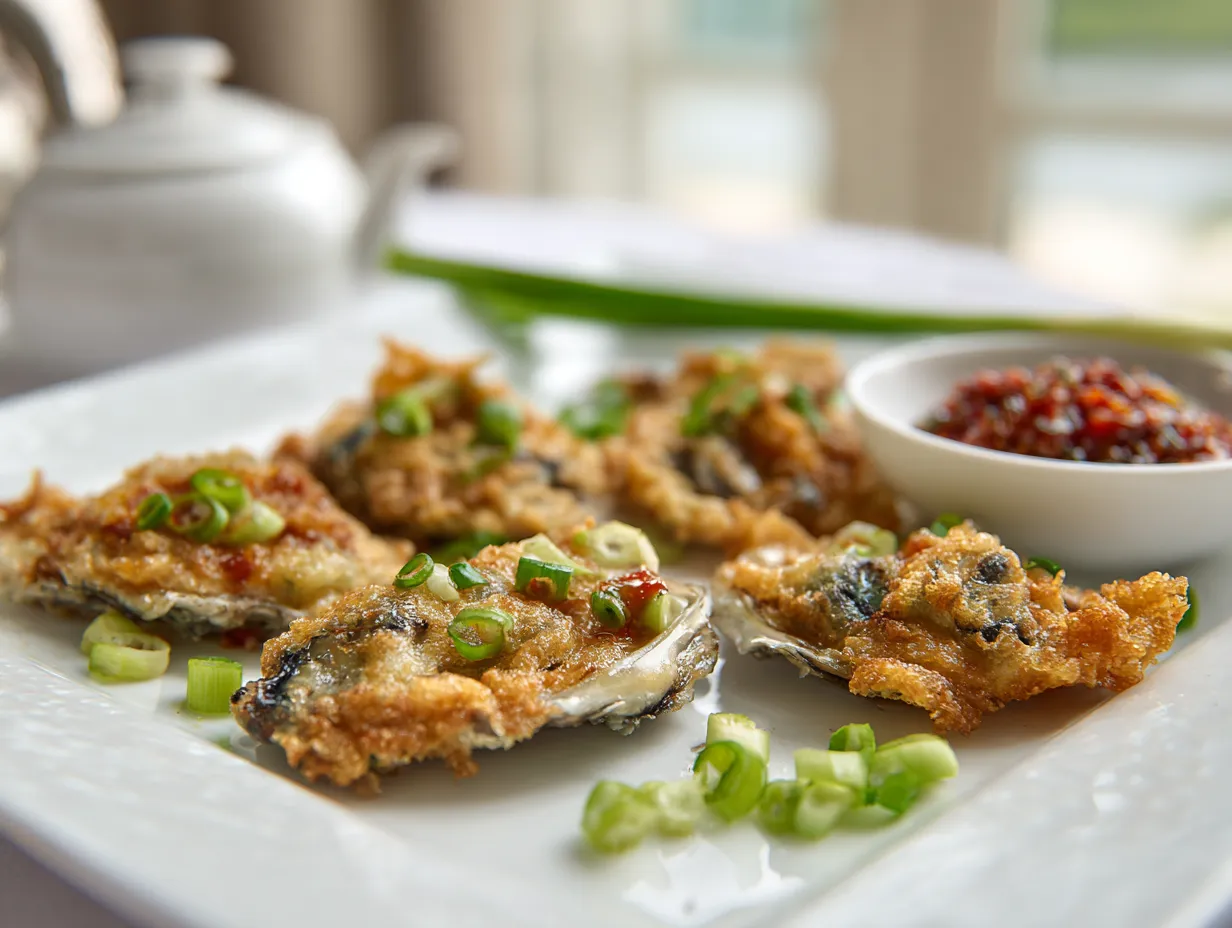
Crispy Oyster Omelette (often called orh luak in Hokkien) is a beloved hawker-centre classic across Singapore, from lively Chinatown stalls to heartland kopitiams and late-night East Coast supper trips. The dish balances briny fresh oysters with a golden, crunchy egg skirt and a slightly gooey interior — the contrast of textures is what keeps people ordering this as a shared plate for zi char dinners or a late-night snack after drinks.
At home in a typical Singapore kitchen, the omelette is made with a simple batter of rice or tapioca starch and water, mixed with eggs and a splash of stock, then shallow-fried at high heat to get those lacy, crisp edges while the centre remains silky and soft. Serve it hawker-style with sambal chilli, a squeeze of lime and chopped spring onions; the acidity lifts the seafood, and sambal adds that familiar local heat. This recipe includes local tips — where to source oysters at NTUC, Sheng Siong or the wet market, and how to manage heat for maximum crispiness — so busy parents, potluck hosts and supper hunters can recreate the taste of a zi char stall at home.
Flavour-wise, expect bright ocean brininess from the oysters, rounded umami from a dash of fish sauce or light soy, and a hint of white pepper and sugar to balance. The best results come from a hot wok and plenty of oil so the batter fries into fragile, crunchy laces around the eggs and oysters — a texture beloved by hawker regulars and a great sharing plate for family-style meals or weekend gatherings.
Ingredients
- 300 g fresh oysters, drained (leave some of the oyster liquor)
- 3 large eggs, beaten
- 60 g tapioca starch (or potato starch) plus 20 g rice flour
- 200 ml cold water or light chicken stock
- 1 tsp light soy sauce
- 1 tsp fish sauce (optional, for extra umami)
- 1/2 tsp sugar
- 1/4 tsp ground white pepper
- 2 cloves garlic, finely minced
- 2 tbsp vegetable oil (for batter and cooking)
- 4–6 tbsp neutral oil (for shallow frying to get crispy edges)
- 2 shallots, thinly sliced (optional)
- 1 small bunch spring onions, chopped
- Small handful coriander leaves, roughly chopped (optional garnish)
- Lime wedges, to serve
- Sambal chilli or sliced chilli padi in light soy, to serve
- Optional: 80 g bean sprouts (tossed into the omelette for extra texture)
- Optional: 1 tsp sesame oil (for finishing, not for frying)
Step-by-Step Method
- 1. Prepare the batter: in a bowl whisk together tapioca starch, rice flour and cold water (or stock) until smooth; let rest for 5 minutes to hydrate — it should be slightly runny but viscous.
- 2. Season the beaten eggs with light soy sauce, fish sauce (if using), sugar and white pepper; set aside. Drain oysters, reserving any milky liquor to add to the batter if desired.
- 3. Heat a wok over high heat until very hot; add 2 tablespoons of vegetable oil, then quickly fry minced garlic and sliced shallots for 20–30 seconds until aromatic but not browned.
- 4. Pour the batter into the wok and swirl to create a thin layer; allow it to set for 30–45 seconds on high heat so the bottom crisps. If using bean sprouts, scatter them now.
- 5. Spoon the oysters evenly over the semi-set batter and immediately pour the beaten eggs over everything. Let cook undisturbed for 20–40 seconds — you want the edges to brown and become lacy while the centre remains slightly soft.
- 6. Pour in 4–6 tablespoons of hot oil around the edges (careful of splatter) to encourage crisp, lacy edges. Use a flat spatula to lift and turn portions; push the omelette so the bottom crisps more evenly — keep the wok on medium-high to high heat.
- 7. Once the omelette has a golden, crispy skirt and the eggs are mostly set but still tender inside (about 1–2 minutes more), slide onto a serving plate. Taste and adjust seasoning with a light splash of soy or a pinch more sugar if you want the hawker-style balance.
- 8. Garnish with chopped spring onions, coriander and a squeeze of lime. Serve immediately with sambal chilli or sliced chilli padi in light soy — crispiness is best right away, like at your favourite zi char stall.
- 9. Leftovers: reheat briefly in a hot non-stick pan with a teaspoon of oil to revive edges, but note the texture changes after sitting — best eaten fresh for that contrast of crisp and gooey.
Tips & Serving Ideas
- Buy fresh oysters from your wet market or supermarket (NTUC, Sheng Siong, Cold Storage) and use some of the oyster liquor in the batter for extra briny flavour.
- Tapioca or potato starch gives the omelette its characteristic chewy-silky interior and crisp lacy edges — avoid using only wheat flour.
- Get the wok very hot and use plenty of oil for shallow frying to create those crisp, golden ‘lacy’ edges; pour hot oil around the edge of the omelette for extra crunch.
- Adjust heat tolerance by serving sambal on the side — Singapore hawkers often let customers add sambal or extra soy to taste.
- If you don’t have a wok, use a wide non-stick frying pan and cook in two batches rather than crowd the pan to keep the edges crispy.
- Make-ahead: you can mix the batter and keep in fridge for a few hours, but cook the omelette just before serving — texture degrades after resting.
- For a Peranakan twist, add a small spoon of belachan-sambal to the plate, but start with a little — it’s potent.
- To reheat leftovers, briefly pan-fry on medium-high to refresh the crisp edges; avoid microwave which makes it soggy.
You might also like
More recipes to save for later.