Olive Fried Rice (Thai-Singapore Style)
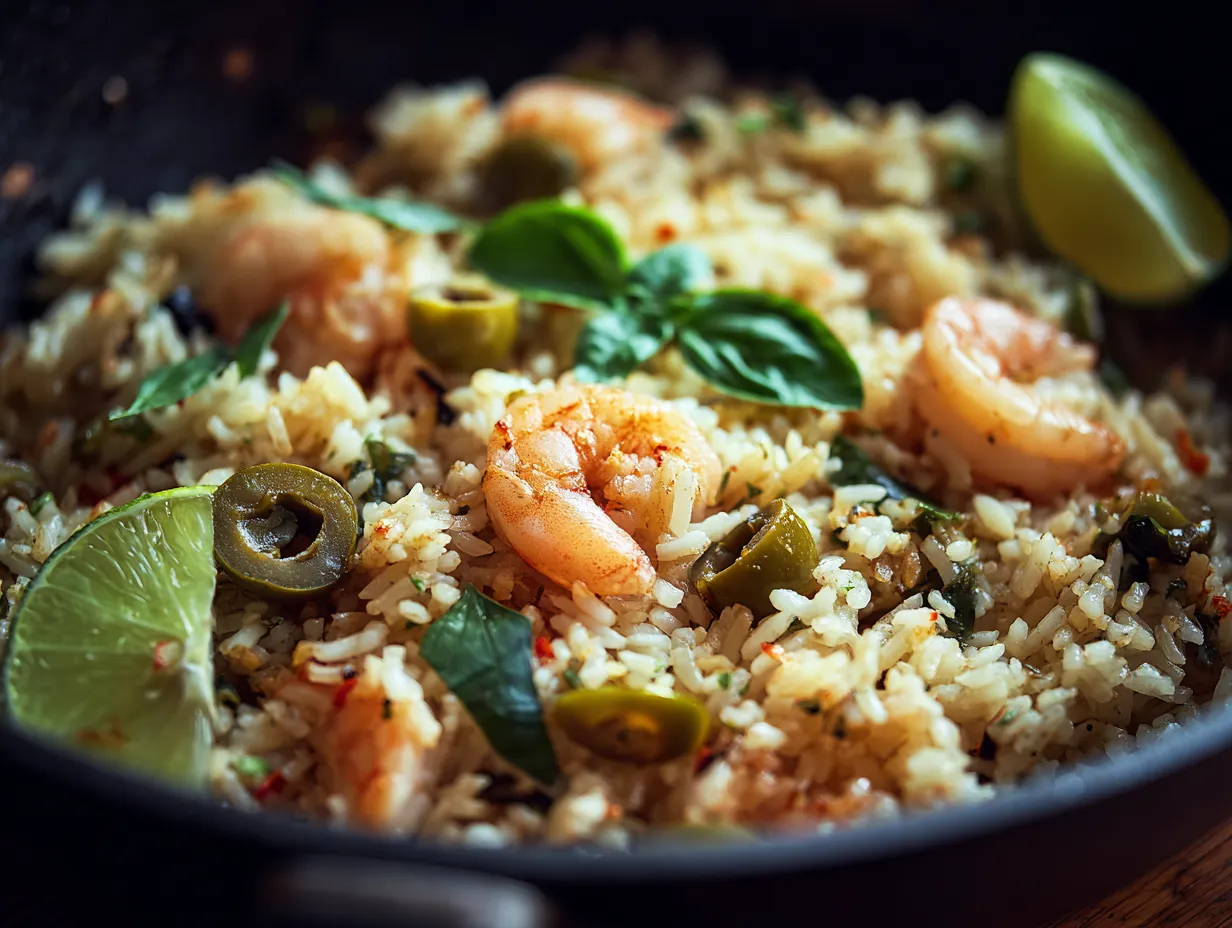
A wok-fried, Thai-Singapore style Olive Fried Rice — a briny, aromatic rice stir-fry with chopped olives, Thai basil and a zesty lime finish, perfect for hawker-style weeknight makan.
About this dish
This Olive Fried Rice (Thai-Singapore Style) is a playful fusion dish that brings together Thai aromatics and Singaporean hawker sensibilities. Imagine a zi char stall sprucing up a classic fried rice with chopped olives for a salty-bright lift, Thai basil for anise notes, fish sauce for umami and a squeeze of lime to finish — a plate that’s simple enough for a quick weekday dinner yet interesting enough for potluck or makan with friends. It’s the kind of dish you might find reworked in a cosy Tiong Bahru cafe or served as part of a family-style spread in an East Coast flat.
The flavour profile balances briny, savoury and bright: the chopped olives add a salty, slightly oily pop, garlic and shallots give the savoury backbone, while fish sauce and a touch of oyster or light soy round out the savouriness. Thai basil (or holy basil where available) introduces a fresh, peppery lift; chilli padi or sambal can be added for heat in true Singapore spice-loving fashion. Texture-wise, day-old jasmine rice gets wok-seared until grains separate with a few caramelised bits — think wok hei from a hot wok at a kopitiam — combined with tender prawns or chicken and crisp spring onions.
This recipe suits busy parents looking for a fuss-free weeknight dinner, students craving late-night supper, or hosts wanting a different fried rice for buffet-style makan. Serve it with a fried egg on top, achar (pickled vegetables) or a side of sambal kangkong for local flair. Leftovers reheat beautifully in a hot wok the next day, making it a practical and tasty staple for Singapore homes stocked with everyday ingredients from NTUC, Sheng Siong or Cold Storage.
Ingredients
- 400 g cooked jasmine rice (preferably day-old, loosely broken up)
- 150 g raw prawns, peeled and deveined (or 150 g boneless chicken thigh, diced)
- 80 g pitted green olives, roughly chopped (use supermarket jarred olives)
- 2 large eggs, beaten
- 3 tbsp neutral oil (vegetable or light olive oil), plus extra for frying
- 4 cloves garlic, finely chopped
- 2 shallots, thinly sliced
- 1–2 bird's eye chillies, finely chopped (optional; adjust to taste)
- 1 tbsp fish sauce
- 1 tbsp light soy sauce
- 1 tbsp oyster sauce
- 1 tsp palm sugar or caster sugar
- 1/4 tsp white pepper
- 1 handful (20 g) Thai basil leaves (substitute: sweet basil or coriander if unavailable)
- 2 spring onions, sliced on the bias
- 1 tsp toasted sesame oil
- Juice of 1/2 lime (to finish)
- Fried shallots or crispy shallots for garnish (optional)
- Cucumber slices and lime wedges to serve
- Sambal or sambal belacan to serve (optional, for Singapore-style heat)
Step-by-Step Method
- Prep: Break up any rice clumps with your fingers or a fork so the grains are loose; keep chilled if possible. Chop olives, mince garlic and shallots, slice spring onions and pluck basil leaves.
- Heat wok: Place a large wok over high heat until smoking hot. Add 2 tablespoons oil and swirl to coat — high heat is important to get wok hei (that smoky char) similar to a zi char stall.
- Cook protein: Add prawns or diced chicken to the hot wok, season with a pinch of salt, and stir-fry for 1–2 minutes until just cooked. Remove and set aside.
- Aromatics and eggs: Add remaining oil to the wok, reduce heat to medium-high. Add garlic, shallots and chillies and stir until fragrant (20–30 seconds). Push aromatics to the side, pour in beaten eggs and scramble quickly until just set.
- Combine rice: Return protein to the wok and add the day-old rice. Keep the heat on high and toss continuously to separate grains; use a spatula to press and toss so a few grains caramelise.
- Season and add olives: Stir in fish sauce, light soy sauce, oyster sauce and palm sugar, tossing to coat evenly. Add chopped olives and white pepper, continue stir-frying for 1–2 minutes so flavours marry. Taste and adjust with extra light soy or a pinch of sugar like a zi char stall would.
- Finish with herbs: Turn off the heat, drizzle toasted sesame oil and lime juice, then fold in Thai basil leaves and spring onions so residual heat wilts the basil but keeps the brightness.
- Serve: Transfer to a serving plate, garnish with fried shallots, cucumber slices and extra lime wedges. Serve immediately with sambal or a sunny-side-up egg for a classic Singapore touch.
- Reheat tip: For leftovers, heat a splash of oil in a hot wok, add rice and a tablespoon of water or stock, and toss quickly to revive texture and warmth.
Tips & Serving Ideas
- Use day-old jasmine rice chilled in the fridge — drier grains give the best wok-seared texture and prevent clumping.
- If you don’t have Thai basil, substitute with sweet basil or coriander; fresh basil is important for the Thai aroma so add it off the heat to preserve flavour.
- For wok hei: keep the wok very hot, work in batches if necessary, and keep the rice moving; add a small splash of oil if rice sticks.
- Olives are salty and oily — taste before adding extra fish sauce or soy; reduce added salt accordingly.
- Supermarket notes: jarred pitted green olives, Thai basil and fish sauce are widely available at NTUC, Cold Storage and Sheng Siong across Singapore.
- Adjust spice by adding sambal belacan or extra chopped bird’s eye chilli for a true Singapore heat, or omit chilies for milder family-friendly versions.
- Make-ahead: cool rice quickly and store covered in the fridge; reheat in a hot wok with a splash of water to prevent drying out for next-day lunchboxes.
You might also like
More recipes to save for later.