Min Jiang Kueh (Peanut Pancake)
Singapore-style Min Jiang Kueh (peanut pancake) — chewy glutinous rice pancake pan-fried until crisp and filled with sweet toasted peanut-sugar, a beloved kopitiam teatime snack.
About this dish
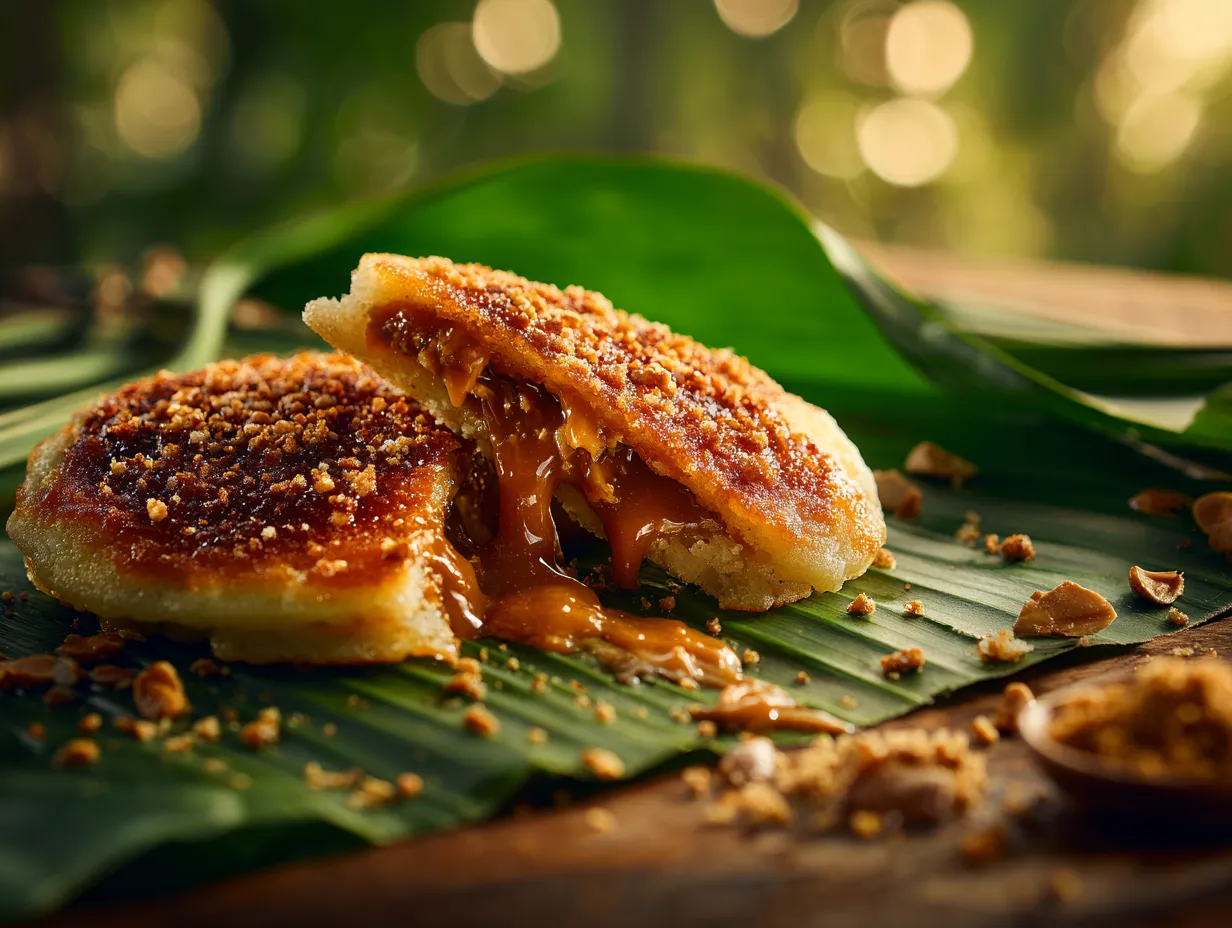
Min Jiang Kueh, often spotted at kopi stalls and heartland hawker centres across Singapore, is a nostalgic peanut pancake with a crisp exterior and a chewy, slightly springy interior. It’s the kind of snack you’d grab with a kopi at Tiong Bahru or enjoy as an after-school teatime treat in a neighbourhood kopitiam. The filling is simple—coarsely ground toasted peanuts mixed with sugar and toasted sesame—giving a lovely crunch and caramel sweetness against the glutinous pancake wrapper.
At home, this recipe is designed for a typical Singapore kitchen: a small non-stick pan or griddle, simple pantry ingredients from NTUC or Sheng Siong, and a few handy shortcuts (food-processor blitzing, option to use palm sugar or gula melaka). You can make it for casual family sharing, bring it to a potluck as a snack, or serve a warm batch for supper after a late-night film. Many stalls add a hint of pandan to the batter or a little lard/coconut oil to the filling for extra aroma—both local twists you can try.
Texture-wise, expect contrast: the outside should be golden and slightly crisp, the dough chewy like mochi, and the filling crunchy and sweet. Adjust sugar and roast level to your taste; for a more local flavour, swap brown sugar for gula melaka. This recipe suits busy home cooks who want authentic hawker-style results without complicated equipment.
Ingredients
- 200 g glutinous rice flour (sweet rice flour)
- 60 g tapioca starch (for chew and slight crisp)
- 250 ml water
- 30 ml pandan extract or 2 pandan leaves blended (optional, for fragrance)
- 1/4 tsp salt
- 2 tbsp vegetable oil (for batter)
- 200 g roasted unsalted peanuts
- 50 g brown sugar or gula melaka (palm sugar), grated
- 2 tbsp toasted sesame seeds
- 1 tbsp coconut oil or 15 g lard (optional, for richer filling)
- 2 tbsp plain caster sugar (to taste, for the peanut mix)
- vegetable oil for shallow frying (about 4 tbsp)
- extra tapioca or glutinous flour for dusting (optional)
- lime or kaya on the side (optional serving suggestion)
Step-by-Step Method
- Prepare the filling: toast the peanuts in a dry pan over medium heat for 6–8 minutes, stirring until fragrant and lightly browned. Cool slightly.
- Pulse the toasted peanuts in a food processor to a coarse crumb (not a paste) — you want some crunch. Transfer to a bowl and mix in brown sugar or grated gula melaka, toasted sesame seeds, coconut oil or lard (if using), and caster sugar; taste and adjust sweetness. Set aside.
- Make the batter: in a mixing bowl, combine glutinous rice flour, tapioca starch, salt and sugar (if using). Slowly whisk in water and pandan extract (if using) until a smooth, slightly runny batter forms. Stir in 2 tbsp vegetable oil.
- Rest the batter for 10 minutes. The batter should coat the back of a spoon but still be pourable; add a tablespoon more water if too thick.
- Heat a non-stick frying pan or flat griddle over medium heat. Brush a little oil to coat. Reduce to medium-low when warming the pan to avoid burning and for more even cooking.
- Pour about 2–3 tbsp batter into the pan and spread into a circle about 10–12 cm diameter. Spoon 1–2 tbsp of the peanut filling onto the centre, then pour a thin layer of batter over the filling to seal it (or fold if you prefer a semi-open pancake).
- Cook on medium-low for 2–3 minutes until bubbles form and the edges set. Flip carefully and cook the other side for another 2–3 minutes until golden brown and slightly crisp. Adjust heat if you see dark spots; the goal is a golden, slightly blistered surface with chew inside.
- Repeat with remaining batter and filling, adding a little oil to the pan between batches. Press gently with a spatula while cooking to ensure even contact and a crisp exterior.
- If desired, dust finished pancakes lightly with extra crushed peanuts or sesame. Serve warm with kopi, teh tarik, or iced barley—perfect for kopitiam-style teatime or supper.
- To store: keep cooled pancakes in an airtight container in the fridge for up to 2 days and reheat in a non-stick pan or oven until crisp. The filling can be made ahead and refrigerated for up to 5 days.
Tips & Serving Ideas
- If you can’t find gula melaka, use dark brown sugar for a similar caramel flavour; dissolve and scrape to mix well into the peanut filling.
- For a vegetarian/vegan version, replace lard with coconut oil in the filling — you still get great mouthfeel and aroma.
- Use a non-stick pan or well-seasoned griddle and keep heat at medium-low while frying; this lets the pancakes cook through and crisps the outside without burning (wok-hei isn’t needed here).
- Make the peanut filling a day ahead — flavours marry better and it makes assembly faster, perfect for busy home cooks or when making a large batch for a potluck.
- If you prefer a less chewy texture, increase tapioca starch by 10–15 g and reduce glutinous flour slightly; adjust until you get your preferred chew.
- Crush peanuts coarsely rather than into a fine powder — the contrasting crunch against the chewy pancake is what makes min jiang kueh special.
- Reheat leftovers in a preheated non-stick pan, shell-side down, on low heat to regain crispness; microwaving makes them gummy.
You might also like
More recipes to save for later.