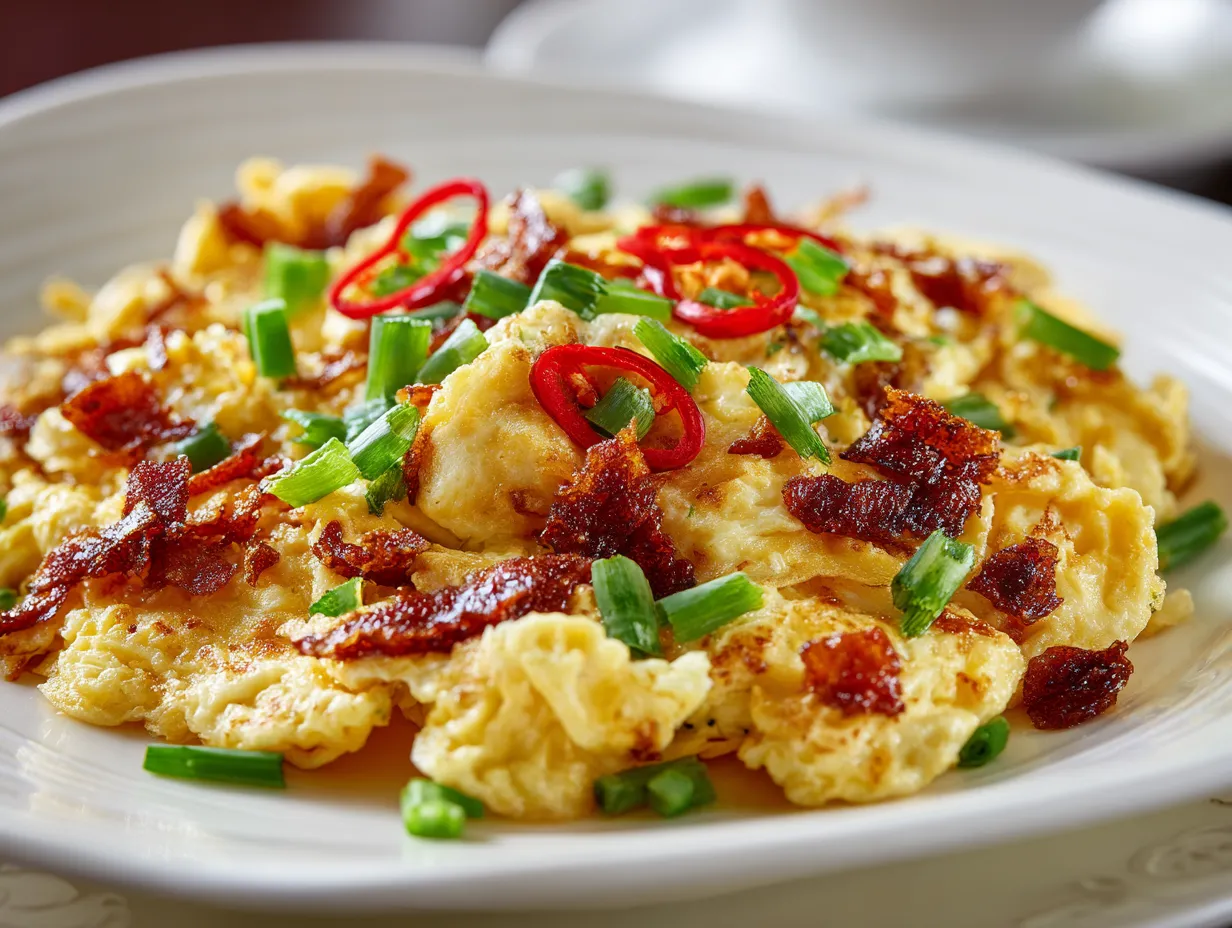
Mee Siam (Gravy Style)
Singapore-style Mee Siam (Gravy Style) — tangy tamarind-and-sambal rice vermicelli simmered with prawns, bean sprouts and a savoury-spicy gravy.
About this dish
Mee Siam is a classic Singapore hawker favourite that you’ll find from kopitiams to neighbourhood hawker centres across the island. This gravy-style version takes the bright, sour-sweet backbone of tamarind and palm sugar, adds umami from dried shrimp and light soy, and creates a glossy, spoonable sauce that coats soft rice vermicelli—perfect for a comforting plate at breakfast, lunch or supper.
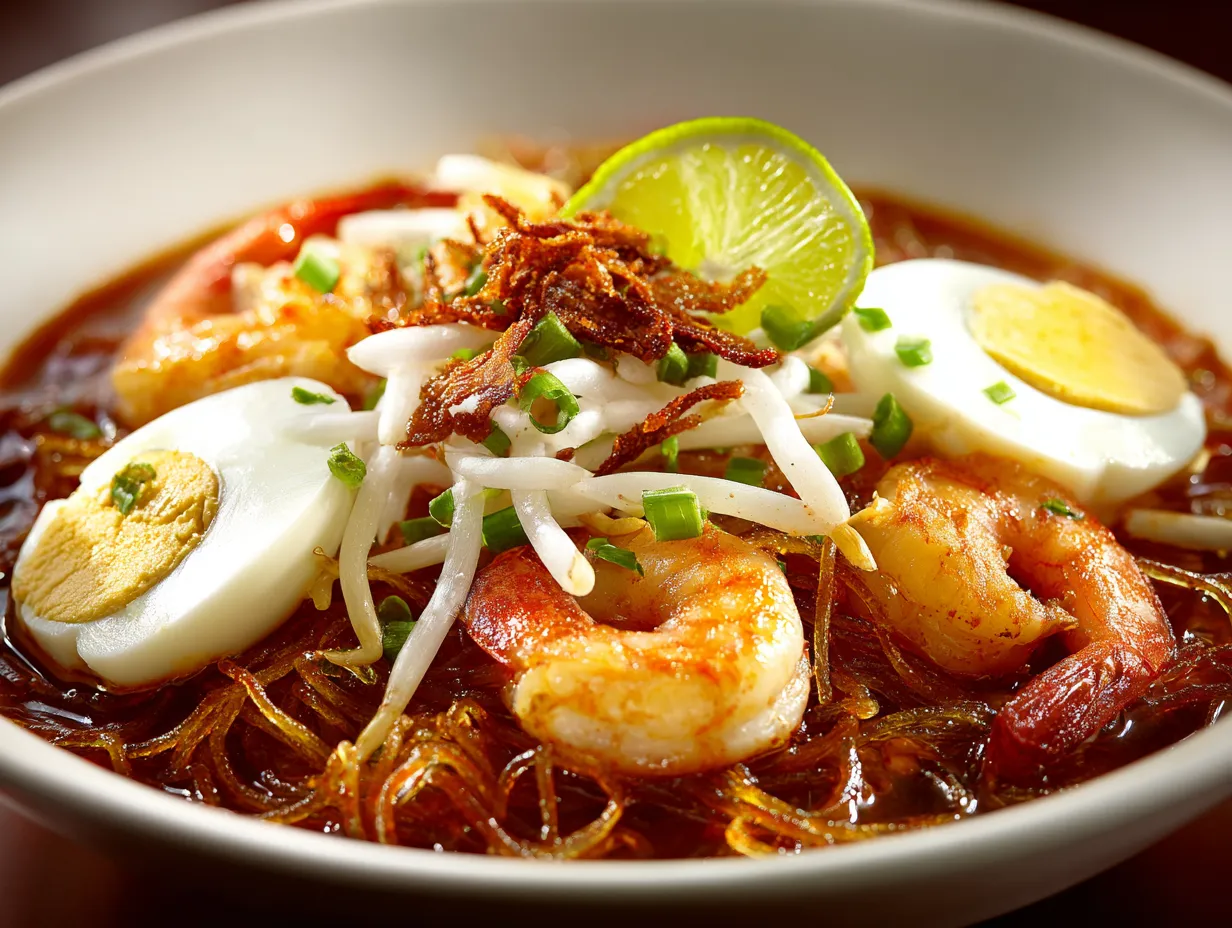
At home, this recipe is ideal for busy weeknights or relaxed weekend makan with family. Think Tiong Bahru mornings or an East Coast kopitiam vibe: steaming bowls arrive topped with hard-boiled egg halves, crunchy bean sprouts and a wedge of lime. It’s also a good dish for small potlucks — serve family-style from a large wok or casserole and let guests add sambal or extra lime to taste.
Flavour-wise, expect a lively balance: tart tamarind, fragrant shallots and garlic, background sweetness from palm sugar, and a chilli heat you can control with bird’s eye chillies or sambal. Texturally the dish is slippery vermicelli with crunchy sprouts and chewy prawns; a splash of coconut milk is optional if you prefer a richer, Malay-influenced gravy. This recipe uses everyday ingredients available at NTUC FairPrice, Cold Storage or wet market stalls and keeps the method straightforward for home cooks wanting authentic hawker-style results.
Ingredients
- 300 g rice vermicelli (bee hoon), thin
- 300 g prawns, shelled and deveined (or 200 g shredded chicken as substitute)
- 200 g bean sprouts, trimmed
- 2 tbsp dried prawns (hae bee), rinsed and soaked for 10 mins
- 4 shallots, peeled and thinly sliced
- 3 cloves garlic, minced
- 3-4 red chillies, sliced (reduce for less heat) plus 1-2 bird’s eye chillies optional
- 2 tbsp sambal oelek or homemade sambal (adjust for spice)
- 3 tbsp tamarind paste mixed with 200 ml warm water (tamarind water), strained
- 2 tbsp light soy sauce
- 1 tbsp fish sauce (or 1 tsp salt)
- 1½ tbsp palm sugar or brown sugar (to taste)
- 500 ml prawn or chicken stock (use water + stock cube if needed)
- 50 ml coconut milk (optional for a creamier gravy)
- 2 tbsp vegetable oil (or neutral oil for frying)
- 4 hard-boiled eggs, halved
- 3 tbsp fried shallots for garnish
- 2 spring onions, thinly sliced
- Fresh coriander leaves and lime wedges to serve
- Optional: 100 g firm tofu puffs or tau pok, halved
Step-by-Step Method
- Soak the rice vermicelli in warm water for 6–8 minutes until pliable but not fully soft; drain and set aside. If using dried prawns, rinse and roughly chop after soaking.
- Heat a wok over medium-high heat until hot; add oil. Fry sliced shallots, garlic and chopped dried prawns on medium heat until fragrant and golden (about 2–3 minutes) — watch so they don’t burn.
- Add sliced red chillies and sambal; stir-fry for 30 seconds on high to bloom the chilli aroma. Deglaze with 150 ml of the prawn/chicken stock, scraping up any browned bits.
- Pour in the tamarind water, the remaining stock, light soy sauce, fish sauce and palm sugar. Bring to a simmer and taste — adjust with more sugar for sweetness or extra tamarind for tang, like at a zi char stall.
- Add prawns (or shredded chicken) and simmer gently for 2–3 minutes until prawns are just cooked through. If using tofu puffs, add them now to soak up the gravy.
- If you prefer a richer gravy, stir in coconut milk and return to a gentle simmer (do not boil hard after adding coconut milk to avoid splitting). Simmer for 1–2 minutes to combine flavours.
- Add the soaked vermicelli and bean sprouts to the wok; toss gently over medium-high heat so the mee absorbs the gravy. Use tongs to lift and turn the noodles — aim for glossy, evenly coated strands (about 1–2 minutes).
- Check seasoning: add a splash more light soy or a pinch of salt if needed. For extra heat, stir in chopped bird’s eye chillies or serve sambal on the side.
- Serve immediately in bowls topped with halved hard-boiled eggs, sliced spring onions, coriander leaves and a generous sprinkle of fried shallots. Provide lime wedges and extra sambal at the table for the Singapore hawker-centre experience.
- Leftovers: store gravy and mee separately in the fridge and reheat on the stove, adding a little water or stock to loosen the sauce and revive the noodles.
Tips & Serving Ideas
- Tamarind strength varies: make tamarind water then taste before adding — you want a bright, tangy note, not overpowering sourness.
- If you can’t find dried prawns at Cold Storage or NTUC, use a teaspoon of prawn paste (belacan) or a little extra fish sauce for umami, but toast briefly to remove raw edge.
- To get wok hei-like flavour at home, use a hot wok and toss quickly on high heat for the final combine; keep moving the noodles and avoid overcooking the prawns.
- Adjust heat to taste: remove bird’s eye chillies for milder family-friendly versions or offer sambal on the side like hawker stalls in the heartlands.
- Make-ahead: keep the gravy separate from the noodles and bean sprouts overnight; combine and reheat gently on the day to prevent soggy mee.
- Substitutions: replace prawns with shredded chicken or firm tofu for a budget-friendly or vegetarian option; use mushroom stock to keep it meat-free.
- Shop tip for Singapore cooks: buy fresh tamarind paste or dried prawns at wet markets or Geylang/Arab Street spice shops for authentic flavour.
You might also like
More recipes to save for later.