Dry Mee Siam (Nyonya Style)
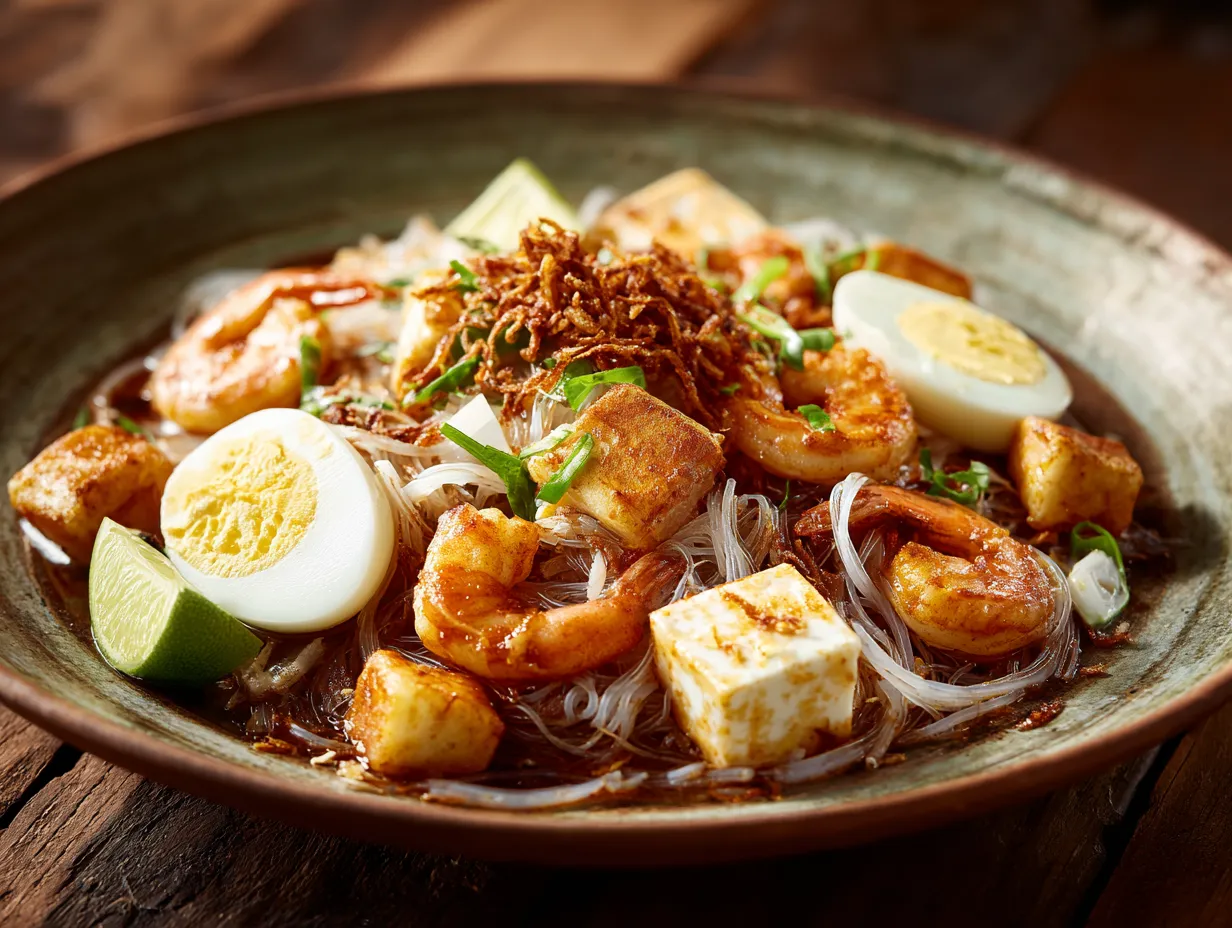
Singapore-style Dry Mee Siam (Nyonya Style): wok-tossed rice vermicelli with tangy tamarind, spicy sambal and prawns for a hawker-style, dry stir-fry version.
About this dish
Dry Mee Siam is a beloved Peranakan-influenced noodle dish you’ll find across Singapore — from heartland kopitiams to late-night hawker centres in Bedok and Tiong Bahru. This Nyonya-style dry version concentrates the sweet-sour-spicy flavours into a glossy, lightly sauced toss rather than a soupy bowl, so it’s perfect for a quick weeknight makan or a zi char-style plate to share at family dinners.
The flavour profile balances tamarind tang, palm sugar sweetness, and chilli heat (sambal or chilli padi) with seafood umami from prawns and dried shrimp. Textures are important: silky rice vermicelli, springy prawns, crunchy bean sprouts, and soft tau pok (tofu puffs). Garnishes like hard-boiled egg, fried shallots and lime wedges give that final hawker-centre finish. This recipe suits busy parents, supper runs, or potlucks where you want something fragrant and crowd-pleasing.
At home in Singapore kitchens we often use a large wok over high heat to get that slight wok hei — the signature kiss of a good stir-fry you’ll find at zi char stalls. If you prefer less heat, reduce chilli and add kecap manis or light soy to taste for a milder, more kid-friendly plate. Serve with achar or a simple cucumber salad for contrast and you’ve recreated a local classic that’s both nostalgic and practical for everyday cooking.
Ingredients
- 250 g rice vermicelli (bee hoon), soaked in warm water for 10 minutes then drained
- 200 g raw prawns, shelled and deveined (tails on if desired)
- 8 pieces tau pok (tofu puffs), halved
- 150 g bean sprouts, trimmed
- 2 large eggs, hard-boiled and halved (for garnish)
- 4 shallots, thinly sliced
- 3 cloves garlic, minced
- 2 tbsp dried shrimp (hae bee), soaked for 10 minutes, finely chopped
- 2 tbsp vegetable oil
- 2 tbsp sambal (adjust to taste) or 1–2 tsp chilli padi, finely chopped
- 2 tbsp tamarind paste mixed with 100 ml warm water (strained), or 2 tbsp tamarind juice
- 1 tbsp fish sauce (or light soy for less salt)
- 1½ tbsp palm sugar (or brown sugar)
- 1 tbsp kecap manis (sweet soy) — optional for a slightly caramelised colour
- 2 spring onions, sliced
- 1 tbsp fried shallots (for garnish)
- Lime wedges, to serve
- Fresh coriander (cilantro) leaves or Vietnamese coriander (laksa leaf) for garnish — optional
Step-by-Step Method
- Prepare ingredients: soak rice vermicelli until pliable, drain and toss with a teaspoon of oil to prevent sticking; soak and chop dried shrimp; halve tofu puffs; trim bean sprouts and slice spring onions.
- Make the sauce: in a small bowl mix tamarind water, fish sauce, palm sugar and kecap manis (if using). Stir until sugar dissolves and set aside. Taste — it should be a balanced sweet-sour-savory mix.
- Heat a large wok over high heat until hot (you want a bit of wok hei). Add vegetable oil and swirl to coat.
- Add sliced shallots and minced garlic, stir-fry on medium-high for 30–40 seconds until fragrant and translucent but not burnt.
- Toss in the chopped dried shrimp and sambal. Fry for another 30–45 seconds to release aroma — if using chilli padi, add with care and taste as you go.
- Add prawns and stir-fry on high for 1–2 minutes until they just turn pink, then push everything to the side of the wok.
- Add tofu puffs and drained rice vermicelli to the wok. Pour the tamarind-fish sauce mixture over the noodles. Using tongs or two spatulas, toss vigorously to coat the bee hoon evenly. Keep heat high to evaporate excess liquid for a 'dry' finish, about 2–3 minutes.
- Stir in bean sprouts and half the spring onions; toss for another 30–45 seconds so sprouts remain crisp-tender.
- Adjust seasoning: if too sour, add a pinch more palm sugar; if too salty, splash a little water and a squeeze of lime to balance. This is the moment to taste and tweak like a zi char cook.
- Finish with a drizzle of toasted sesame oil or extra kecap manis if you want a glaze. Turn off heat and transfer to serving plates.
- Garnish with hard-boiled egg halves, fried shallots, remaining spring onions and coriander. Serve immediately with lime wedges and achar on the side.
Tips & Serving Ideas
- Use a large, well-heated wok to get a bit of wok hei — high heat and quick tossing give the best texture and flavour.
- If you can’t find tamarind paste, substitute with 1 tbsp tamarind concentrate plus 2 tbsp water, adjusting sugar to taste; common at NTUC FairPrice or Sheng Siong.
- For a vegetarian version, replace prawns with sliced shiitake mushrooms and use soy sauce instead of fish sauce; add extra dried shiitake soaking liquid for umami.
- Prep all ingredients before you start cooking (mise en place). Stir-frying moves fast — have sauce, noodles and garnishes ready.
- Adjust sambal/chilli padi to household heat tolerance — Singapore families often serve chilli on the side so everyone can customise.
- Leftovers reheat well in a hot wok with a splash of water or a little oil; store in airtight container in the fridge for up to 2 days and reheat thoroughly.
- If you prefer a slightly saucier mee siam like hawker versions, reserve 50 ml of tamarind mixture to add at the end and reduce high-heat evaporation time.
You might also like
More recipes to save for later.