Traditional Lor Mee with Fried Fish
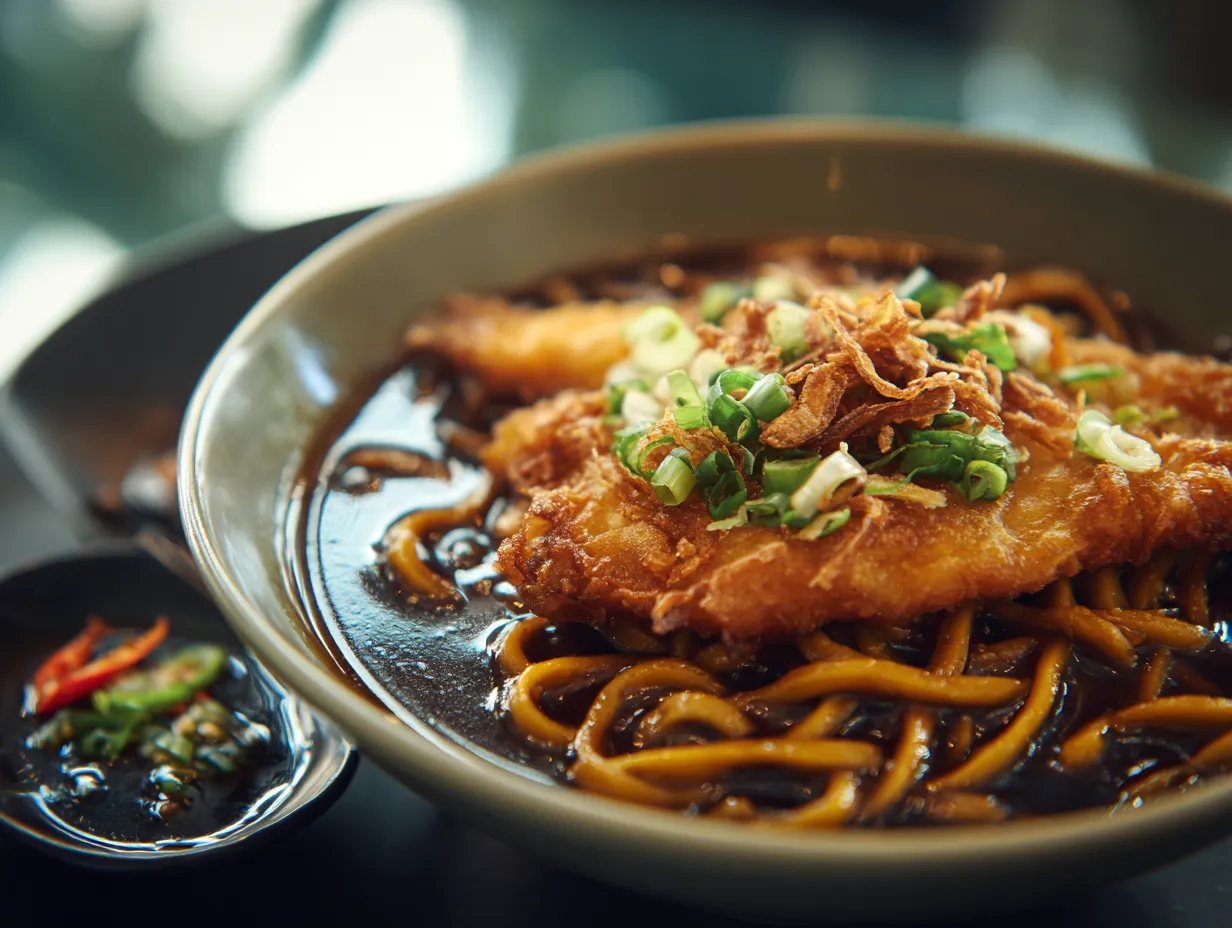
Singapore-style Lor Mee with a thick braised gravy, wok-tossed noodles and crispy fried fish — a hearty hawker-centre classic made at home.
About this dish
Lor Mee is a comforting, slightly sweet-and-sour braised noodle dish you’ll find at many heartland hawker centres and zi char stalls across Singapore. This version pairs the traditional starchy, flavourful lor (gravy) with golden fried fish fillets for a satisfying contrast of silky noodles, glossy gravy and crunchy topping — perfect for a family-style makan or a late-night supper run at the kopitiam.
At home, this recipe is approachable for busy parents and weekend cooks: use a wok and a simple pork-and-garlic base to build deep umami, then thicken with tapioca or corn starch to get that signature lacquered coating. The dish fits well into Singapore routines — a rainy-day comfort meal in a Tiong Bahru flat, a home-cooked alternative to the CBD lunch crowd, or a sharing plate for a casual dinner at the dining table.
Flavour-wise expect savoury soy, a hint of five-spice, mild vinegar tang and the slick mouthfeel from the starchy gravy; the fried fish brings texture and a seaside nostalgia reminiscent of East Coast dinners. Serve with chopped garlic chilli, black vinegar and a scatter of fried shallots for that authentic hawker aroma.
Ingredients
- 300 g yellow springy egg noodles (or thick yellow noodles) per package
- 300 g firm white fish fillets (dory or seabass), cut into 3–4 cm pieces
- 200 g pork belly or minced pork, thinly sliced
- 3 hard-boiled eggs, peeled (optional: braise in gravy for 10 minutes)
- 1.5 litres chicken stock (homemade or low-sodium store-bought)
- 4 cloves garlic, minced
- 3 shallots, thinly sliced
- 2 tbsp light soy sauce
- 1 tbsp dark soy sauce
- 1 tbsp oyster sauce
- 1 tbsp Chinese black vinegar (or white vinegar with a pinch of sugar)
- 1 tsp five-spice powder
- 1 tsp ground white pepper
- 1 tbsp sugar (palm sugar or caster sugar)
- 3 tbsp cornflour or tapioca starch mixed with 6 tbsp water (slurry)
- 150 g tapioca or rice flour for dredging fish
- Vegetable oil for deep frying (about 500 ml)
- 100 g bean sprouts, blanched (optional)
- 2 tbsp Chinese cooking wine (shaoxing) or mirin
- 1 tbsp sesame oil
- Chopped spring onions, coriander leaves and fried shallots for garnish
- Chopped GARLIC CHILLI (crushed garlic + chilli padi in light soy and vinegar) to serve
- Salt to taste
Step-by-Step Method
- 1. Prep fish: pat fish fillets dry, season lightly with salt and white pepper. Dredge in tapioca or rice flour and set on a plate. Heat oil in a wok or deep pan to 170–180°C for frying.
- 2. Fry fish: shallow- or deep-fry the coated fish pieces until golden and crisp (about 3–4 minutes each side depending on thickness). Drain on paper towels and keep warm in a low oven while you finish the gravy.
- 3. Make the flavour base: heat 2 tbsp oil in a clean wok over medium-high heat. Add sliced shallots and minced garlic; stir-fry until fragrant and translucent. Add pork belly/minced pork and stir-fry on high heat until browned and starting to render fat — this builds the lor flavour.
- 4. Build the braise: add light soy, dark soy, oyster sauce, five-spice, sugar and cooking wine. Stir for 1 minute, then pour in the chicken stock and bring to a gentle simmer. Taste and adjust seasoning like a zi char stall — add more light soy or a little sugar if needed.
- 5. Thicken the gravy: once the broth has simmered 8–10 minutes and flavours have married, slowly stir in the cornflour/tapioca slurry while the wok is on medium heat. Keep stirring until the lor gravy becomes glossy and coats the back of a spoon; if too thick, add small amounts of stock to loosen.
- 6. Prepare noodles and accoutrements: blanch the yellow noodles in boiling water for 30–45 seconds until just cooked, then drain. Briefly blanch bean sprouts if using. If you like braised eggs, add the hard-boiled eggs to the gravy for 5–10 minutes to absorb flavour.
- 7. Assemble bowls: place noodles and bean sprouts in serving bowls, ladle generous amount of hot lor gravy and toppings over them. Place fried fish pieces on top so they stay crispy for the first bite, and drizzle a little sesame oil for aroma.
- 8. Garnish and serve: finish with chopped spring onions, coriander and fried shallots. Serve with black vinegar, chopped garlic chilli and extra ground white pepper at the table — encourage diners to mix in vinegar to their taste like at a hawker stall.
- 9. Reheating note: if gravy sets after cooling, reheat gently over medium-low heat and whisk in a little stock or water to loosen before serving to restore gloss.
Tips & Serving Ideas
- Buy yellow springy noodles from local wet markets or NTUC/Cold Storage for authentic texture; egg noodles hold up best to the thick lor gravy.
- Use firm white fish like dory or seabass for frying — ikan kuning may be too oily while mackerel is too strong. Fillets from FairPrice or wet market stalls work well.
- For real hawker taste, render pork fat in the wok to lift the gravy flavour. If you prefer lean, use minced pork and a splash more oyster sauce for umami.
- Adjust gravy thickness with the cornflour/tapioca slurry — lor should coat the noodles but not be gluey. Stir slurry into simmering stock slowly and stop when it clings to the back of a spoon.
- To keep fish crispy: fry just before serving and place on top of the noodles so it doesn’t sit in the gravy for too long.
- Spice and tang: provide black vinegar and chopped garlic-chilli at the table so guests can customise the sweet-sour balance like at a hawker stall.
- Make-ahead: the gravy can be made a day ahead and reheated; store fried fish separately and re-crisp in a 180°C oven for 4–6 minutes.
- Heat note: when stir-frying aromatics and pork for the base, use medium-high to high heat to develop wok flavour (wok hei), but lower the heat when thickening so the starch doesn’t clump.
You might also like
More recipes to save for later.