Lontong Sayur Lodeh (Vegetable Curry with Rice Cakes)
Singapore-style Lontong Sayur Lodeh — a comforting coconut-based vegetable curry simmered in a pot and served with compressed rice cakes (lontong), perfect for family dinners or Hari Raya gatherings.
About this dish
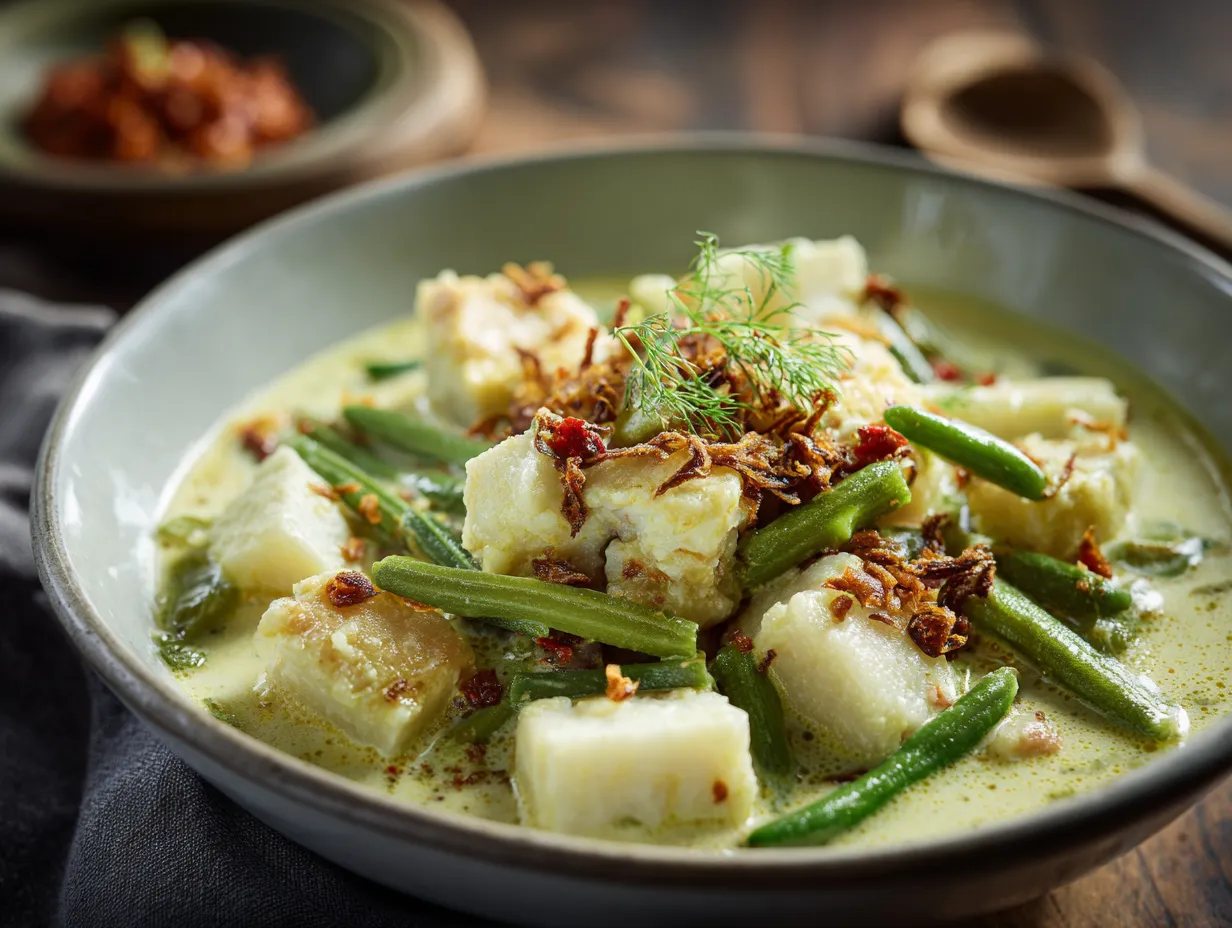
Lontong Sayur Lodeh is a beloved Malay/Peranakan comfort dish you’ll find in Singapore’s heartland kopitiams and occasional zi char stalls, and it’s a must-have on many Hari Raya tables. The dish pairs soft, slightly chewy rice cakes (lontong) with a gently spiced, creamy vegetable curry made from coconut milk and aromatic paste. It’s the sort of makan that warms up rainy evenings in Tiong Bahru flats and fills up tables at East Coast family dinners.
At its best the curry is fragrant from lemongrass, kaffir lime leaves and turmeric, balanced by the richness of coconut milk and the bright snap of long beans, chayote or cabbage. Texture is key: tender vegetables, cubes of tau pok or tofu, and slices of lontong to soak up the creamy gravy. Many Singapore families serve it with sambal chilli, achar (pickled vegetables) and a boiled egg — the spicy-sour condiments cut through the richness beautifully.
This home-friendly recipe includes practical options for busy cooks: how to use store-bought compressed lontong, a quick method to shape leftover rice into cakes, and notes for reducing coconut separation if you’re making the curry on a gas hob. Whether you’re packing it for next-day work lunchboxes, sharing it at a potluck, or serving it as part of a festive spread, this Singapore-style Lontong Sayur Lodeh is a crowd-pleaser that’s easy to scale and tweak to your family’s spice preference.
Ingredients
- 300 g compressed lontong (store-bought) or 300 g cooked rice (for making quick rice cakes)
- 2 tbsp vegetable oil
- 4 shallots, peeled and sliced
- 3 cloves garlic, peeled and chopped
- 1 inch (2.5 cm) piece galangal or substitute with fresh ginger, sliced thinly
- 1 stalk lemongrass, bruised and cut into 5 cm pieces
- 2–3 kaffir lime leaves, torn
- 1–2 bird's eye chillies, sliced (optional — adjust to heat preference)
- 1 tbsp turmeric powder or 1 inch fresh turmeric, grated
- 2 tbsp kerisik (toasted grated coconut) or 1 tbsp ground peanuts (optional)
- 1 tsp belacan (shrimp paste) or 1 tsp fish sauce (optional for non-vegetarian depth)
- 400 ml coconut milk (about 1 can)
- 300 ml light stock or water
- 200 g choy sum or cabbage, roughly chopped (or chayote / labu siam)
- 150 g long beans, cut into 4 cm lengths
- 200 g firm tofu, pressed and cut into cubes (or tau pok)
- 2 hard-boiled eggs, halved (optional)
- 1 tsp sugar (palm sugar or brown sugar)
- 1 tsp salt, or to taste
- 2 tbsp fried shallots, for garnish
- Fresh coriander (cilantro) or Vietnamese coriander (laksa leaf) for garnish
- Sambal chilli and achar (pickled vegetables) to serve
Step-by-Step Method
- If using cooked rice to make quick lontong: pack warm cooked rice into a banana leaf-wrapped tin or tightly into a small loaf tin lined with cling film, press firmly and chill for at least 2 hours to set; otherwise use store-bought compressed lontong sliced into 2 cm pieces and set aside.
- Prepare the spice paste: blend or pound 4 shallots, 3 garlic cloves, 1 inch galangal (or ginger), 1–2 bird's eye chillies (optional) and 1 tbsp turmeric powder or grated turmeric into a coarse paste with a splash of water.
- Heat 2 tbsp vegetable oil in a wok over medium heat. Add the paste and sauté until fragrant and the oil separates slightly, about 3–5 minutes — increase to medium-high briefly to fry the paste but watch it so it doesn’t burn.
- Add bruised lemongrass, torn kaffir lime leaves and 1 tsp belacan (if using). Stir for 1 minute, then pour in 300 ml light stock or water and bring to a gentle simmer to let flavours marry.
- Stir in 400 ml coconut milk and 1 tsp sugar, reduce heat to low–medium. Add the chopped vegetables (choy sum/cabbage or chayote) and long beans. Simmer gently for 8–12 minutes until vegetables are tender but still hold some bite. Avoid boiling vigorously to prevent coconut milk from splitting.
- Add tofu cubes and kerisik (if using), simmer another 3–5 minutes so tofu absorbs flavours. Taste and adjust seasoning with salt and a little more sugar if the curry needs balancing; add a dash of fish sauce if you want deeper umami.
- If using prepped lontong, warm the slices by steaming for 3–4 minutes or briefly in the microwave covered; add boiled egg halves to warm through. Place a few slices of lontong in each bowl and ladle the hot vegetable curry over.
- Garnish with fried shallots and fresh coriander or laksa leaf. Serve immediately with sambal chilli and achar on the side — in Singapore style, diners add sambal to taste for heat and achar for a refreshing sour crunch.
Tips & Serving Ideas
- Buy compressed lontong from NTUC FairPrice, Cold Storage or a Malay grocer if you’re short on time; otherwise press warm rice into small tins lined with banana leaf or cling film and chill to set.
- To avoid coconut milk splitting: keep the curry at a gentle simmer and avoid high rolling boil once coconut milk is added; remove from heat if it starts to separate and stir in a splash of warm stock.
- Adjust spice levels to suit the family: start with 1 chilli and add more at the table with sambal, popular at kopitiam-style meals in Singapore.
- Make-ahead friendly: the curry flavours deepen overnight — store the curry and lontong separately in the fridge and reheat gently the next day for lunchboxes or potluck sharing.
- Substitutions: swap vegetables for what’s in season at Sheng Siong or wet markets — chayote, eggplant or pumpkin all work well; use firm tempeh or extra tofu for more protein.
- For authentic aroma, add a pandan leaf tied in a knot while simmering and remove before serving; bruise lemongrass to release extra fragrance like many zi char stalls do.
You might also like
More recipes to save for later.