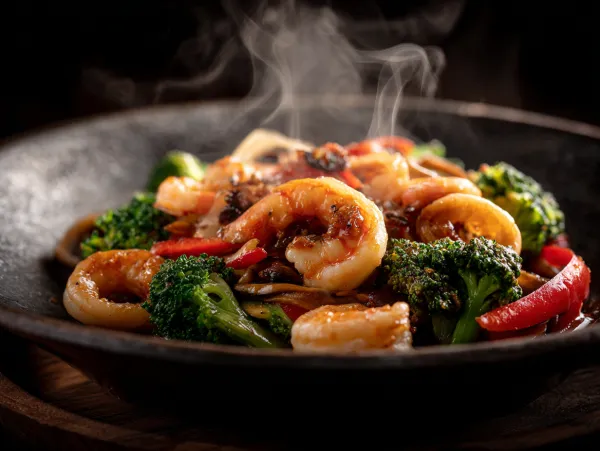
Dry Laksa (Siglap Style)
Singapore-style Dry Laksa (Siglap Style): wok-tossed laksa noodles coated in a rich, slightly reduced coconut-laksa paste with prawns, fish cake and fragrant laksa leaf — a hawker-inspired, East Coast flavour.

About this dish
Dry Laksa (Siglap Style) is a local take on the classic Peranakan laksa — imagine the same heady aromatics and coconut richness but reduced into a glossy coating that clings to every strand of noodle. It’s the kind of dish you’d order at a bustling East Coast hawker stall after an evening at the beach, or rustle up at home for a family dinner when you want bold flavours without a soupy bowl.
This variation leans on a house-style laksa paste: shallots, garlic, galangal, turmeric, dried shrimp (hae bee), and a touch of belacan, fried until fragrant and simmered briefly with coconut milk and prawn stock until it becomes a saucy glaze. Tossed with rice vermicelli or thick laksa noodles and finished with laksa leaf (Vietnamese coriander), crunchy bean sprouts and sambal, the result is creamy, spicy, slightly tangy and packed with umami — exactly the kind of comfort Singaporeans love from a kopitiam or zi char-style meal.
Serve Dry Laksa for a casual weeknight dinner, a potluck at the void deck, or as part of a larger festive spread. It travels well for next-day lunchboxes (reheat gently), and you can tweak it for different heat levels — milder for kids, extra sambal for chilli lovers. With tips on local ingredient swaps and simple shortcuts, this recipe brings that Siglap hawker vibe into your kitchen.
Ingredients
- 300 g thick rice vermicelli or fresh laksa noodles
- 200 g prawns, shelled and deveined (reserve shells)
- 150 g cockles or small clams, cleaned (optional)
- 150 g fish cake, sliced
- 150 g tau pok (firm tofu puffs), halved
- 3 tbsp neutral oil (vegetable or peanut) for frying
- 1 medium onion or 4 shallots, roughly chopped (about 120 g)
- 4 cloves garlic
- 2 stalks lemongrass, white part only, chopped
- 1 thumb (20 g) galangal or ginger, sliced
- 1 tsp turmeric powder or 1 small fresh turmeric piece
- 2–3 tbsp dried shrimp (hae bee), soaked and drained
- 2 tbsp belacan (shrimp paste) or 1 tbsp fermented shrimp paste, toasted
- 2–3 tbsp sambal oelek or homemade sambal (adjust to taste)
- 200 ml coconut milk (full fat for richness)
- 400 ml prawn stock (made from simmering reserved shells with 600 ml water) or low-sodium chicken broth
- 1 tbsp tamarind concentrate or 1 tbsp tamarind juice for a slight tang (optional)
- 1 tbsp fish sauce (nam pla) or 1 tbsp light soy sauce
- 1 tsp sugar (palm sugar or caster sugar) to balance
- Handful bean sprouts, blanched (about 80 g)
- A good bunch of laksa leaves / Vietnamese coriander (15–20 g), roughly torn
- Fried shallots and chopped coriander for garnish
- Lime wedges and extra sambal on the side
- Optional: 2 tbsp toasted ground peanuts for a crunchy finish
Step-by-Step Method
- Prepare the noodles: if using dried rice vermicelli, soak in hot water until al dente (about 4–6 minutes), then drain and rinse under cold water; if using fresh laksa noodles, blanch briefly in boiling water for 30–45 seconds, then drain and toss with a little oil to prevent sticking.
- Make prawn stock: heat a small pot, add reserved prawn shells and heads, cover with 600 ml water and simmer for 10–12 minutes, strain and set aside (about 400 ml usable stock).
- Blend laksa paste: in a blender, combine shallots, garlic, lemongrass, galangal, turmeric, soaked dried shrimp and belacan — blitz into a coarse paste, adding a splash of water if needed. Alternatively use 4–5 tbsp good-quality store-bought laksa paste as a shortcut.
- Fry the paste: heat 3 tbsp oil in a heavy-based wok over medium-high heat. Add the paste and fry, stirring constantly, until fragrant and the oil separates (5–7 minutes) — key for depth of flavour like a zi char stall.
- Add liquids and simmer: pour in prawn stock and coconut milk, stir to combine and bring to a gentle simmer. Cook on medium heat for 6–8 minutes until the sauce reduces and thickens slightly — it should become a glossy coating rather than a thin soup.
- Season the sauce: stir in tamarind concentrate (if using), fish sauce, sugar and sambal. Taste and adjust: add more fish sauce for saltiness, sugar for balance, or sambal for heat — Singapore home cooks often tweak to their liking.
- Cook proteins: add prawns, cockles and fish cake to the simmering sauce and cook until prawns turn pink and cockles open (2–3 minutes). If using tau pok, add it now to soak up flavours.
- Toss with noodles: increase heat to high for wok hei, add drained noodles and blanched bean sprouts to the wok, toss continuously for 1–2 minutes until noodles are evenly coated in the reduced laksa sauce. If it looks dry, splash a little reserved prawn stock to loosen.
- Finish with herbs and texture: remove from heat, fold in torn laksa leaves and sprinkle toasted ground peanuts if using. The laksa leaf should remain bright and aromatic.
- Serve immediately: portion into bowls, top with fried shallots, extra laksa leaves, lime wedges and sambal on the side. Enjoy like you would at a kopitiam or hawker centre — hot and fragrant.
Tips & Serving Ideas
- Shortcut: use good-quality store-bought laksa paste to save time; brighten the flavour with fresh laksa leaves and a squeeze of lime.
- Prawn stock boost: simmer prawn heads and shells for a quick 10–12 minutes — it adds authentic umami like hawker stalls. Freeze extra stock in ice cube trays for future use.
- Wok hei trick: toss on high heat at the end for a few quick seconds to get that charred aroma; have your utensils and garnishes ready because it comes together fast.
- Adjusting spice: start with 1–2 tbsp sambal and increase to taste — Singapore households often vary heat by household (kids vs adults).
- Ingredient swaps: if you can’t find laksa leaves, use a mix of coriander and mint for a fresh lift; dried shrimp can be found at Sheng Siong, FairPrice or wet markets.
- Make-ahead: prepare and refrigerate the laksa paste and prawn stock up to 2 days in advance. Reheat gently and toss noodles just before serving to avoid sogginess.
- Leftovers: store separately from garnishes. Reheat gently with a splash of coconut milk or stock on the stove; avoid microwave which can make noodles clump.
You might also like
More recipes to save for later.