Kueh Bingka Ubi (Tapioca Cake)
Singapore-style Kueh Bingka Ubi is a baked tapioca (cassava) cake made with grated ubi, coconut milk and eggs — a fragrant, slightly caramelised tea-time kueh often enjoyed at kopitiams and family gatherings.
About this dish
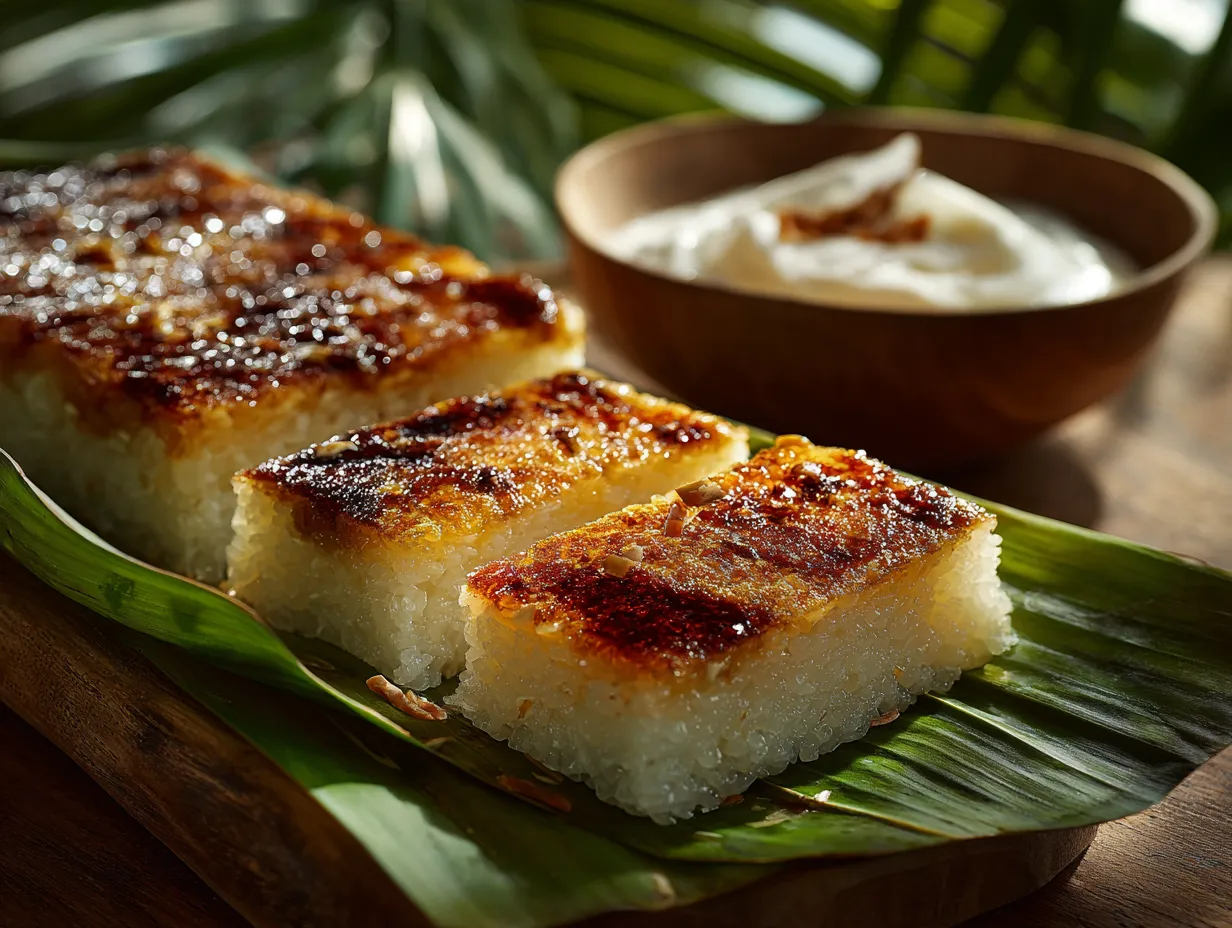
Kueh Bingka Ubi, or tapioca cake, is a beloved Peranakan/Malay kueh you'll find at neighbourhood kopitiams, pasar malam stalls and home kitchens across Singapore. In heartland hawker centres and older Tiong Bahru bakeries, this humble, slightly caramelised baking kueh appears on trolleys alongside ondeh-ondeh and lapis — perfect for afternoon kopi or as a sweet finish to a family zi char meal. At home it’s a popular potluck or festive treat for Hari Raya, Chinese New Year and deep community gatherings.
The texture is dense yet tender: grated tapioca gives a gentle chew while eggs and coconut milk set into a custardy, slightly sticky cake with a crisp golden top. Aromatics like pandan and a touch of butter lift the flavour into something nostalgic and comforting—think coconut-sweet, lightly caramelised edges and a fragrant pandan note. Some cooks swirl in gula melaka for deeper molasses notes or bake the tray on banana leaf for that authentic hawker aroma.
This recipe is written for a typical Singapore home kitchen: use a hand grater or food processor for the ubi (cassava), a regular oven set to 180°C, and common local ingredients available at NTUC FairPrice, Sheng Siong or wet markets. It suits weekend baking sessions, teatime sharing with friends, or as a make-ahead dessert for gatherings — slice it warm or at room temperature and enjoy with kopi O or teh tarik for the full local experience.
Ingredients
- 1 kg fresh grated tapioca (ubi kayu / cassava), packed but not squeezed
- 200 ml coconut milk (full fat)
- 150 g caster sugar (adjust to taste; can substitute with 100 g gula melaka melted)
- 3 large eggs, lightly beaten
- 60 g unsalted butter, melted (or 50 g margarine)
- 1 tsp fine salt
- 2-3 pandan leaves, knotted (or 1 tsp pandan paste)
- 1 tsp vanilla extract (optional)
- 30 g rice flour or tapioca starch (to help set, optional)
- 1 tbsp evaporated milk or condensed milk (optional for extra richness)
- Banana leaf or baking paper to line the tray
- Extra melted butter for greasing
- Gula melaka (palm sugar) syrup for drizzling, optional
- To serve: grated coconut or a drizzle of thick coconut cream (optional)
Step-by-Step Method
- Preheat the oven to 180°C (conventional) or 170°C (fan-forced). Grease a 20 x 30 cm baking tray and line with banana leaf or baking paper; brush the banana leaf with melted butter to prevent sticking.
- If using pandan leaves, knot them and simmer with the coconut milk briefly to infuse, then cool. Alternatively, stir pandan paste into the coconut milk. Remove leaves before mixing.
- In a large mixing bowl combine grated tapioca with sugar and salt. Pour in the warm (not hot) coconut milk and beaten eggs, then add the melted butter and vanilla. Stir until well incorporated; the mixture will be wet and slightly loose.
- If using rice flour/tapioca starch, sift it in now and fold through to help the cake set more evenly. For a deeper flavour, swirl in melted gula melaka at this stage for a marbled effect.
- Pour the mixture into the prepared tray and press down firmly and evenly with the back of a spoon or a spatula so the top is smooth; this helps achieve even caramelisation like at a zi char stall.
- Bake in the preheated oven for 50–65 minutes until the top is golden brown and slightly crisp and a skewer inserted into the centre comes out mostly clean with a few moist crumbs (not liquid).
- If the top browns too quickly, tent loosely with foil and continue baking until set. For a more caramelised top, finish under a preheated grill for 2–3 minutes while watching closely.
- Remove from oven and allow the kueh to cool in the tray for at least 20–30 minutes so it firms up; this makes slicing cleaner. For best texture, cool to room temperature before cutting into squares.
- Serve warm or at room temperature with a drizzle of thick coconut cream or gula melaka syrup if you like, alongside kopi, teh tarik or iced barley for a Singapore-style teatime.
- Store leftovers in an airtight container in the fridge for up to 4 days. Reheat gently in a microwave or a low oven slice-by-slice before serving to restore softness.
Tips & Serving Ideas
- Buy fresh grated tapioca from a wet market or use a food processor to grate fresh cassava at home; some supermarkets also sell pre-grated tapioca in the chilled section.
- Do not over-squeeze the grated tapioca — retaining some moisture keeps the kueh tender. If the mix seems too wet, a tablespoon of rice flour or tapioca starch helps bind it.
- Line the tray with banana leaf for authentic aroma; if unavailable, use parchment paper and brush with butter for easy release.
- Watch the oven towards the end of baking — the top should be golden and slightly caramelised but not burnt. Tent with foil if it browns too fast, similar to adjusting heat at a zi char stall.
- Swap caster sugar for melted gula melaka for a richer, caramel flavour; adjust sweetness to taste since palm sugar can be sweeter and darker.
- Make-ahead: refrigerate overnight and slice cold for cleaner edges. Reheat slices in a hot pan or microwave briefly before serving.
- If you prefer a smokier, hawker-style finish, try baking in a cast-iron skillet or finishing briefly under the grill to mimic a charred top.
You might also like
More recipes to save for later.