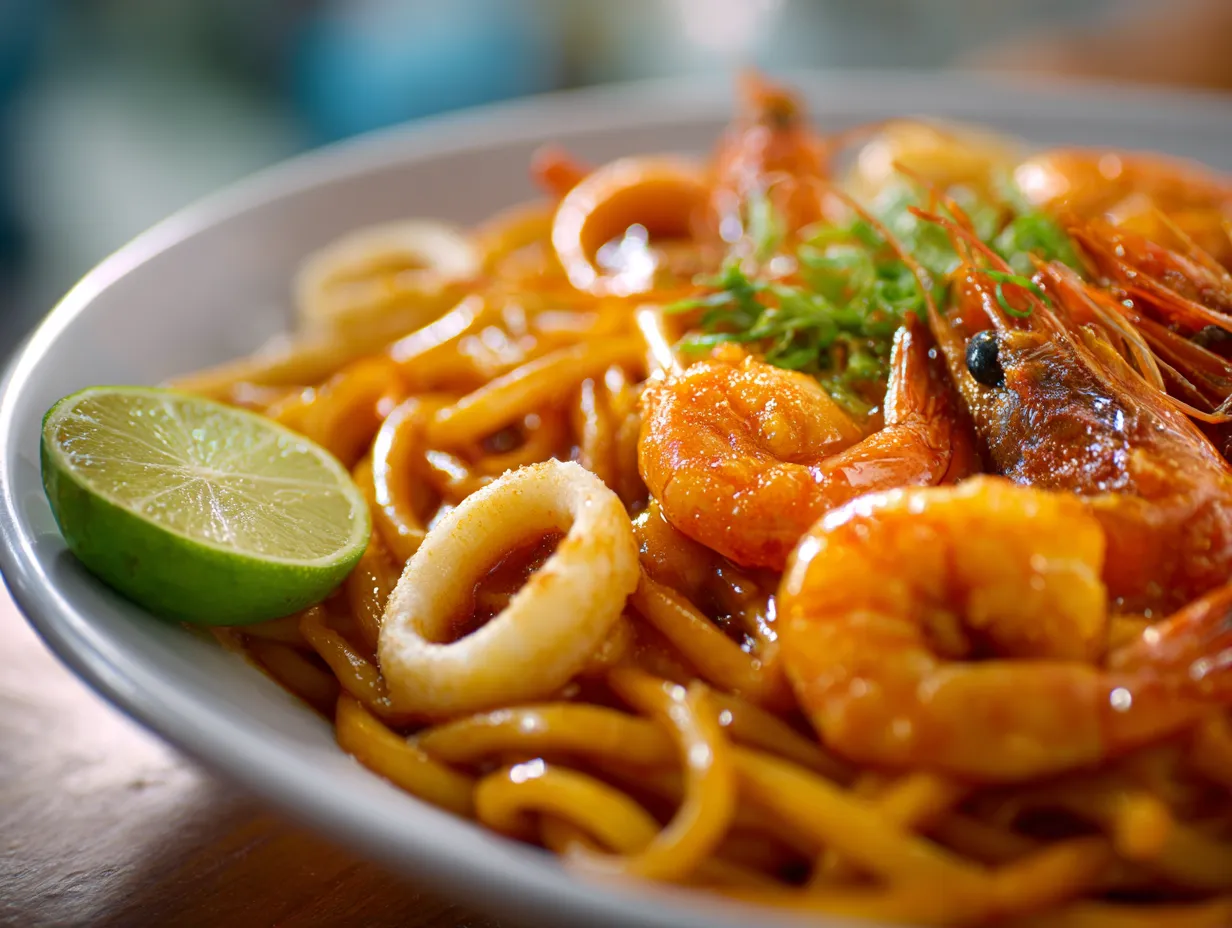
Hokkien Mee (Wet & Gooey)
Singapore-style wet & gooey Hokkien Mee — wok-fried yellow noodles and rice vermicelli tossed in a rich prawn stock with prawns, squid and wok hei.
About this dish
Hokkien Mee is a hawker-centre staple in Singapore and this wet & gooey version channels the saucy, comfort-food side of the dish you’ll find at late-night zi char stalls and East Coast seafood eateries. Think glossy noodles, bright prawns, tender squid and a prawn-forward stock that clings lovingly to every strand — perfect for supper runs, family weekend dinners or sharing at a kopitiam table with friends.
In a Singapore home kitchen you’ll recognise the familiar rituals: blitzing prawn heads into stock, rendering a little pork or lard for richness, and using a smoking-hot wok to chase wok hei for that charred aroma. The flavour profile is savoury and slightly sweet with deep umami from prawn stock, a hint of dark soy for colour, and the bright lift of lime or calamansi and sambal chilli on the side. It’s the kind of plate that tastes best when eaten piping hot — as you’d get from a hawker stall in Tiong Bahru or a heartland kopitiam.
This recipe is written for local cooks who want an authentic, repeatable result in a typical Singapore kitchen: metric measures, common supermarket ingredients (NTUC, Cold Storage or Sheng Siong), and practical tips on achieving wok hei and the right saucy, gooey texture. Serve it family-style with sambal and lime wedges, and you’ve got a proper Singapore comfort meal that’s ideal for potlucks, late-night supper groups, or a weekend treat when you’re craving that hawker-centre nostalgia.
Ingredients
- 300 g fresh yellow egg noodles (Hokkien mee yellow noodles)
- 200 g rice vermicelli (bee hoon), soaked in warm water for 5 minutes and drained
- 300 g prawns, shelled and deveined (keep shells & heads)
- 150 g squid, cleaned and sliced into rings
- 150 g pork belly, thinly sliced
- 1.5 L prawn stock (made from prawn heads & shells) or use chicken stock if preferred
- 3 tbsp pork lard or 2 tbsp vegetable oil + 1 tbsp butter (for richness)
- 4 cloves garlic, minced
- 2 shallots, thinly sliced
- 2 tbsp light soy sauce
- 1 tbsp dark soy sauce (optional, for colour)
- 1 tbsp fish sauce or 1 tsp anchovy paste (optional for extra umami)
- 1 tsp sugar (palm sugar preferred)
- 1 tbsp cornflour (cornstarch) mixed with 2 tbsp water (slurry) to slightly thicken
- 2 large eggs, beaten
- 2 stalks spring onion, sliced on the diagonal
- Fried shallots or pork lard bits for garnish
- Sambal chilli and lime or calamansi wedges, to serve
- 1 tbsp vegetable oil (for stir-frying if not using lard)
- Salt and white pepper to taste
Step-by-Step Method
- Make the prawn stock: heat a small pot, dry-roast prawn heads and shells for 2–3 minutes until fragrant, add 1.5 L water and a smashed shallot, simmer gently for 20–25 minutes; strain and keep warm.
- Prep noodles and proteins: separate yellow noodles with your fingers, drain soaked bee hoon, pat prawns and squid dry, season pork belly lightly with a pinch of salt and white pepper.
- Heat the wok: set a large wok on high heat until very hot. Add lard or oil and swirl to coat — hot fat helps create wok hei.
- Render pork and aromatics: add pork belly and fry until lightly browned and edges crisp, toss in garlic and sliced shallots and fry until fragrant but not burnt (about 30–40 seconds).
- Cook prawns and squid: push ingredients to the side, add prawns and squid and stir-fry quickly until just cooked (prawns turn opaque), then remove to a plate to avoid overcooking.
- Stir-fry noodles: return wok to very high heat, add a little oil if needed, add yellow noodles and bee hoon, toss briefly to heat through and lightly char in spots for wok hei.
- Build the sauce: pour hot prawn stock into the wok (start with 200–250 ml and add more to reach desired wetness), add light soy sauce, dark soy (if using), fish sauce and sugar; toss briskly so stock reduces slightly and coats the noodles.
- Add slurry and eggs: stir the cornflour slurry into the stock to create a glossy, clingy sauce; quickly pour beaten eggs along the sides of the wok, scramble through the noodles until set and distributed.
- Return proteins and finish: add prawns, squid and pork back to the wok with spring onions; toss on high heat for 30–60 seconds to marry flavours and heat everything through. Taste and adjust with more light soy, fish sauce or a pinch of sugar like a zi char cook would.
- Serve immediately: transfer to a large serving plate or individual bowls, garnish with fried shallots or lard bits, serve with sambal chilli and lime/calams on the side for squeezing over before eating.
- Leftovers note: reheat gently in a non-stick pan with a splash of stock or water; avoid overheating to prevent seafood from becoming rubbery.
Tips & Serving Ideas
- For the best prawn flavour, reserve and dry-roast prawn heads and shells before simmering into stock — available prawn heads can be bought at NTUC or seafood stalls.
- If you don’t have pork lard, use a mix of vegetable oil and a knob of butter to approximate the rich mouthfeel; halal cooks can substitute chicken stock and omit pork entirely.
- Keep the wok smoking hot for wok hei — preheat well, work quickly, and don’t overcrowd the pan; if cooking for more than 2 people, work in batches.
- Adjust the wetness by adding more or less prawn stock; the ‘wet & gooey’ texture comes from slightly more stock and a small cornstarch slurry to help the sauce cling.
- Make sambal on the side: sambal chilli sambal or store-bought chili paste works well — squeeze lime or calamansi over the finished dish to brighten the flavours like hawker stalls do.
- Prep ingredients in advance (clean seafood, slice pork, separate noodles) so actual wok time is short — ideal for busy weeknight cooking.
- Leftovers reheat well with a splash of stock on the stove over medium heat; avoid microwave reheating with seafood to prevent rubberiness.
You might also like
More recipes to save for later.