Authentic Hainanese Curry Rice (Scissor Cut)
Singapore-style Hainanese curry rice: a wok-simmered, scissor-cut plate of steamed rice drenched in a silky Hainanese curry roux and topped with fried pork/chicken chops and braised sides.
About this dish
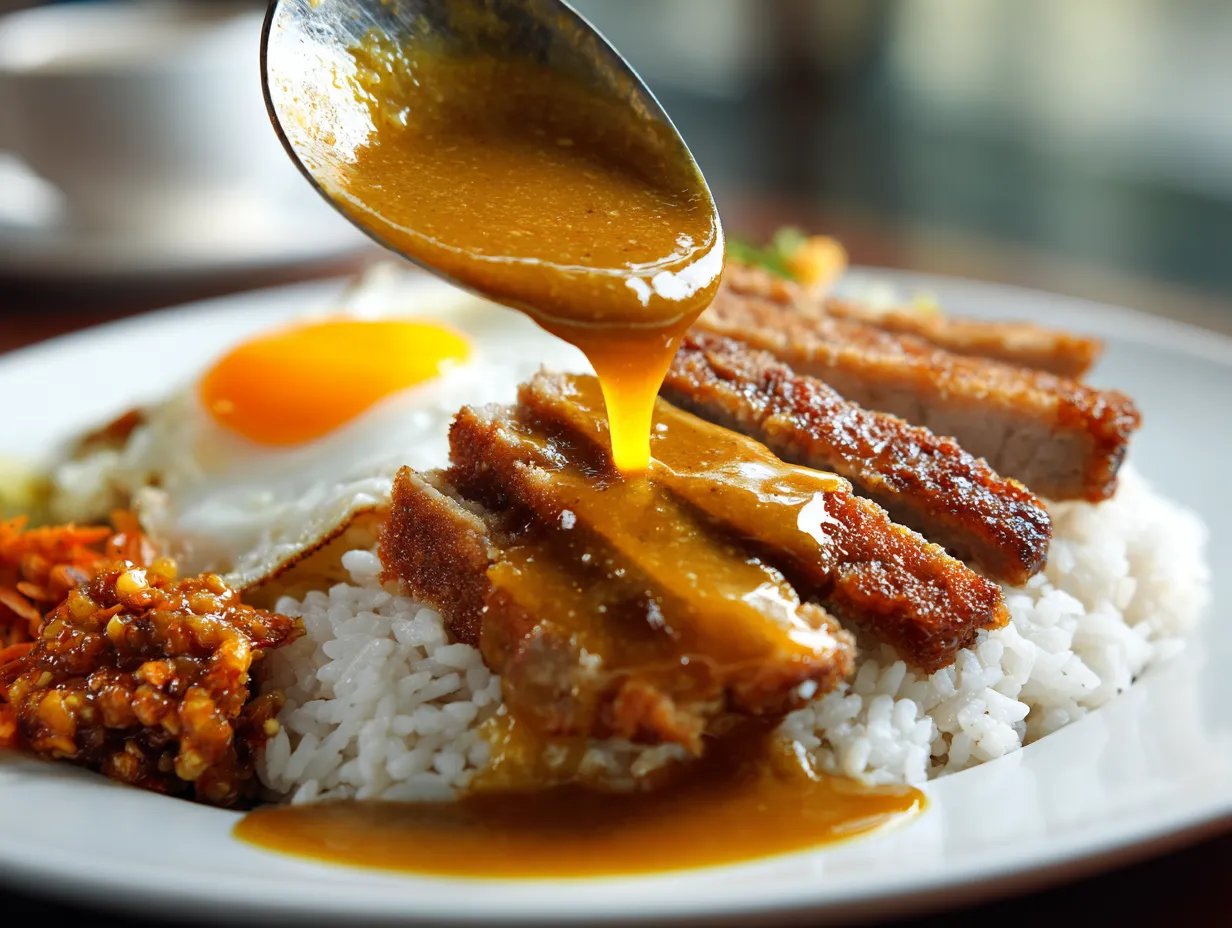
Hainanese curry rice is a beloved Singapore comfort plate you’ll find in kopitiams and heartland hawker centres from Tiong Bahru to the East Coast. This version recreates the classic hawker stall experience at home — a slightly thick, mildly spiced curry roux ladled over steamed rice with scissor-cut pieces of fried pork or chicken, braised cabbage and potato, achar and a sunny-side up egg.
This dish suits family dinners, weekend makan sessions or late-night supper runs — it’s hearty, shareable and forgiving for busy home cooks. The curry profile is approachable: fragrant curry powder, sweet onion and tomato paste build the base, enriched with chicken stock and a touch of evaporated or coconut milk for silkiness. Textures play a big part: crisp-edged chops, soft braised veg, and glossy curry soaking into rice.
Serve it hawker-style on a plate and watch everyone help themselves with scissors — a little local theatre that’s iconic to Singapore’s Hainanese curry rice stalls. The recipe includes tips for scaling spice, making the curry ahead, and swapping proteins, so you can tailor it to weeknight family meals, potluck sharing or a casual get-together in the heartland.
Ingredients
- 300 g jasmine rice (uncooked) or 2 cups, cooked in rice cooker
- 2 tbsp vegetable oil (for curry base)
- 1 large onion, finely chopped (about 150 g)
- 4 cloves garlic, minced
- 1 tbsp grated ginger
- 2–3 tbsp Hainanese or Madras curry powder (adjust to taste)
- 1 tbsp plain flour (for light roux)
- 2 tbsp tomato paste
- 500 ml chicken stock (use stock cube dissolved in water if needed)
- 100 ml evaporated milk or 100 ml coconut milk (optional for creaminess)
- 1 medium potato, peeled and 1.5 cm diced (about 200 g)
- 200 g cabbage, shredded (or Chinese cabbage)
- 2 pork loin chops (about 250–300 g total) or 2 chicken thighs for chicken chop
- 1 egg, fried sunny-side up (per 2 servings)
- 1 tbsp light soy sauce
- 1 tsp sugar
- Salt and white/black pepper to taste
- Pickled achar (store-bought or homemade), to serve (about 80–100 g)
- Sambal belacan or sliced bird’s eye chilli for heat, to serve (optional)
- Spring onions or coriander, chopped, for garnish
- 1 tbsp cornflour mixed with 2 tbsp water (slurry to thicken if needed)
- Cooking oil for frying (about 200 ml for shallow fry if frying chops)
Step-by-Step Method
- Cook the rice: rinse 300 g jasmine rice until water runs clear, then cook in a rice cooker with the appropriate water ratio. Keep warm until serving.
- Prep proteins and veg: season pork chops with 1 tsp light soy sauce, a pinch of pepper and a little salt; lightly dust with flour or breadcrumbs if you prefer a crisper chop. Cut potato into 1.5 cm cubes and shred the cabbage.
- Make a light roux: heat 2 tbsp vegetable oil in a wok over medium heat. Add 1 tbsp plain flour and stir continuously for 1–2 minutes until it smells slightly nutty and turns a pale golden — this builds the curry’s body.
- Build the curry base: add chopped onion, minced garlic and grated ginger to the wok, raise heat to medium-high and stir until onion softens and becomes translucent (about 4–5 minutes). Add 2–3 tbsp curry powder and 2 tbsp tomato paste, stir for 1 minute to bloom the spices.
- Simmer the sauce: pour in 500 ml chicken stock, bring to a boil then reduce to a gentle simmer. Add diced potato and simmer for 10–12 minutes until potato is tender. Stir occasionally and skim any foam. Season with 1 tsp sugar and salt to taste.
- Finish the curry: stir in 100 ml evaporated milk or coconut milk for a silky finish if using. If the curry is too thin, make a cornflour slurry (1 tbsp cornflour + 2 tbsp water) and stir in little by little until sauce coats the back of a spoon. Keep on very low heat while you cook the chops.
- Fry the chops: heat oil in a frying pan or shallow skillet over medium-high heat. Shallow-fry pork or chicken chops until golden brown and cooked through (about 3–4 minutes per side depending on thickness). Drain on paper towels.
- Fry the egg and quick-sauté cabbage: in the same pan, lightly sauté shredded cabbage with a little oil and salt just until wilted (1–2 minutes) to keep bite. Fry eggs sunny-side up to serve with each plate.
- Plating the hawker way: mound steamed rice on plates. Use kitchen shears to scissor-cut the fried chop into bite-sized pieces straight onto the rice — this gives the authentic hawker presentation and makes sharing easy.
- Assemble and serve: ladle generous amounts of curry sauce over rice and meat, add a portion of braised cabbage and potato, spoon achar on the side and top with a fried egg. Garnish with chopped spring onions or coriander and offer sambal belacan or sliced chilli for heat.
- Taste and adjust: like a zi char stall, taste the curry and adjust seasoning — add more soy for umami, a pinch of sugar to balance acidity, or extra curry powder for warmth.
- Leftovers & reheat tip: store curry sauce separately in the fridge for up to 3 days; reheat gently on low so milk doesn't split. The sauce freezes well for up to 1 month.
Tips & Serving Ideas
- Buy curry powder labelled Madras or Hainanese-style in NTUC FairPrice, Cold Storage or Sheng Siong; adjust amount to suit family heat tolerance.
- For true hawker texture, shallow-fry chops until just crisp then scissor-cut at the table — scissors make bite-sized pieces for sharing.
- If you don’t eat dairy, swap evaporated milk for coconut milk; if using coconut milk, stir it in at the end on low heat to avoid splitting.
- Control spice by starting with 2 tbsp curry powder and adding more later; add sliced bird’s eye chillies or sambal at the table for those who want extra heat.
- Make the curry sauce a day ahead — flavours deepen overnight and the sauce reheats well for quick weeknight meals or lunchboxes.
- Use a wok for even heat and to develop flavour; cook onions on medium-high to get a little caramelisation before adding spices for a richer base.
- Leftovers: keep sauce and rice separate for best texture; reheat sauce on low and sprinkle a little water if it thickens too much.
You might also like
More recipes to save for later.