Gado Gado with Peanut Sauce
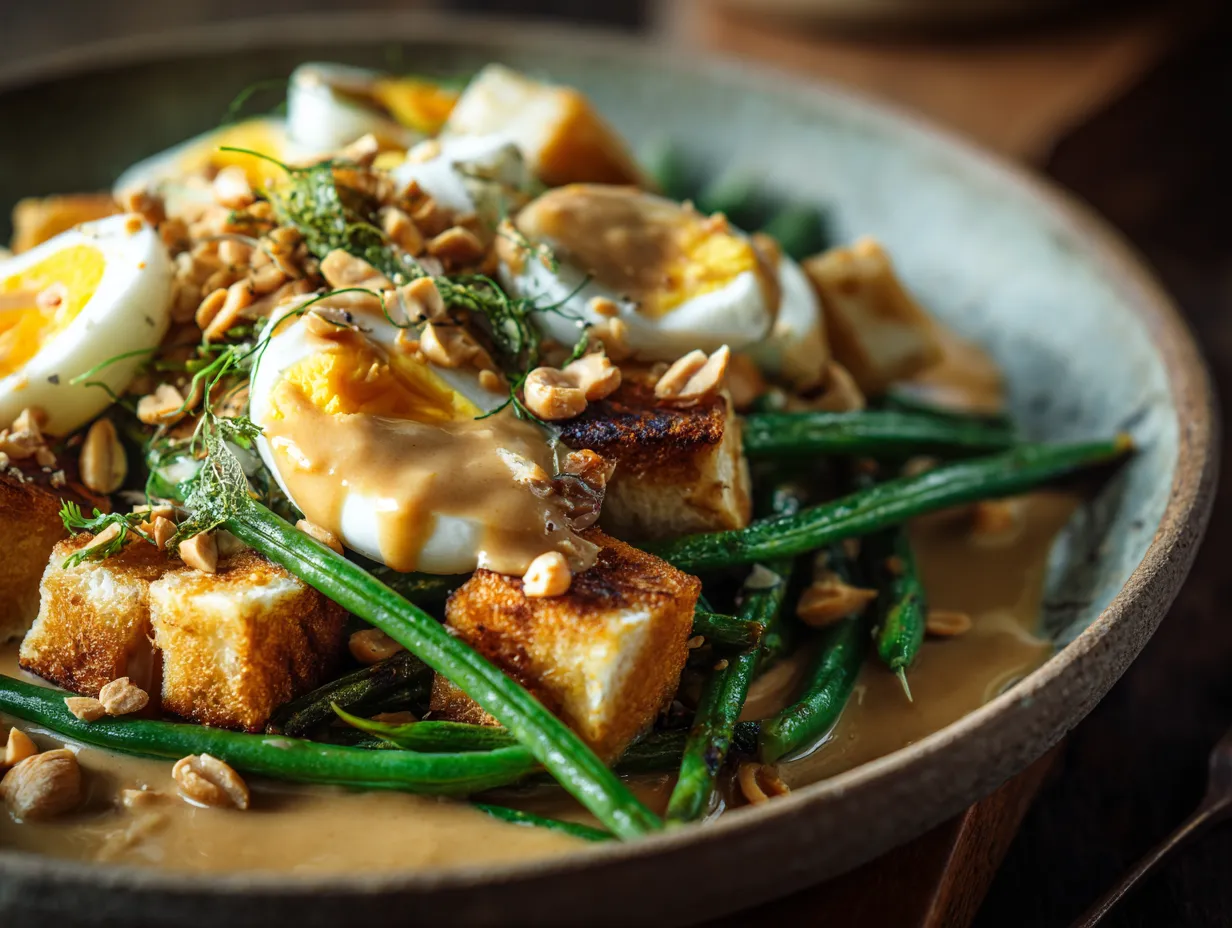
A Singapore-style Gado Gado with Peanut Sauce — a mixed blanched vegetable and tofu salad dressed in a creamy roasted-peanut sauce, perfect for hawker-centre vibes at home.
About this dish
Gado Gado is a beloved Indonesian-Malay salad that fits right into Singapore’s hawker-centre and kopitiam culture — think heartland weekend makan or a light family-style dinner shared with sambal and keropok on the side. This Singapore-friendly version keeps the classic mix of blanched greens, boiled potatoes and eggs, fried tofu or tempeh and cubes of lontong or steamed rice, all brought together with a rich, slightly sweet-and-tangy roasted peanut sauce.
At home, gado gado is great for busy parents and potluck gatherings because most components can be prepped ahead: blanch and chill the vegetables, fry tofu and tempeh in the morning, and whip up the peanut sauce just before serving. The flavour profile is nutty and savoury with a hint of palm sugar sweetness and lime or tamarind brightness; textures are a delightful contrast of creamy sauce, crunchy crushed peanuts and krupuk. You’ll find local tweaks around Singapore — a splash of kecap manis for depth, a spoonful of sambal or chilli padi for heat, or a scatter of fried shallots for extra umami.
Serve gado gado as a fresh main for a light weeknight meal, a colourful side at Hari Raya or Deepavali spreads, or as a healthy option for CBD lunch runs packed into a bento. It sits beautifully alongside acar (pickled vegetables), a plate of steamed rice or lontong and an icy glass of barley or kopi ais — simple, satisfying and very Singaporean in spirit.
Ingredients
- 300 g baby potatoes, cut into bite-sized pieces
- 4 large eggs
- 200 g firm tofu, cut into 2 cm cubes
- 150 g tempeh (optional), sliced and pan-fried
- 150 g long beans (kacang panjang), trimmed and cut into 4 cm lengths
- 150 g bean sprouts, blanched
- 200 g cabbage, shredded
- 100 g water spinach (kangkong) or spinach leaves, blanched
- 1 medium cucumber, thinly sliced
- 200 g lontong or steamed rice, cut into cubes (can substitute with cooked jasmine rice)
- 120 g roasted unsalted peanuts (plus extra for garnish)
- 2–3 tbsp kecap manis (sweet soy sauce)
- 2 tbsp palm sugar or brown sugar
- 2 tbsp tamarind paste or 1–2 tbsp freshly squeezed lime juice
- 3 cloves garlic, roughly chopped
- 2 small shallots, peeled
- 1–2 red chillies or 3–4 chilli padi (adjust to taste)
- 1 tbsp vegetable oil (for sauce) plus 2 tbsp for frying tofu/tempeh
- 200–250 ml water (to loosen sauce)
- 1 tsp salt, plus to taste
- 1 tsp light soy sauce (optional)
- 1/2 tsp toasted shrimp paste (belacan) — optional for umami (omit for vegetarian)
- Fried shallots and chopped coriander (cilantro) for garnish
- Keropok/ prawn crackers for serving
- Lime wedges to serve
Step-by-Step Method
- Start eggs and potatoes: place eggs in a small pot, cover with cold water and bring to a boil; cook 9–10 minutes for hard-boiled. In another pot, boil potatoes until fork-tender (about 10–12 minutes). Drain and cool; peel eggs and halve.
- Prep vegetables: bring a large pot of salted water to a boil. Blanch long beans for 1–2 minutes until bright green and slightly tender; blanch bean sprouts for 30 seconds to 1 minute. Blanch cabbage and kangkong/spinach for 30–60 seconds. Immediately transfer to iced water to stop cooking and keep colour.
- Fry tofu and tempeh: heat 2 tbsp vegetable oil in a wok or frying pan over medium-high heat. Fry tofu cubes until golden and slightly crisp (about 3–4 minutes per side), then drain on paper towels. If using tempeh, fry slices until browned. Increase heat to get a little wok sizzle for texture.
- Make the peanut sauce: in a blender or food processor, combine roasted peanuts, garlic, shallots, chillies, kecap manis, palm sugar, tamarind paste (or lime), belacan (if using), 1 tbsp oil and 200 ml water. Blend until smooth, adding more water a little at a time to reach a creamy but pourable consistency.
- Adjust seasoning: pour the sauce into a small pan and simmer gently for 3–5 minutes over low heat to meld flavours. Taste and adjust with more lime/tamarind for acidity, palm sugar for sweetness or salt/soy for seasoning — like a zi char cook, balance sweet, salty and sour.
- Assemble the platter: arrange potatoes, blanched greens, bean sprouts, cabbage, sliced cucumber, tofu and lontong/rice on a large serving platter. Place halved eggs on top and scatter fried tempeh if using.
- Dress and finish: spoon or drizzle a generous amount of peanut sauce over the salad, then sprinkle crushed roasted peanuts, fried shallots and chopped coriander. Add keropok on the side or crumble over for crunch.
- Serve immediately with lime wedges and extra sauce on the side. Leftovers: keep sauce separate in an airtight container in the fridge for up to 4–5 days and reheat gently before serving.
Tips & Serving Ideas
- Buy roasted unsalted peanuts from NTUC FairPrice or Cold Storage, or roast raw peanuts in a 180°C oven for 8–10 minutes until golden for better flavour.
- Adjust chilli heat to your taste: use chilli padi for Singapore-style bite, or swap for a milder red chilli if serving children or guests who prefer less spice.
- Make the peanut sauce ahead — it keeps well in the fridge for 4–5 days. Reheat gently with a splash of water; do not boil vigorously to preserve texture.
- For a vegetarian/vegan version, omit belacan (shrimp paste) and use kecap manis for depth. Use firm tofu and pan-fry until crisp for a meaty bite.
- If you want more 'wok hei' texture on tofu or tempeh, fry over medium-high heat until the oil sizzles and the pieces turn golden quickly.
- Taste and tweak like a zi char cook: more lime or tamarind for brightness, more palm sugar or kecap manis for sweetness and depth.
- Leftovers make a great lunchbox option — keep the sauce separate and dress just before eating to retain crunch in vegetables and keropok.
You might also like
More recipes to save for later.