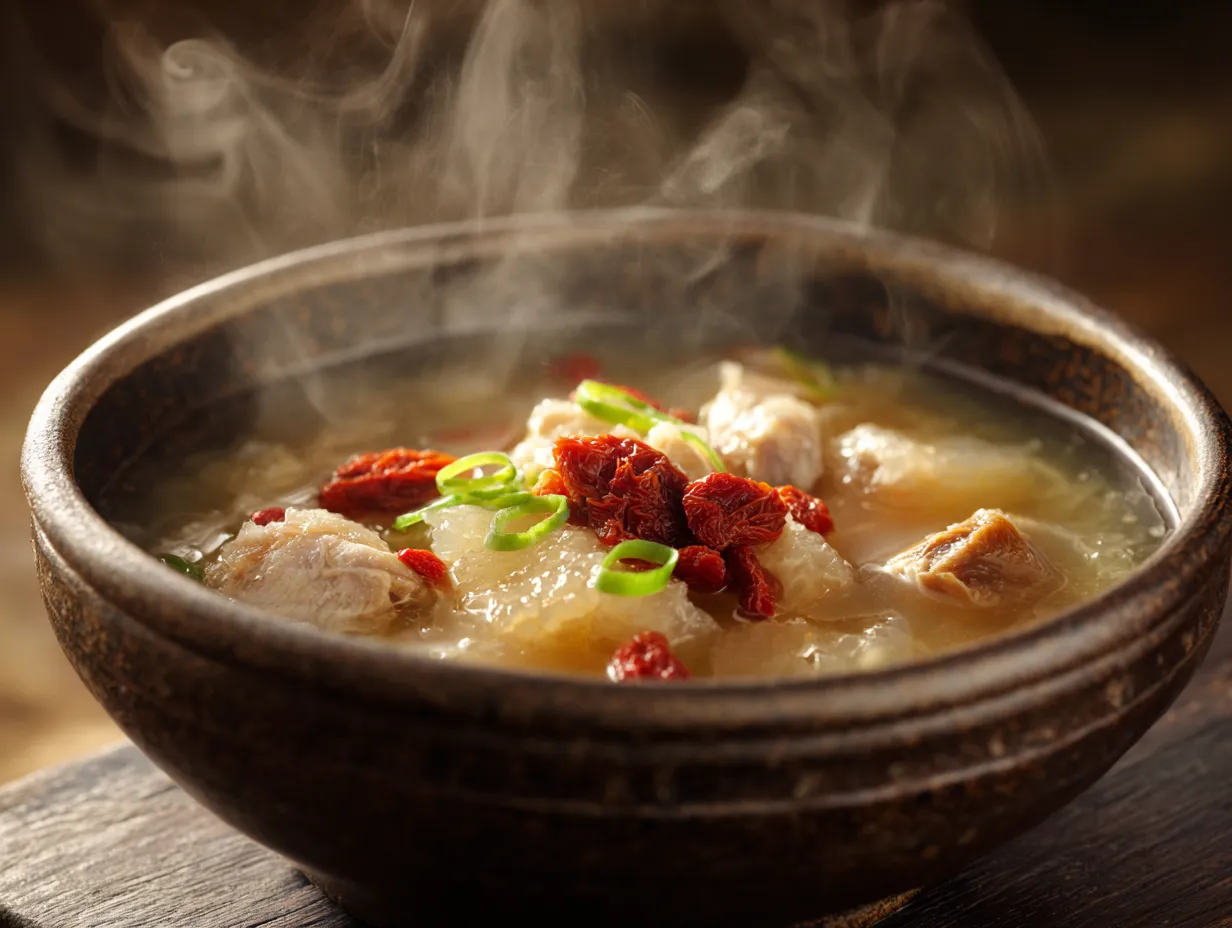
Fish Maw Soup
A Singapore-style slow-simmered Fish Maw Soup featuring rehydrated fish maw, pork ribs and dried scallops — a clear, umami-rich broth ideal for family dinners and CNY banquets.
About this dish
Fish maw soup is a classic in Singapore Chinese households and zi char menus — prized for its silky texture and festive association rather than bold spice. In many heartland kopitiams and family tables from Tiong Bahru flats to East Coast HDBs, a steaming tureen of fish maw soup signals a special meal: think reunion dinners, birthday lunches or a comforting weeknight soup to share.
This recipe uses rehydrated dried fish maw simmered with pork ribs and dried scallops (cong chiak) to build a deep, savoury broth. The mouthfeel of fish maw is uniquely gelatinous and luxurious once softened, while dried scallops and chicken or pork stock lift the umami. Cook it low and slow like a homely zi char stall: long simmer, frequent skimming and a final delicate seasoning. Local twists include a splash of Shaoxing wine to remove any marine scent, a few goji berries for colour, and finishing sesame oil for aroma.
Serve this soup as a centrepiece during Chinese New Year, or as a nourishing family-style dish after a wet hawker-centre day. It’s forgiving to variations — use an electric pressure cooker if you’re short on time, swap pork ribs for a whole chicken carcass for different depth, or buy pre-soaked fish maw from NTUC or your neighbourhood wet market to cut prep time. The result should be a clear, glossy broth, tender ribs and plump, silky fish maw — comfort food with a distinctly Singaporean banquet vibe.
Ingredients
- 150 g dried fish maw (pre-soaked until soft) or 200 g rehydrated fish maw
- 500 g pork ribs, blanched and rinsed
- 2 dried scallops (conpoy), rinsed and shredded (about 15 g)
- 1.5–2 L chicken stock or water (use home-made or low-sodium stock)
- 1 thumb (about 30 g) fresh ginger, sliced into 6–8 thin pieces
- 2 stalks spring onion (white part tied in a knot; green part sliced for garnish)
- 10–15 goji berries, rinsed
- 1 tbsp Shaoxing wine (optional, to remove marine smell)
- 1 tsp light soy sauce (optional, for colour)
- 1 tsp fish sauce (optional, for umami)
- 1 tsp sesame oil, for finishing
- 1/2–1 tsp salt, to taste
- 1/2 tsp white pepper, freshly ground, to taste
- 1 tbsp cornflour (cornstarch) mixed with 2 tbsp water (optional slurry to slightly thicken)
- 2 cloves garlic (optional, lightly bruised for extra depth)
- 1 small knob of rock sugar or 1/2 tsp sugar (optional, balances flavour)
- Coriander leaves (cilantro) or fried shallots for garnish (optional)
Step-by-Step Method
- Soak the dried fish maw: place dried fish maw in warm water and soak for 30–60 minutes (or according to package; overnight cold soak for thicker pieces). Change water if it becomes cloudy. Once soft, trim any hard edges and cut into bite-size pieces.
- Blanch pork ribs and scallops: bring a pot of water to a rolling boil, blanch the pork ribs for 1–2 minutes to remove scum, then drain and rinse. Quickly blanch the dried scallops to rehydrate slightly and rinse.
- Prepare the stock: in a large pot, add 1.5–2 L chicken stock (or water) with blanched pork ribs, ginger slices, and the white part of the spring onion. Bring to a boil over high heat, then lower to a gentle simmer. Skim any surface scum in the first 10–15 minutes to keep the broth clear.
- Simmer for depth: add shredded dried scallops and Shaoxing wine (if using). Cover and simmer gently for 60–75 minutes on low heat until the ribs are tender and the broth is flavoured. Maintain a gentle simmer — not a furious boil — to keep the soup clear.
- Add fish maw: 15–20 minutes before finishing, add the softened fish maw and goji berries to the pot so the fish maw can absorb the broth without becoming mushy. Taste the broth and season with light soy, fish sauce and salt; adjust with a pinch of sugar if needed.
- Optional thickening: if you prefer a slightly silken, velvety soup (popular in some zi char styles), stir the cornflour slurry and drizzle slowly into the simmering soup while stirring until you reach desired consistency. Do not over-thicken — the soup should remain delicate.
- Finish and garnish: turn off heat, stir in sesame oil, and sprinkle with freshly ground white pepper. Ladle into bowls and garnish with sliced spring onion greens and coriander or a few fried shallots for texture.
- Serve hot: present in a communal tureen for family-style sharing — perfect with steamed jasmine rice and simple vegetable sides. Reheat gently; avoid long vigorous boiling after adding fish maw to preserve texture.
Tips & Serving Ideas
- Buy pre-soaked or ready-to-use fish maw from NTUC FairPrice, Cold Storage or your neighbourhood wet market to cut soaking time — many local supermarkets stock it in the seafood aisle.
- If short on time, use a pressure cooker or Instant Pot: 20–25 minutes high pressure for ribs and stock, then quick release and add fish maw to soften for 5–8 minutes.
- Keep the heat low after initial boil; a gentle simmer (small bubbles) keeps the broth clear and prevents the fish maw from falling apart.
- Skim scum early and frequently during the first 15 minutes of simmering for a clean, clear soup like those from a good zi char stall.
- Adjust seasoning conservatively — fish maw and dried scallops add natural sweetness and umami. Finish with sesame oil and white pepper rather than heavy soy to keep the light broth character.
- Make-ahead: the soup improves after a few hours as flavours settle — cool, refrigerate and gently reheat; add fresh spring onion before serving.
- Substitutions: replace pork ribs with chicken carcass or bone-in chicken for a lighter broth; dried scallops can be swapped for a small piece of dried shiitake for a vegetarian-adjacent umami boost (omit meat).
You might also like
More recipes to save for later.