Assam Style Fish Head Curry
A Singapore-style Assam fish head curry — tangy tamarind broth simmered with a fish head, okra and brinjal, cooked wok-style for a fragrant, hawker-style family dish.
About this dish
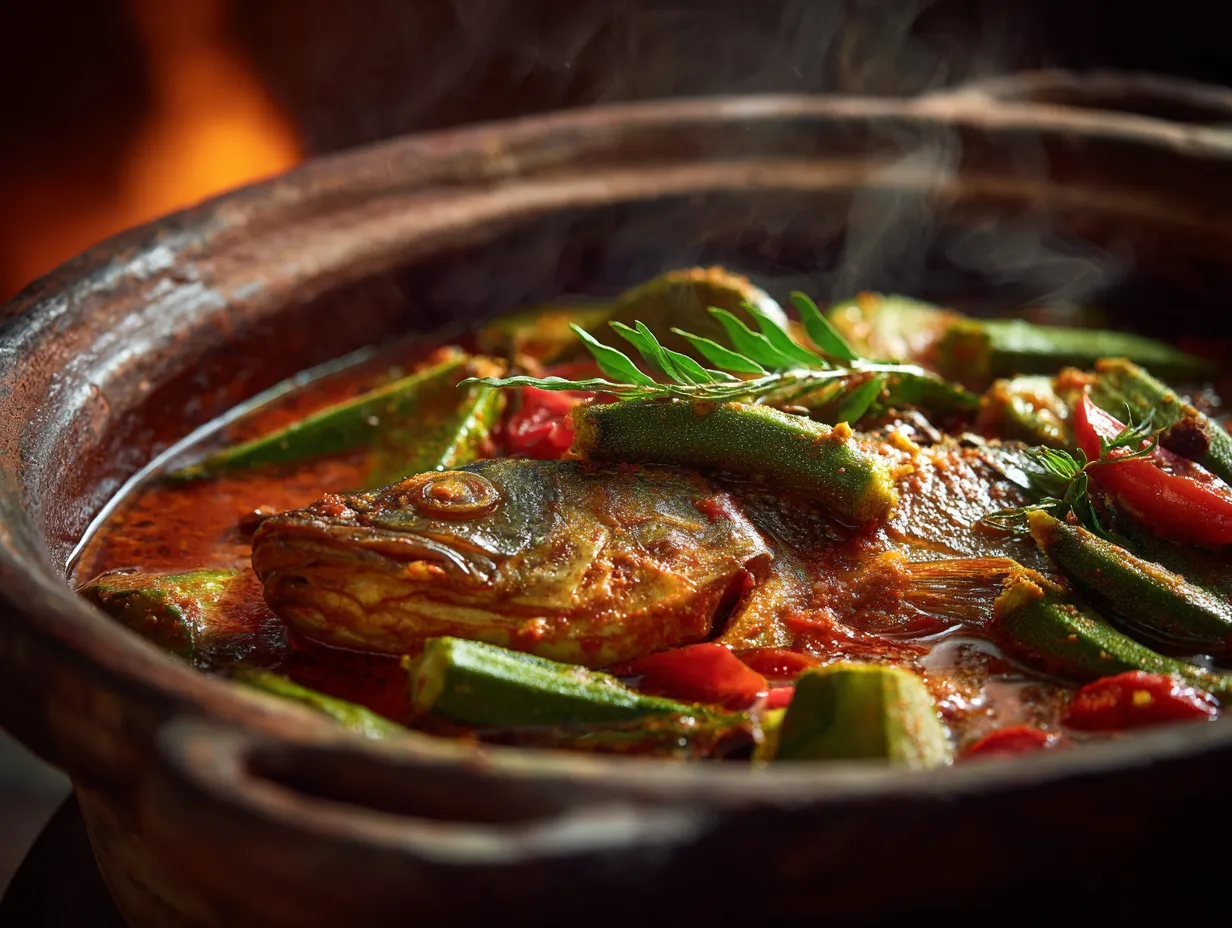
Assam Style Fish Head Curry is a beloved tangy-sour curry you’ll find in zi char stalls and Peranakan kitchens across Singapore, from heartland hawker centres to family tables in Tiong Bahru and the East Coast. The dish centres on a large fish head (commonly ikan merah or red snapper) simmered in a tamarind-forward broth with curry spices, belacan and fresh vegetables like okra and brinjal — a perfect sharing dish for a family dinner or weekend makan session.
In Singapore homes this is a crowd-pleaser for potluck dinners, festive gatherings and rainy-night suppers; the tart assam (tamarind) brightness cuts through the fishy richness and the gentle heat keeps everyone coming back for rice. At hawker stalls the curry is often cooked in a big wok and ladled straight onto the table, steam rising, chilli padi glinting — that communal, kopitiam-meets-zi char vibe is what many home cooks try to recreate.
Flavour-wise expect a lively balance: sour tamarind, savoury belacan, warm curry powder and a hint of sweetness to round things out. Textures play a part too — soft flakey fish, silky eggplant, slightly crisp okra and juicy tomato pieces. You can keep it coconut-free for a sharper assam profile or add a splash of coconut milk for a creamier, more Peranakan-style finish. Serve with steaming jasmine rice and a squeeze of lime for the authentic hawker experience.
Ingredients
- 1 whole fish head (red snapper / ikan merah), about 800–1,000 g, cleaned and rinsed
- 2 tbsp tamarind paste (or 30 g fresh tamarind soaked in 150 ml warm water, strained)
- 2–3 tbsp vegetable oil (for frying the spice paste)
- 3 tbsp curry powder (Malaysian/Nyonya style)
- 1 tbsp belacan (shrimp paste), toasted and crushed; or 1 tsp substitute fish sauce
- 4 shallots, thinly sliced
- 4 cloves garlic, crushed
- 2 cm piece ginger, julienned
- 2 stalks lemongrass, bruised and tied into a knot
- 3–4 red chillies, sliced (adjust to taste); 2–4 bird's eye chillies optional for heat
- 200 g okra (lady's fingers), halved on the diagonal
- 200 g brinjal (eggplant), cut into 3–4 cm chunks
- 2 medium tomatoes, quartered
- 400–500 ml water or light fish stock
- 150–200 ml coconut milk (optional for a creamier Peranakan version)
- 1 tsp palm sugar or light brown sugar (to balance tamarind)
- 1 tsp salt, plus more to taste
- Handful of curry leaves
- Fresh coriander (cilantro) and lime wedges to garnish
Step-by-Step Method
- Prep the fish head: rinse and pat dry, remove any scales and gills, score flesh on both sides so flavours penetrate. Patience here prevents a fishy taste.
- Make the spice base: in a blender, pulse shallots, garlic, ginger, 2 red chillies and belacan into a coarse paste. If needed add a splash of water to help blend.
- Heat 2–3 tbsp oil in a wok over medium-high heat until shimmering. Fry the spice paste and lemongrass knot for 3–4 minutes, stirring constantly, until fragrant and oil separates — this builds the flavour like a zi char stall.
- Stir in curry powder and fry for 30–45 seconds to bloom the spices, then add tomatoes and curry leaves and cook for another 1–2 minutes until tomato softens.
- Deglaze with water or fish stock, add tamarind paste (or strained tamarind liquid), sugar and salt. Bring to a rolling simmer, then reduce heat to medium-low and let the broth develop for 5 minutes.
- Gently add the fish head to the simmering curry, spooning sauce over the flesh. Simmer gently (not a hard boil) for 10–12 minutes, turning once, until flesh flakes easily and the soup is aromatic.
- Add eggplant and okra in the last 6–8 minutes of cooking so they become tender but not mushy. If using coconut milk, stir it in during the final 3–4 minutes and keep the heat gentle to prevent curdling.
- Taste and adjust: balance sourness with a pinch more sugar, add salt or a dash of light soy if it needs depth, and more chillies if you like it spicier — just like at a hawker zi char stall, tweak to your liking.
- Finish with fresh coriander and an extra squeeze of lime or calamansi. Serve hot in the wok or claypot for sharing, alongside steamed jasmine rice.
- Leftovers reheat gently on low heat; the flavours deepen overnight and make excellent next-day lunch with rice.
Tips & Serving Ideas
- Buy the fish head fresh from a wet market (e.g. Tekka, Geylang) or trusted supermarket; ask the fishmonger to remove gills to reduce bitterness.
- If fresh tamarind isn’t available, use tamarind paste diluted in warm water — adjust quantity to taste as brands vary in acidity.
- Toast belacan briefly before blending to tame its rawness; substitute with a splash of fish sauce if you can’t find it at NTUC or Cold Storage.
- To keep okra from turning slimy, add it near the end of cooking and avoid over-stirring — you want it tender with a bit of bite.
- For wok hei notes, fry the spice paste until oil separates on medium-high heat before adding liquids; then lower heat to a simmer to finish the fish.
- Make-ahead: the curry tastes better the next day as flavours marry — refrigerate and gently reheat; add a splash of water if the sauce thickens.
- Adjust chilli level for children or guests by removing seeds and using fewer bird's eye chillies, or serve sliced chillies on the side for those who like heat.
You might also like
More recipes to save for later.