Hyderabadi Egg Biryani
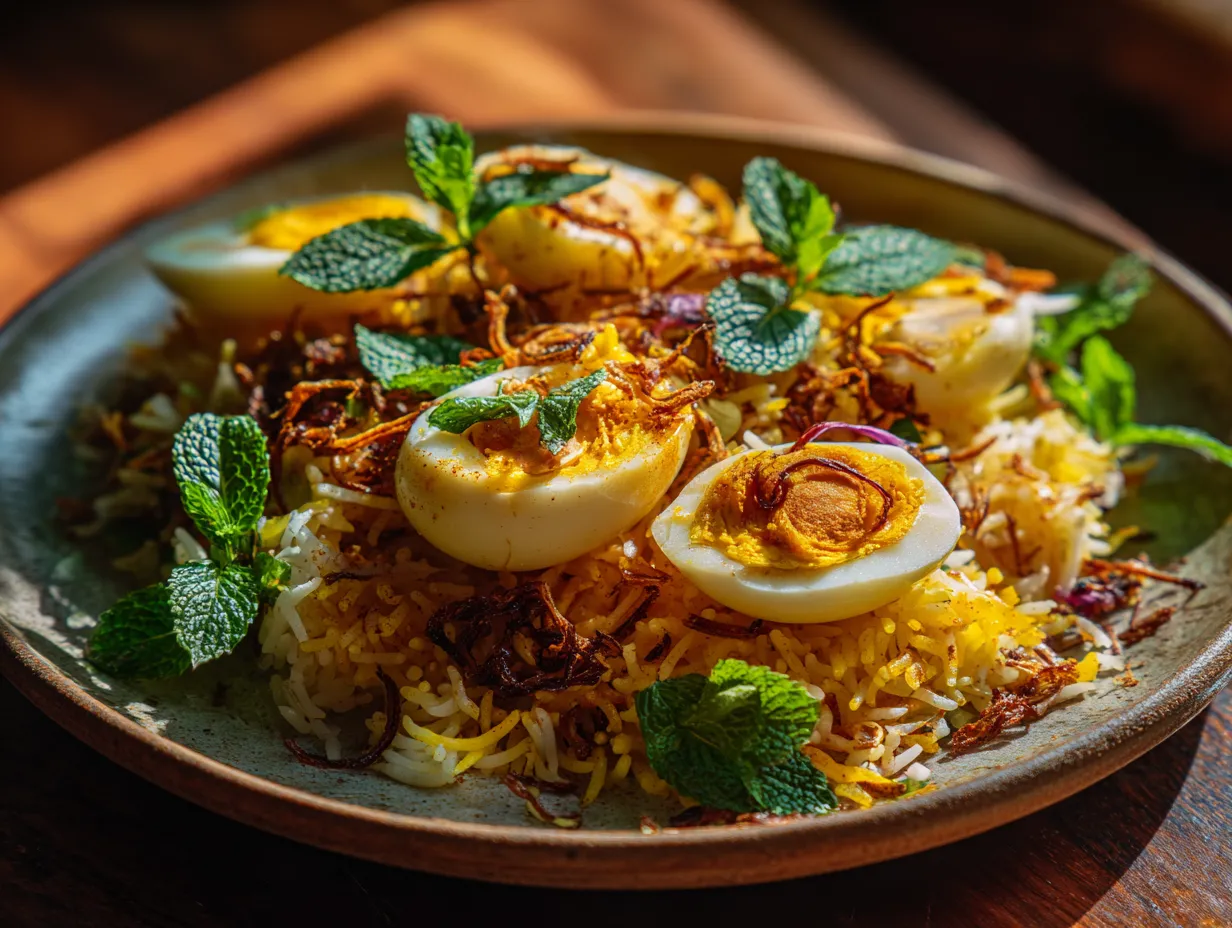
Singapore-style Hyderabadi Egg Biryani — fragrant basmati rice layered with a spiced yoghurt curry and boiled eggs, finished with traditional dum steaming for deep, aromatic flavours.
About this dish
This Hyderabadi Egg Biryani brings the rich, aromatic dum biryani tradition into a Singapore home kitchen. Think fragrant basmati, whole spices, saffron-splashed milk and boiled eggs tucked into layers of spiced yoghurt gravy — perfect for family dinners in a heartland HDB flat or a weekend potluck at the kopitiam. It’s a budget-friendly Hyderabadi take that still sings with the classic saffron, fried onion (birista) and mint-coriander notes.
In Singapore you might spot variations of egg biryani at Little India restaurants and Muslim eatery stalls, or enjoy it as a comforting supper after a shift at a hawker centre. The texture is about contrast — fluffy separate rice grains, soft boiled eggs, and a saucy, lightly spiced masala that’s tangy from yogurt and lemon. The dum (steam) phase is key: low, slow heat builds that signature aroma similar to the heavy-potted biryanis served at festive Deepavali or family gatherings.
This recipe is written for a typical Singapore kitchen (wok, heavy-bottomed pot or rice cooker for par-cooking) and uses ingredients you can easily find at NTUC FairPrice, Cold Storage or Sheng Siong. Serve it family-style with cooling raita or achar, and you’ve got a no-fuss, crowd-pleasing main that doubles as great tupperware makan for next-day lunch.
Ingredients
- 400 g basmati rice, rinsed until water runs clear
- 6 large eggs
- 300 g plain yogurt (full-fat preferred)
- 2 medium onions (about 200 g), thinly sliced
- 4 tbsp ghee or a mix of ghee and neutral oil
- 3 tbsp biryani masala (store-bought or homemade)
- 1 tsp turmeric powder
- 1½ tsp red chilli powder (adjust to taste)
- 1 tbsp ginger-garlic paste
- 4 green cardamom pods
- 4 cloves
- 2 bay leaves
- 2 small cinnamon sticks (2 x 3 cm)
- 1 star anise (optional)
- 1 tsp garam masala
- A generous handful of fresh mint leaves (about 20 g), chopped
- A generous handful of fresh coriander/cilantro (about 20 g), chopped
- A pinch of saffron threads soaked in 2 tbsp warm milk
- Juice of ½ lemon
- 100 g fried onions (birista) plus extra for garnish
- Salt to taste (about 1.5 tsp)
- 2 tbsp toasted cashews or raisins (optional, for garnish)
- 100 ml water or stock (to adjust masala consistency)
Step-by-Step Method
- Hard-boil the eggs: place eggs in a pot, cover with water, bring to boil and simmer 8–10 minutes, cool in ice water, peel and set aside.
- Par-cook the rice: bring a large pot of salted water to boil, add rinsed basmati and cook until about 70% done (grains still with a slight bite), drain and spread on a tray to stop cooking.
- Fry the onions (birista) if not using store-bought: heat 2 tbsp oil, fry thinly sliced onions over medium heat until deep golden and crisp, drain on paper towel; reserve 100 g for layering and some extra for garnish.
- Make the masala: heat 2 tbsp ghee in a heavy-bottomed pan, add whole spices (cardamom, cloves, cinnamon, bay), sauté 30 seconds, add ginger-garlic paste and fry until raw smell gone, add biryani masala, turmeric, chilli powder and cook 1 minute.
- Add yogurt and aromatics: lower heat, whisk in yogurt, add lemon juice, salt and 100 ml water or stock to make a thick curry; simmer 4–5 minutes until the oil separates slightly. Stir in chopped mint and coriander and half the fried onions.
- Coat the eggs: make shallow slits in boiled eggs and gently toss them in a little of the masala so they absorb flavour; place eggs into the masala and simmer 2 minutes.
- Layering for dum: in a heavy pot or Dutch oven, spread a third of rice, spoon half the masala (with some eggs) over it, sprinkle some fried onions, mint and coriander; repeat layers finishing with rice. Drizzle saffron milk and dot remaining ghee on top.
- Seal and steam (dum): cover lid tightly (use dough or heavy foil to seal if you like) and cook on very low heat for 18–25 minutes, or place in a preheated oven at 180°C for 15–20 minutes to allow flavours to marry.
- Rest and serve: turn off heat, let sit sealed for 10 minutes, then gently fluff the rice with a fork so you don’t break eggs; garnish with remaining fried onions, toasted cashews/raisins and fresh coriander.
- Taste-and-adjust: when serving, offer extra raita or achar at the side; instruct diners to break eggs into the rice for extra richness — adjust salt or chilli with sambal or chilli padi like at a zi char stall.
Tips & Serving Ideas
- Par-cook rice to 70% (al dente) so it finishes perfectly during dum; Singapore home cooks often use a rice cooker to par-boil then transfer to the pot for layering.
- Use store-bought biryani masala for convenience (available at NTUC FairPrice, Cold Storage or Mustafa) or mix garam masala, coriander and cumin for a quick substitute.
- Soak saffron in warm milk for 10 minutes and drizzle on the top layer for aroma and colour — a little goes a long way.
- Seal the pot well for dum: if you don't have dough, use aluminium foil under the lid and cook on the lowest flame to emulate hawker-style steam.
- Adjust heat: reduce red chilli powder or omit green chillies for kids or low-spice palates; Singaporeans often serve sambal on the side for those who want extra kick.
- Make-ahead: prepare the masala and hard-boiled eggs a day ahead. Assemble and steam on the day for fresher texture — great for potlucks and festive gatherings.
- Leftovers reheat well in a microwave or in a pan with a splash of water and a lid to restore moisture; add a dollop of ghee when reheating for extra aroma.
You might also like
More recipes to save for later.