Fried Economical Bee Hoon (Breakfast Style)
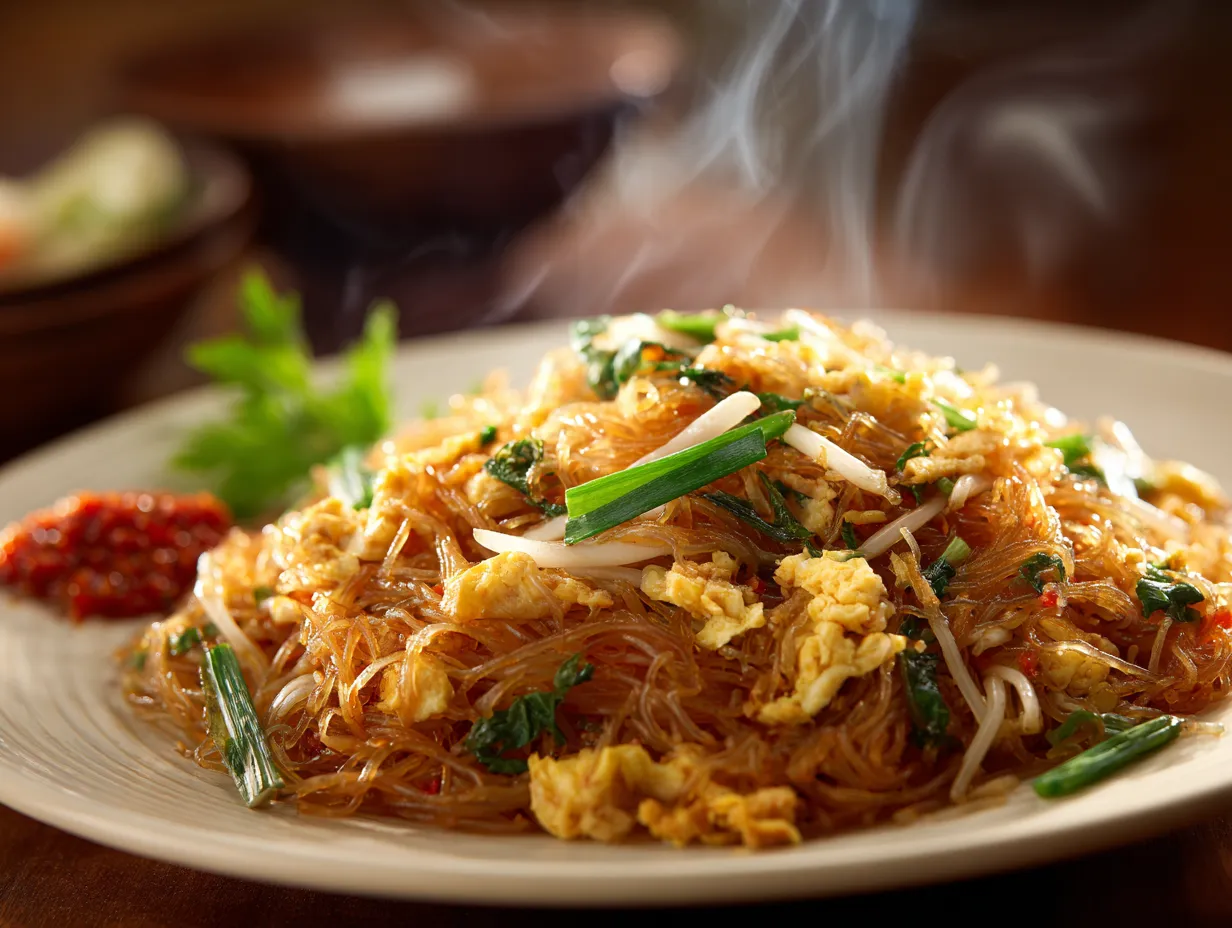
A Singapore-style wok-fried bee hoon made with economical pantry ingredients — light, savoury and perfect for a kopitiam-style breakfast or quick family makan.
About this dish
Fried Economical Bee Hoon (Breakfast Style) is the kind of humble, comforting hawker-style dish you’ll find in kopitiams and heartland coffee shops across Singapore — simple, quick and full of flavour. This version uses inexpensive staples like rice vermicelli, eggs, shredded cabbage and a little luncheon meat or flaked fish to keep costs down while still delivering satisfying texture and wok-fired aroma.
It’s ideal for busy mornings or a late-night supper after a shift at the office, and it’s the sort of plate that Singaporeans of all ages will happily tuck into alongside kopi or teh. The flavour profile is light and savoury with a touch of sweetness and optional sambal or sliced chilli on the side; textures come from soft bee hoon, crunchy bean sprouts and the occasional bite of spring onion or fried shallot.
This recipe suits home cooks who want a fuss-free, wallet-friendly meal. It’s flexible — swap proteins based on what’s on sale at NTUC, Sheng Siong or Cold Storage, and tweak the seasonings to match the street-hawker taste you grew up with in Tiong Bahru, East Coast or your local heartland hawker centre.
Ingredients
- 250 g dried rice vermicelli (bee hoon), soaked in warm water for 5–8 minutes until pliable, drained
- 2 tbsp vegetable oil (for frying)
- 3 cloves garlic, finely minced
- 2 shallots, thinly sliced
- 2 large eggs, beaten lightly
- 100 g luncheon meat or small peeled prawns or flaked canned tuna (economical protein option), thinly sliced
- 100 g cabbage, shredded (or chye sim/kapok)
- 100 g bean sprouts, ends trimmed
- 2 spring onions, white and green parts separated, sliced thinly
- 1 tbsp light soy sauce
- 1 tsp dark soy sauce (for colour, optional)
- 1 tsp fish sauce or 1/2 tsp salt (optional for umami)
- 1/2 tsp sugar
- 1/4 tsp white pepper
- 1 tsp sesame oil
- Lime wedges and sambal chilli or sliced red chilli, to serve
- Optional garnish: fried shallots or chopped coriander (cilantro)
Step-by-Step Method
- Soak the rice vermicelli in warm water for 5–8 minutes until pliable but not falling apart. Drain well and toss with 1 tsp sesame oil to prevent sticking.
- Prepare all ingredients: beat the eggs, slice the luncheon meat or protein, shred cabbage, trim bean sprouts and separate spring onion whites and greens. Have sauces measured and within reach — stir-frying is fast.
- Heat a wok over high heat until very hot. Add 2 tbsp vegetable oil and swirl to coat. Add minced garlic and shallot; stir-fry for 10–15 seconds on medium-high until fragrant but not browned.
- Add the luncheon meat (or prawns/tuna) and the spring onion whites. Stir-fry on high for 30–45 seconds until the protein is heated through and has a little colour.
- Push ingredients to one side of the wok. Pour beaten eggs into the empty side and scramble quickly until mostly set, then mix with the rest.
- Add the drained bee hoon, shredded cabbage and bean sprouts. Toss continuously on high heat to combine and heat through — this helps achieve a bit of wok hei. If the wok looks dry, add a splash (1–2 tbsp) of water or a neutral oil.
- Season with light soy sauce, dark soy sauce (if using) for colour, fish sauce or salt, sugar and white pepper. Toss thoroughly, taste and adjust seasoning — add a little more light soy for saltiness or a pinch more sugar to balance.
- Turn off the heat and finish with the reserved spring onion greens and 1 tsp sesame oil. Serve immediately with lime wedges, sambal or sliced chilli, and optional fried shallots for crunch.
Tips & Serving Ideas
- Buy dried bee hoon in bulk at NTUC, Sheng Siong or Cold Storage — it’s economical and stores well; soak just until pliable to avoid soggy noodles.
- To get wok hei at home, preheat the wok until very hot, stir constantly and cook on high heat in quick batches; keep ingredients dry and avoid overcrowding.
- If you don’t have luncheon meat, use canned tuna or leftover shredded roast chicken for an affordable protein swap; small prawns work well when on sale.
- Adjust seasoning to taste like a local zi char stall — add more light soy for saltiness, or a dash of sugar to mimic the sweet-savory balance many hawkers use.
- Make-ahead tip: keep noodles and cooked ingredients separate in the fridge and toss together in a hot wok right before serving for best texture the next day.
- For a breakfast twist, top with a sunny-side-up egg or serve with achar and a strong cup of kopi or teh tarik.
You might also like
More recipes to save for later.