Claypot Curry Fish Head
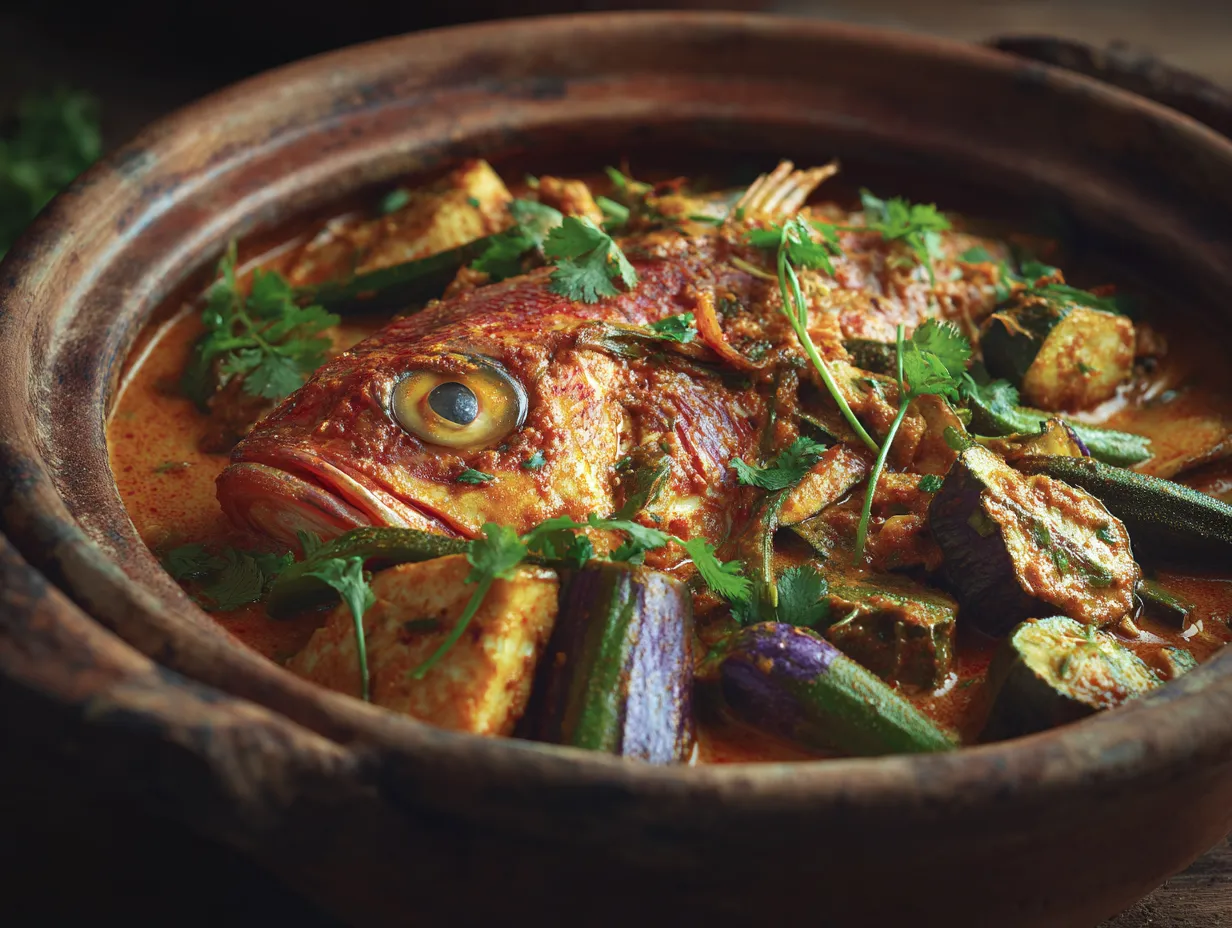
Singapore-style claypot curry fish head: a hearty, family-style curry simmered with fresh fish head, coconut milk and bold spices in a claypot for wok-hei warmth.
About this dish
Claypot Curry Fish Head is a beloved Singapore comfort dish that sits comfortably between zi char classics and Peranakan-influenced home cooking. You’ll find variations at hawker centres, kopitiam zi char stalls and family tables from East Coast to Tiong Bahru — it’s the kind of sharing dish that turns a regular weeknight into a communal makan. The claypot gives the curry a slow-simmered depth and keeps the gravy piping hot, perfect for dipping rice and soaked-up sambal.
This version balances fragrant aromatics (shallot, garlic, ginger, lemongrass) with curry powder and a spoonful of store-bought curry paste for convenience — a method many busy Singapore cooks use. Coconut milk softens the spice and creates a silky gravy, while tamarind (asam jawa) or a squeeze of lime adds the bright, slightly sour note familiar in local curry fish head recipes. Vegetables like eggplant and okra are common additions in Singapore homes and zi char stalls, lending texture and colour.
Serve this claypot curry fish head family-style with steaming white rice, achar and a jug of iced lemon tea or kopi. It’s ideal for rainy-day suppers, weekend family dinners, or sharing at small gatherings and potlucks. Leftovers keep well and make a flavourful next-day lunch — just reheat gently so the fish stays tender. Whether you’re recreating a hawker favourite or cooking up a homely crowd-pleaser, this recipe brings the familiar heartland flavours of Singapore straight to your kitchen.
Ingredients
- 1 whole red snapper head (about 800 g), halved if large and rinsed
- 1 tsp salt, for rubbing the fish and rinsing
- 2 tbsp vegetable oil or peanut oil
- 6 shallots, thinly sliced
- 4 cloves garlic, crushed and sliced
- 2 tbsp ginger, julienned
- 2 stalks lemongrass, bruised and sliced (white part only)
- 2–3 tbsp curry powder (Malaysian/Singapore style)
- 1–2 tbsp store-bought curry paste (optional, adjust for spice)
- 400 ml coconut milk (1 can)
- 250 ml water or fish stock
- 1 tbsp tamarind paste (asam jawa) mixed with 2 tbsp water, or 1 tbsp fresh lime juice
- 2 tbsp fish sauce or 1–2 tbsp light soy sauce
- 1 tsp palm sugar or caster sugar
- 1 small eggplant (brinjal), cut into bite-size chunks (about 200 g)
- 150 g okra (ladies' fingers), trimmed and halved
- 2 medium tomatoes, cut into wedges
- 6–8 curry leaves (optional) or a few kaffir lime leaves
- 2–4 bird's eye chillies, sliced (optional, for heat)
- Handful fresh coriander (cilantro) leaves for garnish
- Lime wedges, to serve
- Steamed white rice, to serve
Step-by-Step Method
- Clean and prep the fish head: rub with 1 tsp salt, rinse and pat dry. If the head is very large, halve it so it fits in your claypot; set aside.
- Mix tamarind paste with 2 tbsp water (or prepare lime wedges). Prepare vegetables: cut eggplant, trim and halve okra, and wedge the tomatoes.
- Heat the claypot over medium heat (or use a heavy-bottomed wok). Add 2 tbsp oil and swirl to coat. When oil is hot (shimmering), sear the fish head skin-side down for 2–3 minutes until lightly browned; flip and sear the other side briefly. Remove fish and set aside on a plate.
- Lower heat to medium-low. In the same pot, add a little more oil if needed and sauté shallots, garlic, ginger and lemongrass for 2–3 minutes until fragrant and translucent. Add curry leaves if using.
- Add curry powder and curry paste; stir-fry for 1–2 minutes until the spices are aromatic (careful not to burn). This blooms the spices much like a zi char stall would.
- Pour in water or fish stock, scraping up any browned bits. Return the seared fish head to the pot, skin-side up, and add coconut milk. Bring to a gentle simmer over low–medium heat.
- Add eggplant and okra around the fish, then simmer gently, covered, for 12–15 minutes until the fish is cooked through and vegetables are tender. Keep the heat such that the curry is bubbling gently — too vigorous and the coconut milk may split.
- Add tomato wedges in the last 3–4 minutes to soften but not disintegrate. Taste the gravy and season with fish sauce (or light soy) and 1 tsp sugar; adjust salt and tamarind/lime for brightness.
- If you prefer a thicker sauce, simmer uncovered for a few minutes to reduce. Otherwise, keep covered until ready to serve to maintain warmth in the claypot.
- Transfer to the table in the claypot for communal eating. Garnish with fresh coriander, sliced bird's eye chillies and lime wedges. Serve immediately with steamed white rice and side dishes like achar or sambal kangkong.
- Leftovers: cool to room temperature then refrigerate. Reheat gently over low heat to avoid overcooking the fish; add a splash of water or coconut milk if the sauce has thickened.
Tips & Serving Ideas
- Buy the fish head fresh from the wet market or local seafood counter (NTUC FairPrice, Cold Storage or a heartland fishmonger) and ask the seller to clean/scale it for you — fresh fish makes a noticeable difference.
- If you don’t have a claypot, use a heavy-bottomed wok or Dutch oven; start on medium-high to sear and finish on low to simmer so the coconut milk doesn’t split.
- Adjust spice levels by controlling the amount of curry paste and bird’s eye chillies; Singapore palates vary so taste then tweak with sugar, fish sauce and lime like a zi char stall cook.
- To develop deeper flavour, briefly dry-roast curry powder in the pan before adding oil, or use a mix of store-bought curry powder and a tablespoon of fresh curry paste.
- Avoid overcooking: fish head meat cooks quickly — simmer gently and check the cheek meat for doneness (opaque and flakes easily).
- Make-ahead: the curry actually tastes better the next day as flavours meld. Reheat gently on low and add a splash of water or coconut milk if the sauce thickens.
- For a brighter, slightly tangy note typical of some local versions, use tamarind paste (asam) rather than just lime — taste and balance to your preference.
- If you have a large family, double the vegetables (eggplant, okra, tomatoes) so there’s plenty to go around with rice.
You might also like
More recipes to save for later.