Coffee Pork Ribs (Zi Char Style)
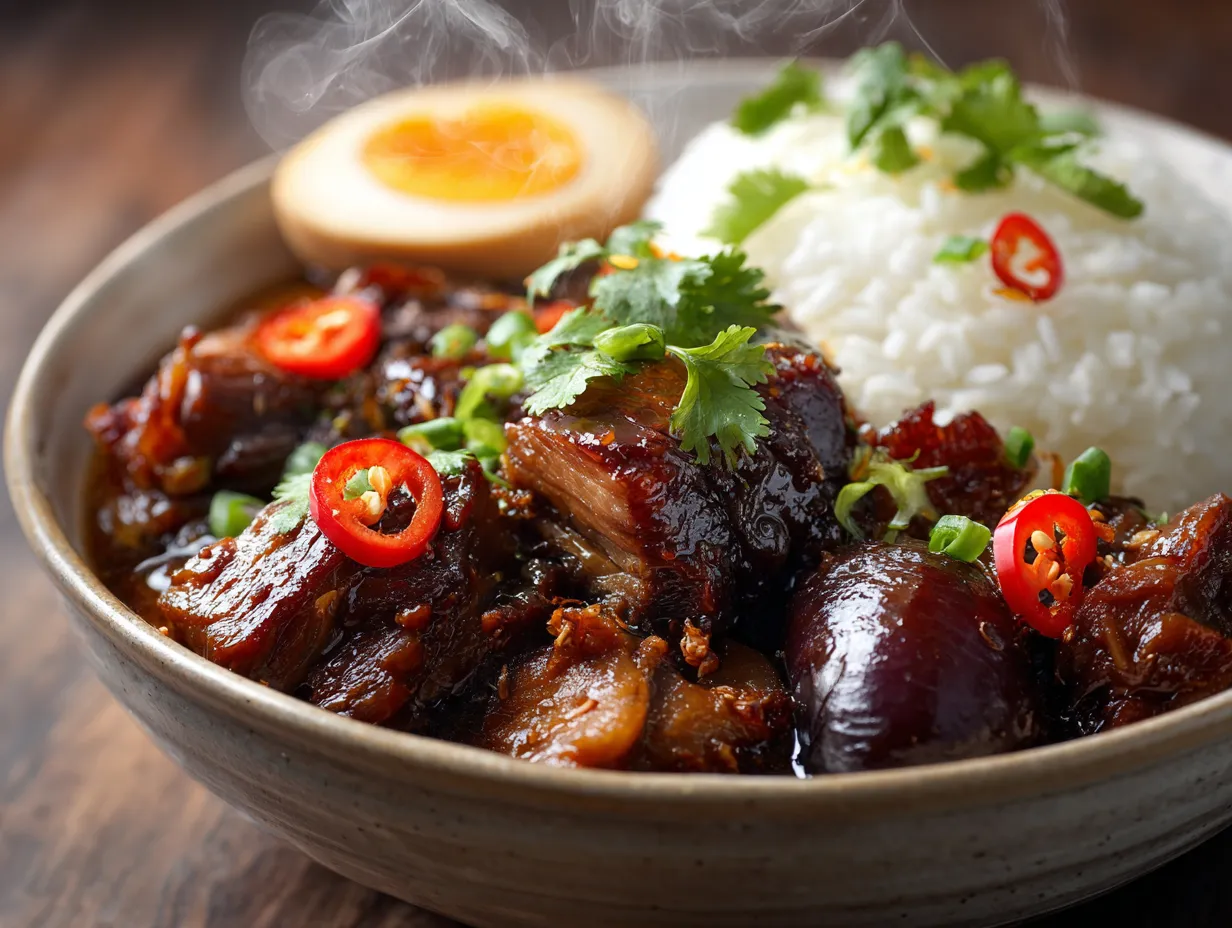
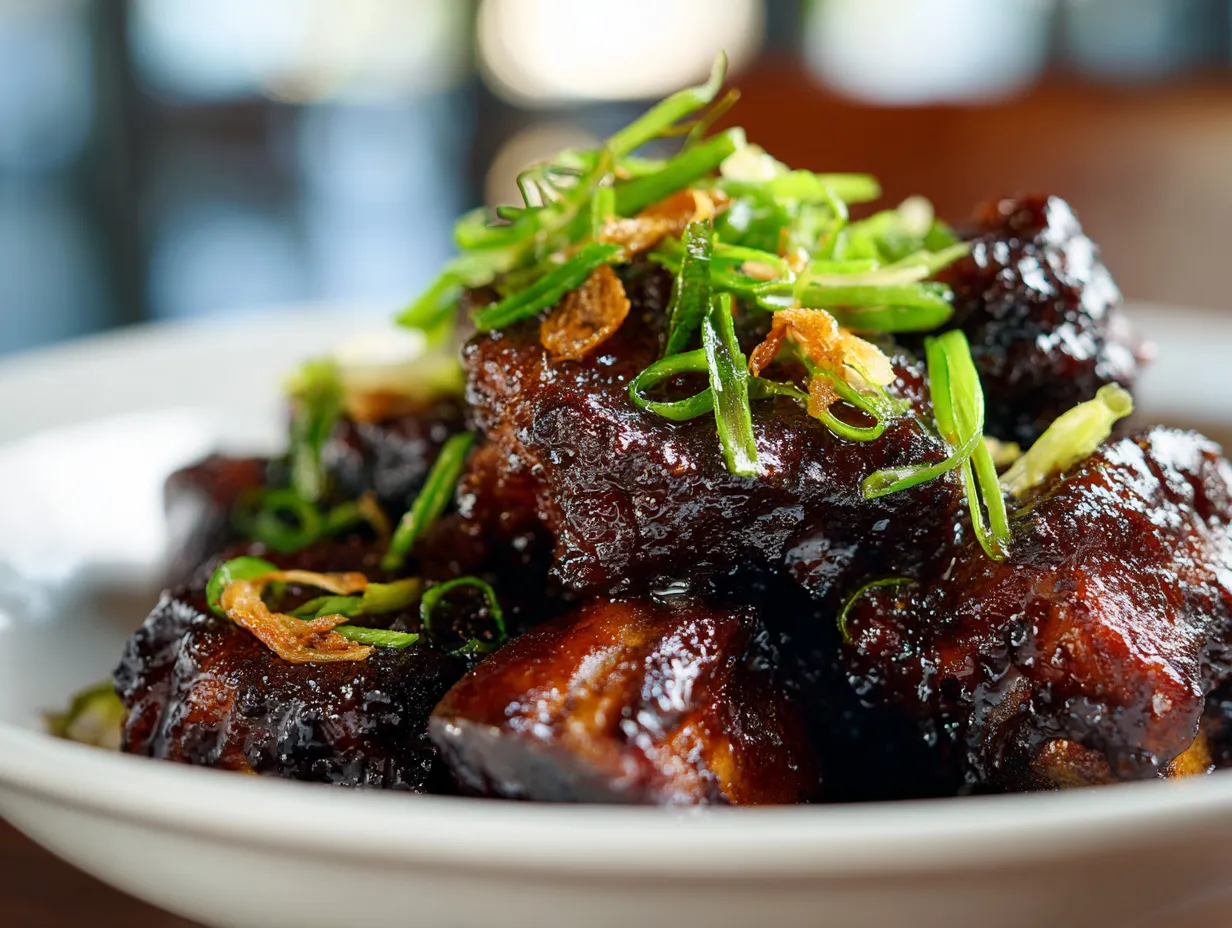
Singapore-style zi char coffee pork ribs — wok-fried pork ribs glazed in a bittersweet kopi-infused caramel for a sticky, savoury-sweet finish.
About this dish
Coffee Pork Ribs (Zi Char Style) is the kind of dish that turns up both at heartland zi char stalls and family dinners across Singapore — think hawker-centre energy with homecooked comfort. The ribs are lightly coated and wok-fried, then finished in a glossy, kopi (local black coffee) caramel mixed with dark soy, oyster sauce and a touch of gula melaka or brown sugar for that signature bittersweet balance. The result is tender meat with sticky edges, a whisper of coffee bitterness and the familiar savoury umami of Chinese-style sauces.
This recipe suits busy parents who want a quick-ish weeknight crowd-pleaser, folks preparing a sharing plate for a potluck, or late-night supper hunters craving something moreish after kopitiam drinks. It channels zi char techniques — high heat in a wok, tossing to develop caramelised edges and concentrating the sauce — but uses ingredients easily found at NTUC FairPrice, Cold Storage or Sheng Siong.
Expect bold, layered flavours: salty-sweet soy, aromatic garlic and ginger, warming five-spice or black pepper if you like, and that unexpected coffee note that cuts through the richness. Serve it family-style with steamed jasmine rice, achar or a simple cucumber salad to balance the glaze. For a chilli kick, add sliced chilli padi or a spoonful of sambal on the side — very Singaporean, very shiok.
Ingredients
- 800 g pork spare ribs, cut into 6–8 cm pieces
- 1 tbsp light soy sauce
- 1 tbsp dark soy sauce
- 2 tbsp oyster sauce
- 100 ml strong black coffee (cooled), or 60 ml kopi and 40 ml water
- 2 tbsp palm sugar (gula melaka) or dark brown sugar
- 1 tbsp Shaoxing wine or dry sherry (optional)
- 1 tsp five-spice powder
- 1 tsp coarsely ground black pepper
- 3 cloves garlic, smashed and finely chopped
- 1 thumb (20 g) ginger, julienned
- 1 tbsp cornflour (cornstarch) mixed with 2 tbsp water (slurry)
- 2 tbsp neutral oil (peanut or vegetable) for frying
- 1 red chilli, thinly sliced, or 2–3 bird's eye chillies (optional)
- 2 stalks spring onions, cut into 4 cm pieces
- 2 tbsp fried shallots (bawang goreng) for garnish
- 1 lime or calamansi, cut into wedges, to serve
- 150 ml water or low-sodium chicken stock
- Salt to taste (if needed)
- Optional: 1 tbsp kecap manis for extra caramelised sweetness
Step-by-Step Method
- Rinse and pat the pork ribs dry. In a bowl, mix 1 tbsp light soy, 1 tsp five-spice powder, 1 tbsp Shaoxing wine (if using) and a pinch of black pepper; toss the ribs to coat and marinate for 15–30 minutes in the fridge.
- Prepare the coffee glaze: combine cooled strong coffee, dark soy sauce, 2 tbsp oyster sauce, palm sugar (or brown sugar) and 150 ml water or stock in a measuring jug. Stir until sugar dissolves and set aside.
- Heat a wok over high heat until very hot. Add 2 tbsp oil and swirl to coat. Shake off excess marinade from the ribs and add them to the wok in a single layer. Fry in batches if needed to avoid overcrowding. Cook on high until browned and caramelised on the edges, about 3–4 minutes per side.
- Remove the seared ribs and set aside. Leave any fond in the wok, reduce heat to medium-high and add the chopped garlic and julienned ginger. Stir-fry for 30–45 seconds until fragrant but not burnt.
- Return all ribs to the wok and pour the coffee-sauce mixture over. Bring to a simmer on medium heat, scraping up any browned bits. Simmer, uncovered, for 12–15 minutes until the ribs are almost tender and the sauce has reduced slightly.
- Taste and adjust: add more light soy if it needs salt, or a little brown sugar if you prefer sweeter — same way a zi char stall will tweak balance. When ribs are tender and sauce is reduced, stir in the cornflour slurry to thicken the glaze. Cook for another 1–2 minutes until glossy and clinging to the ribs.
- Turn heat up briefly to high and toss constantly so the glaze caramelises onto the ribs, creating sticky edges — watch carefully to prevent burning. Add sliced chillies and spring onions in the last 30 seconds and toss through.
- Transfer to a serving platter. Sprinkle fried shallots on top and serve with lime or calamansi wedges, steamed jasmine rice and some achar or simple cucumber salad on the side.
- Leftovers: store cooled ribs in an airtight container in the fridge for up to 2 days. Reheat gently in a wok or oven to retain the glaze.
Tips & Serving Ideas
- Use strong brewed coffee or concentrated kopi for a pronounced coffee note; instant coffee mixed with hot water also works when you're short on time.
- If you prefer less bitterness, reduce the coffee by 20–30% and add a little more sugar or kecap manis to balance the glaze — a common adjustment in home zi char kitchens.
- For deeper caramelisation, sear the ribs in batches on high heat to develop fond; don’t overcrowd the wok or the ribs will steam instead of caramelise.
- Gula melaka (palm sugar) gives a more complex molasses flavour than regular brown sugar and is widely available at NTUC FairPrice and wet markets — a nice local touch.
- To make ahead: simmer ribs until nearly tender, cool and refrigerate. Reheat in a hot wok with the sauce and cornflour slurry just before serving to refresh the glaze.
- Shortcut: use boneless pork ribs or spare-rib pieces for faster cook time, but reduce simmering by 5–8 minutes and check for tenderness.
- Adjust chilli heat to taste — add sliced bird's eye chillies at the end for a fresh, sharp kick popular with Malay and Peranakan-influenced zi char stalls.
You might also like
More recipes to save for later.