Penang Style Char Kway Teow
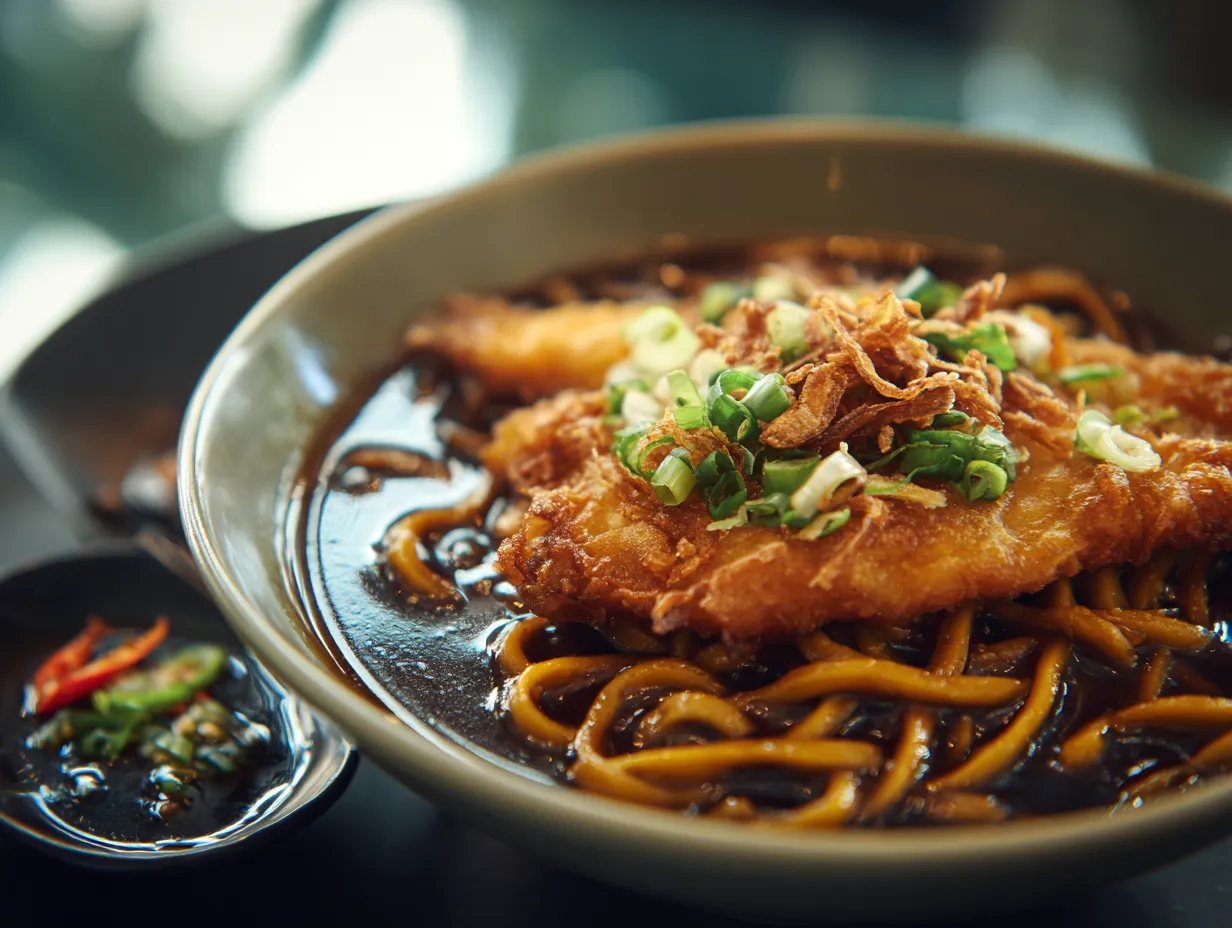
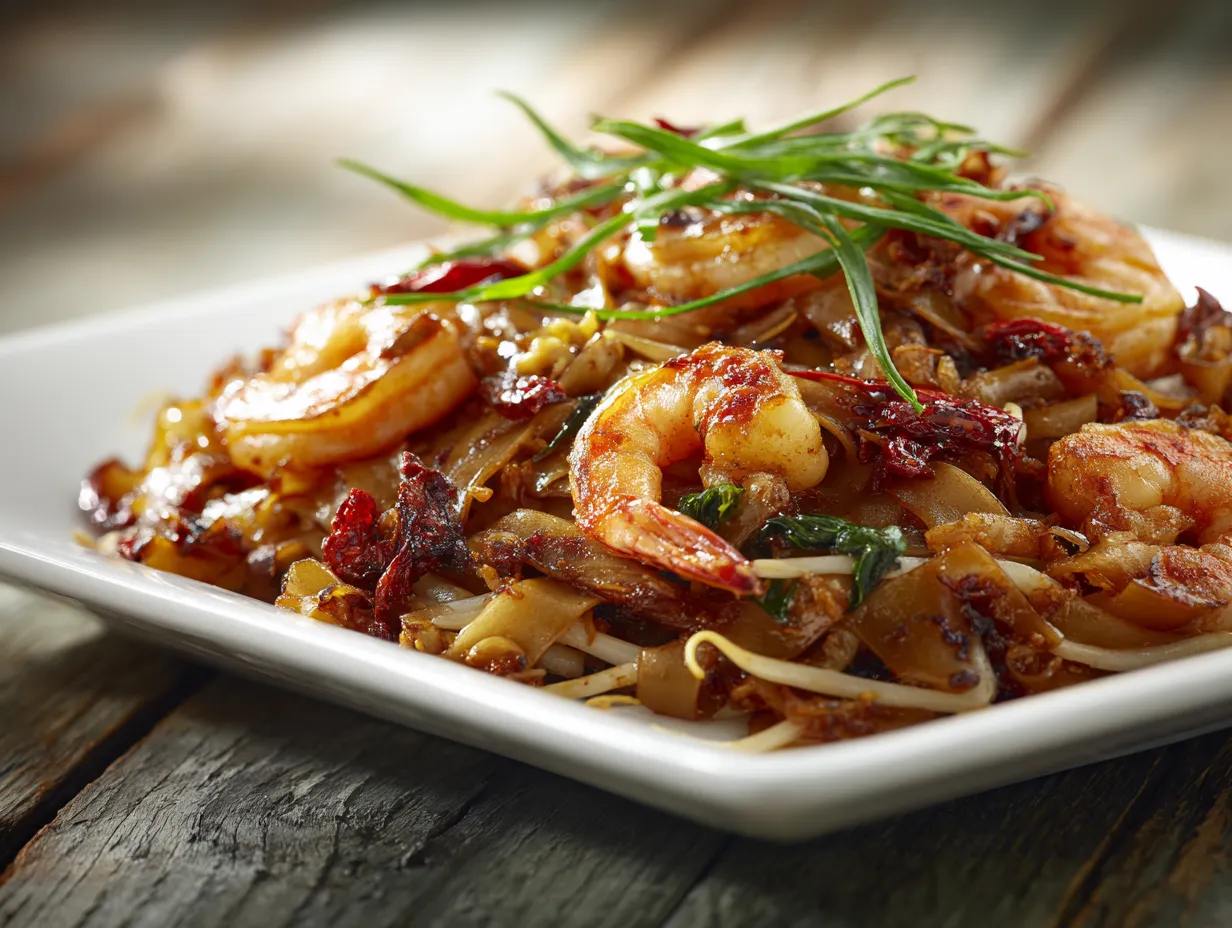
Penang Style Char Kway Teow — wok-fried flat rice noodles with prawns, cockles and smoky wok-hei, a favourite hawker-style stir-fry enjoyed across Singapore.
About this dish
This Penang-style char kway teow brings the smoky, charred flavours of Penang hawker stalls into a Singapore home kitchen. Think wide, slippery rice noodles tossed at very high heat with prawns, cockles (optional), lap cheong or Chinese sausage, eggs and bean sprouts — finished with a hit of dark soy, fish sauce and sambal for a savoury, slightly spicy finish. It’s the kind of plate you find at kopi tiam and hawker centres from Tiong Bahru to the East Coast on weekends and late-night suppers in the heartlands.
In Singapore we often adapt the street recipe to local tastes: you can use less lard for a lighter version, swap cockles for sliced fish cake or extra prawns, and adjust sambal heat to suit the family. The texture is key — silky noodles with charred edges, crunchy bean sprouts and springy prawns — and the flavour balance comes from dark soy sweetness, a salty-funky note from fish sauce or belacan, and aromatic garlic.
Perfect for a weekend family meal, zi char-style sharing, or a late-night supper after drinks, this recipe is built for a hot wok and quick tosses. Serve with lime wedges and extra sambal on the side, and pair with kopi or an iced barley drink for a proper local makan moment.
Ingredients
- 400 g fresh flat rice noodles (kway teow) or gently loosened store-bought sheets
- 200 g prawns, shelled and deveined (keep tails on for presentation)
- 100 g cockles, cleaned and blanched (optional; can substitute with clams or extra prawns)
- 50 g lap cheong (Chinese sausage), thinly sliced
- 2 large eggs, lightly beaten
- 150 g bean sprouts, rinsed and drained
- 3-4 stalks Chinese chives (leek chives), cut into 5 cm lengths
- 3 cloves garlic, finely chopped
- 2 tbsp vegetable oil (or 1 tbsp lard + 1 tbsp oil for traditional flavour)
- 1 tbsp belacan or sambal belacan (dissolved in 1 tbsp warm water) or 1–2 tsp chilli paste
- 2 tbsp dark soy sauce (for colour and caramelised sweetness)
- 1 tbsp light soy sauce (for seasoning)
- 1 tbsp fish sauce (or 1 tsp anchovy paste as alternative)
- 1 tsp sugar
- 1/4 tsp white pepper (or to taste)
- 2 lime wedges, to serve
- 1-2 tbsp chopped spring onion for garnish
- Extra sambal or sliced chilli padi, to serve
- Optional: 1 small shallot, thinly sliced for extra aroma
- Optional: 1 tbsp kecap manis (if you prefer sweeter, Malaysian-influenced finish)
Step-by-Step Method
- Prepare ingredients: peel and devein prawns, slice lap cheong, rinse bean sprouts and chives, and loosen fresh kway teow into separate strands; if using packet noodles, separate gently and toss with a little oil to prevent sticking.
- Mix sauces: in a small bowl combine dark soy, light soy, fish sauce, dissolved belacan/sambal (or chilli paste), sugar and white pepper; set aside — taste to check balance (salty, a touch sweet, spicy).
- Heat wok very hot: place a large wok over high heat until smoking hot. Add oil (and lard if using) and swirl to coat. High heat is essential for wok hei — the smoky charred flavour.
- Sizzle aromatics and lap cheong: quickly add chopped garlic (and shallot if using) and stir-fry for 10–15 seconds until fragrant; add lap cheong and toss for another 20–30 seconds to release oils.
- Cook prawns and cockles: push ingredients to the side, add prawns and stir until just turning pink (about 1–2 minutes); add cockles briefly until heated through — avoid overcooking.
- Add noodles and sauce: add the kway teow to the wok in a single layer if possible. Pour the sauce mixture evenly over the noodles. Toss and stir-fry constantly, pressing noodles against the wok so they pick up smoky char, about 1–2 minutes.
- Add eggs and vegetables: push noodles to one side, pour beaten eggs into the cleared space and scramble quickly. Combine with noodles, then add bean sprouts and chives. Stir-fry on high for another 30–60 seconds so sprouts stay crisp.
- Finish and taste: give a final toss to coat everything evenly; adjust seasoning with a splash more light soy, fish sauce or a pinch of sugar if needed. Look for some caramelised spots on the noodles for authentic char.
- Serve immediately: portion onto plates, garnish with spring onions, serve with lime wedges and extra sambal on the side. Eat hot for the best texture and wok hei.
- Leftover note: for next-day reheating, stir-fry quickly in a very hot pan with a dash of oil and a splash of water to loosen noodles — avoid soggy results by reheating briefly on high heat.
Tips & Serving Ideas
- Use the hottest wok you have and preheat well — wok hei (smoky char) comes from high heat and quick tossing.
- If you can’t find fresh kway teow, use good-quality dried wide rice noodles rehydrated just until flexible; toss with a little oil to prevent sticking.
- Substitute cockles with extra prawns or sliced fish cake if local wet market or supermarket (NTUC FairPrice, Cold Storage, Sheng Siong) supply is spotty.
- Adjust chilli level by adding more or less sambal belacan; for family-friendly version reduce belacan and serve extra sambal at the table.
- Cook in batches if your wok is small to avoid steaming the noodles — overcrowding prevents caramelisation.
- Make-ahead: prep all ingredients (mise en place) and sauce ahead; the actual stir-fry only takes 6–8 minutes, perfect for a busy weeknight.
You might also like
More recipes to save for later.