Burnt Basque Cheesecake
A Singapore-style take on the caramelised, crustless Burnt Basque cheesecake — deeply browned top, lusciously creamy centre, baked at high heat for that signature smokey finish.
About this dish
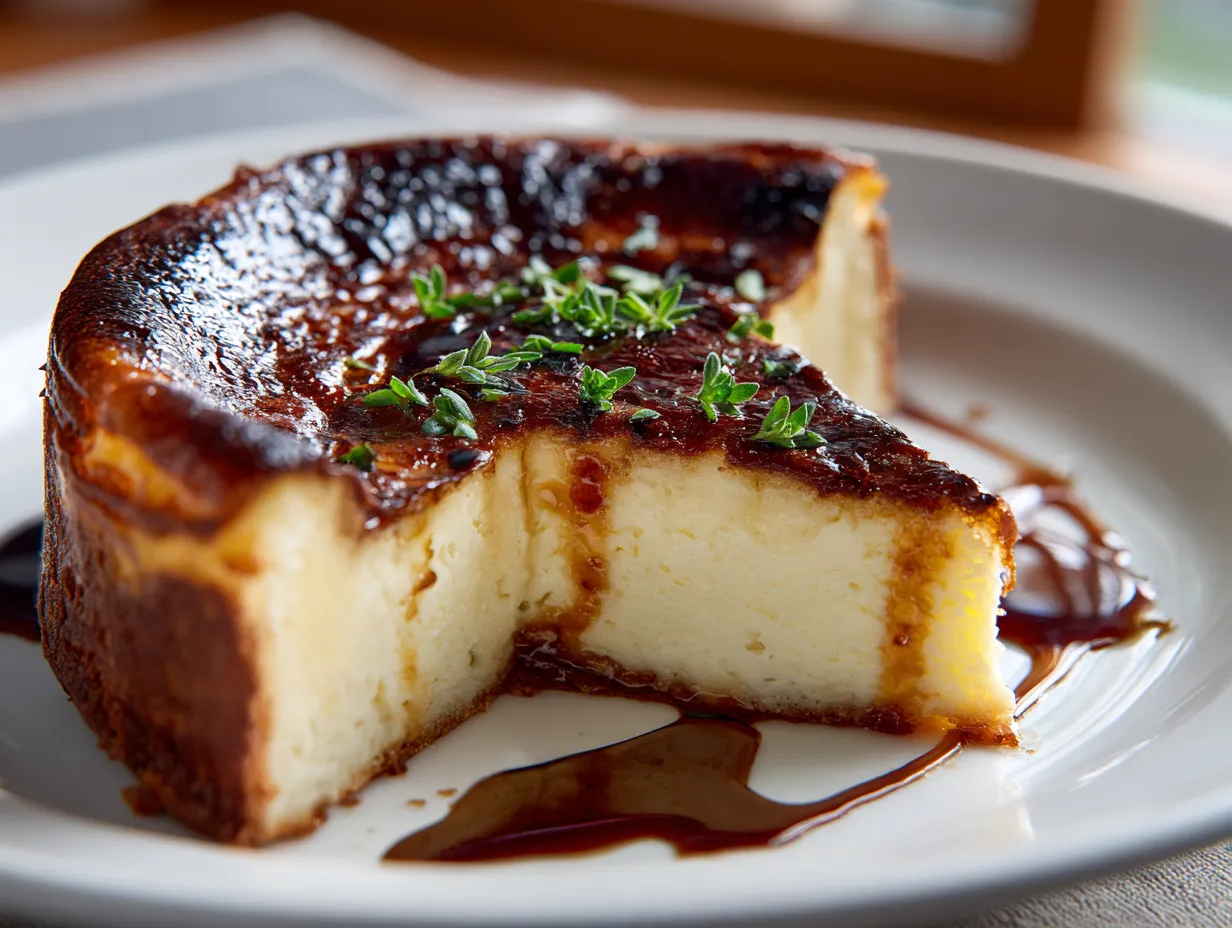
The Burnt Basque Cheesecake arrived from Pintxos bars in Spain but has become a favourite in Singapore cafes and home kitchens — you’ll spot it on the cake counter in Tiong Bahru cafés, neighbourhood kopitiams with a western twist, and at casual dinner parties across the heartlands. Its charm is simple: no crust, minimal fuss, and a deeply caramelised, almost brûléed top that gives way to a silky, slightly tangy interior. It’s perfect for kopi breaks, teatime, or as a showstopper dessert for potlucks or festive gatherings like CNY and Hari Raya.
This recipe keeps the classic technique — room-temperature cream cheese, eggs, sugar and lots of cream — but I include a few local serving ideas: drizzle with gula melaka syrup, scatter thin slices of fresh mango or passionfruit, or serve alongside a cup of kopi or teh tarik for contrast. The texture is custardy and rich, with a bitter-sweet top and a soft wobble in the middle when it comes out of the oven. That contrast of smoky caramel and creamy interior makes it a crowd-pleaser whether you’re serving at a family dinner in an HDB flat or bringing it to a friends’ potluck in the CBD.
At home in Singapore, this cake is forgiving: you don’t need a water bath, but you do need a very hot oven and good parchment that overhangs the tin. For local cooks, ingredients are easy to find at NTUC FairPrice, Cold Storage or specialty stores like Little Farms for extra creaminess. Make it ahead and chill: the flavours deepen overnight, and it travels well to gatherings when kept chilled in an insulated bag.
Ingredients
- 900 g full-fat cream cheese, room temperature (block style)
- 240 g caster sugar (superfine sugar)
- 4 large eggs, room temperature
- 300 ml heavy cream (35% fat), room temperature
- 30 g plain (all-purpose) flour, sifted
- 1 tsp vanilla extract
- 1/4 tsp fine sea salt
- Zest of 1 small lemon (optional, for brightness)
- Parchment paper large enough to line and overhang a 20–23 cm springform tin
- Butter or non-stick spray to grease the tin
- Optional: 50 g mascarpone for extra silkiness (replace 50 g cream cheese)
- Optional topping: 2–3 tbsp gula melaka syrup or runny honey for drizzling
- Optional garnish: thin mango slices, passionfruit pulp or toasted coconut flakes
Step-by-Step Method
- Preheat the oven to 240°C (same for fan or conventional; if your oven runs hot, lower to 230°C). Position an oven rack in the middle. Grease a 20–23 cm springform tin and line it with parchment paper so the paper overhangs the edges (this helps the cake rise and get that characteristic dark top).
- In a large bowl, beat the room-temperature cream cheese and caster sugar with an electric mixer on medium-high until smooth and lump-free, scraping the sides so no pockets remain (about 2–3 minutes).
- Reduce mixer speed and add eggs one at a time, mixing until each is incorporated — do not overbeat. The mixture should be glossy and smooth. If using mascarpone, add it now.
- Pour in the heavy cream, vanilla extract, lemon zest (if using) and salt. Mix on low until combined. Sprinkle in the sifted flour and fold gently until there are no streaks of flour. The batter will be fairly loose — that’s normal.
- Pour the batter into the prepared tin. Tap the tin lightly on the bench to remove large air bubbles. Place the tin on a baking tray (no water bath needed) and bake in the preheated oven for 40–55 minutes, checking after 40 minutes. The top should be deeply browned — almost burnt in places — and the centre should still wobble slightly when you gently shake the tin.
- If the top is browning too quickly while the centre is still very raw, reduce the temperature to 220°C and continue baking. Oven colour varies — aim for a dark mahogany top not pitch black.
- Remove the cheesecake from the oven and let it cool in the tin to room temperature (about 1–2 hours). The centre will continue to set as it cools. For best texture and easier slicing, chill in the refrigerator for at least 4 hours or overnight — it becomes silkier the next day.
- To serve, lift the cake using the overhanging parchment, transfer to a board, remove the springform ring and slice with a warm knife (dip in boiling water and dry between cuts). Drizzle with gula melaka syrup or a little runny honey and garnish with fresh mango, passionfruit or toasted coconut if desired.
- Storage: keep chilled in an airtight container for up to 4 days. Bring to room temperature 20–30 minutes before serving for the best creamy texture.
Tips & Serving Ideas
- Use room-temperature cream cheese and eggs — this prevents lumps and gives a silkier batter. Many Singapore home bakers leave the blocks out for 30–60 minutes before mixing.
- Calibrate your oven: send a test with an oven thermometer or reduce temperature by 10–15°C if using a smaller fan oven. Singapore kitchens often have compact ovens that run hot.
- No water bath needed — the high heat is what creates the deeply browned top. If the top is burning too fast, lower the temperature and extend bake time to finish the centre.
- If you can’t find heavy cream, full-fat milk + mascarpone can work in a pinch, but the texture will be less rich. Ingredients are widely available at NTUC FairPrice, Cold Storage or specialty grocers.
- Make-ahead: bake the day before and refrigerate overnight — the flavour and texture improve and it’s easier to slice cold for events or potlucks.
- To reheat a slice slightly (if you prefer warm), microwave for 8–12 seconds or warm in a 160°C oven for 5 minutes — but be aware the contrast between hot and cold textures will change.
- Adjust sweetness for local palates: if you like a less sweet dessert (common for kopi pairings), reduce sugar by 10–15 g and balance with a touch more salt or a citrus zest.
You might also like
More recipes to save for later.