Handmade Ban Mian with Ikan Bilis
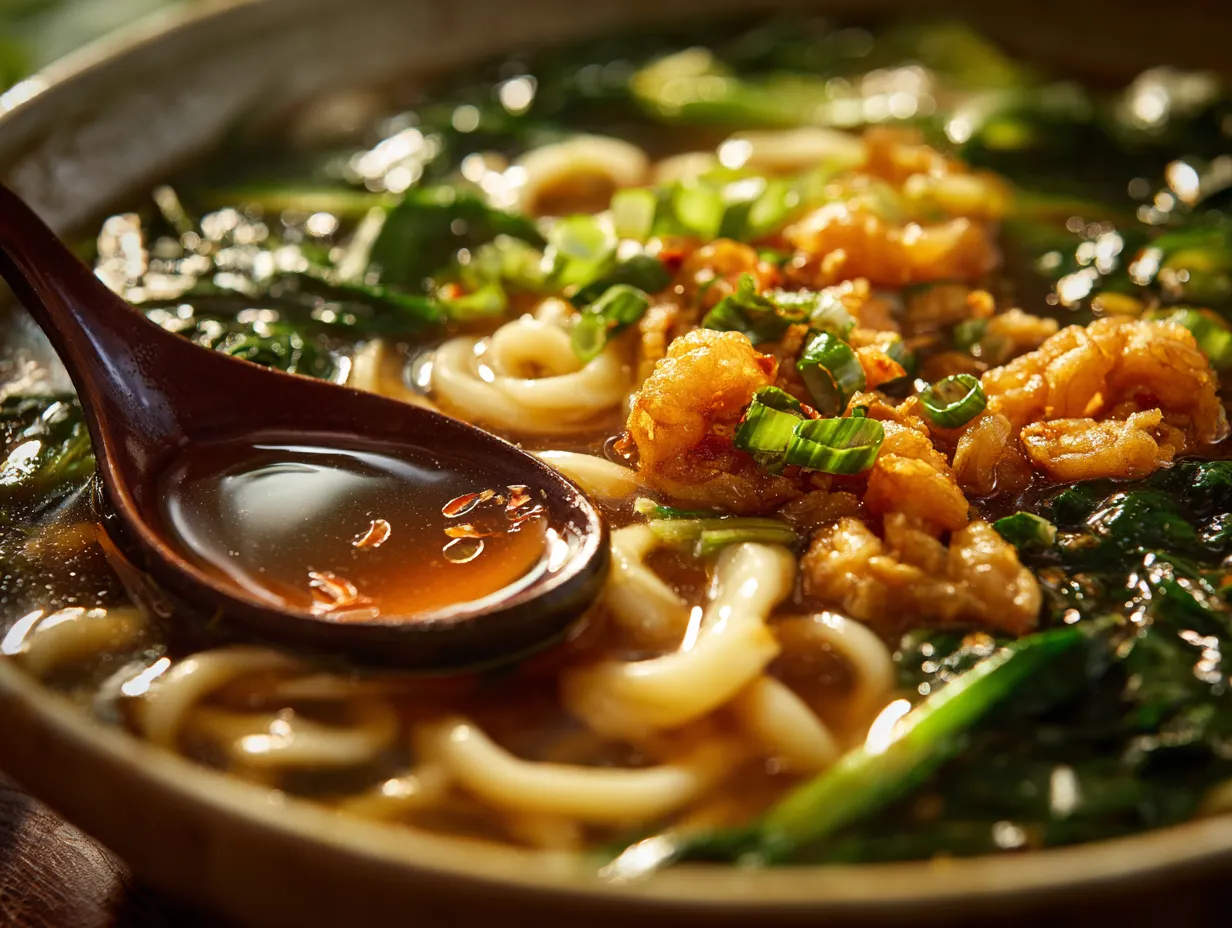
Singapore-style Handmade Ban Mian with crispy ikan bilis — silky hand-pulled wheat noodles in a clear umami broth topped with crunchy anchovies and leafy greens.
About this dish
Handmade Ban Mian is a comforting Singapore favourite that bridges hawker-centre nostalgia and home-cooked warmth. In many heartland kopitiams and zi char stalls around Tiong Bahru and the East Coast, you’ll see bowls of springy ban mian served to busy office workers, families and supper hunters alike; this recipe recreates that simple pleasure at home using a traditional hand-rolled noodle technique and flavourful ikan bilis (dried anchovy) accents.
The dish balances textures — chewy, slightly elastic handmade noodles; tender minced pork or fish balls; blanched greens; and the addictive crunch of fried ikan bilis. The broth is clear but rich, built from a light chicken or pork stock plus a slow-simmered ikan bilis base for that salty-savory backbone common in Singaporean bowls. A drizzle of sesame oil, splash of light soy and a scatter of chopped spring onions finish the bowl like a hawker’s touch.
This recipe suits weeknight dinners, cosy family meals and even potluck gatherings where everyone wants a warm, sharing-style dish. It’s versatile: feel free to swap in prawns or fish slices for the protein, or add a spoonful of sambal for a chilli kick more commonly seen at neighbourhood stalls. For cooks short on time, pre-made stock and store-bought ikan bilis can speed things up without losing the local flavours.
Ingredients
- 400 g all-purpose flour (plus extra for dusting)
- 1 large egg (about 50 g), beaten
- 180–200 ml water, room temperature (adjust as needed)
- 1 tsp fine salt (for dough)
- 2 tbsp vegetable oil (for dough and tossing)
- 200 g minced pork (or 200 g prawns or sliced fish as alternative)
- 1 L chicken stock or light pork broth (homemade or low-sodium store-bought)
- 30 g dried ikan bilis (dried anchovies), halved for stock and extra for frying
- 3 cloves garlic, minced
- 2 tbsp light soy sauce
- 1 tsp dark soy sauce (optional, for colour)
- 1 tsp sesame oil
- 1 tsp sugar
- 1 tsp white pepper, or to taste
- 100 g shiitake mushrooms, thinly sliced (fresh or rehydrated)
- 150 g choy sum or spinach, blanched
- 2 stalks spring onion, thinly sliced (green parts reserved for garnish)
- 1 tbsp cooking oil (for frying ikan bilis and stir-frying pork)
- Optional: 1–2 tbsp sambal chilli or sliced chilli padi for heat
- Optional garnish: fried shallots, chopped coriander, a soft-boiled egg or poached egg
- Optional: 1 tbsp light fish sauce (if you like an extra umami boost)
- Optional: 1 tsp toasted sesame seeds
Step-by-Step Method
- Make the dough: on a clean surface, combine flour and 1 tsp salt. Make a well, add beaten egg, 2 tbsp oil and start mixing while gradually adding 180 ml water. Knead for 8–10 minutes until smooth and elastic; add a little more water if too dry or a sprinkle of flour if too sticky.
- Rest the dough: shape into a ball, coat lightly with oil, wrap in cling film and rest at room temperature for 20–30 minutes to relax the gluten — this helps achieve springy, hand-pulled noodles.
- Prepare ikan bilis stock base: toast 20 g dried ikan bilis in a dry pan over medium heat for 1–2 minutes until fragrant. Add to a pot with the chicken stock, bring to a gentle simmer for 10–12 minutes to infuse umami, then strain and reserve the clear broth.
- Fry crunchy ikan bilis: heat 1 tbsp cooking oil in a small pan over medium-high heat, add remaining dried ikan bilis and fry until golden and crisp (about 1–2 minutes). Transfer to paper towel and set aside for garnish.
- Cook the meat and aromatics: in a wok over high heat, add 1 tbsp oil, sear minced pork (or prawns/sliced fish) until just cooked; add minced garlic and sliced mushrooms, stir-fry for 1–2 minutes. Season with 2 tbsp light soy, 1 tsp sugar and a pinch of white pepper. Remove and set aside.
- Roll and cut or pull noodles: divide rested dough into 4 pieces. For hand-rolled/knife-cut style, roll each thinly with a rolling pin, dust with flour and slice into 4–6 mm wide strips. For hand-pulled, stretch gently into thin strands — aim for slightly irregular, chewy texture.
- Cook noodles: bring the ikan bilis-infused broth back to a rolling simmer. Add noodles and cook for 2–4 minutes (fresh handmade noodles cook quickly — watch for chewy springiness).
- Assemble bowls: place cooked noodles in bowls, ladle hot broth over, top with cooked minced pork mixture, blanched choy sum or spinach, fried ikan bilis and sliced spring onions. Drizzle 1 tsp sesame oil and add sambal if using.
- Taste and adjust: taste the bowl and adjust seasoning with extra light soy or a pinch more sugar, like a zi char stall balancing salty and sweet. Add white pepper to warm it up.
- Serve immediately: encourage diners to mix toppings through the noodles so the crispy ikan bilis retains some crunch while soaking up broth at the same time. Serve with sambal, achar or sliced green chilli on the side for a Singapore hawker-style finish.
Tips & Serving Ideas
- If you’re short on time, use high-quality store-bought fresh egg noodles and concentrate on an excellent ikan bilis-infused broth — many NTUC and Cold Storage outlets carry good fresh ramen/egg noodles.
- To get chew and slight bite in the noodles, knead the dough well and allow the gluten to relax during the 20–30 minute rest; dust liberally with flour when cutting or pulling to prevent sticking.
- For a clear but flavourful soup, toast dried ikan bilis and strain the stock after simmering; avoid long rolling boils which cloud the broth.
- Adjust chilli level for the family: serve sambal or sliced chilli padi on the side so everyone can customise their heat — common practice in Singapore households and hawker stalls.
- Wok heat tip: when stir-frying the minced pork and aromatics, use high heat for quick searing to preserve juices and get light caramelisation similar to zi char stalls.
- Make-ahead: keep components separate — cooked pork, fried ikan bilis and blanched greens refrigerate for 1–2 days; reheat the broth and cook fresh noodles just before serving for best texture.
- Local swaps: if dried ikan bilis is scarce, use a small piece of dried mackerel or kombu for umami; you can find ikan bilis at wet markets and larger supermarkets like Sheng Siong.
You might also like
More recipes to save for later.