Ayam Penyet with Sambal Terasi
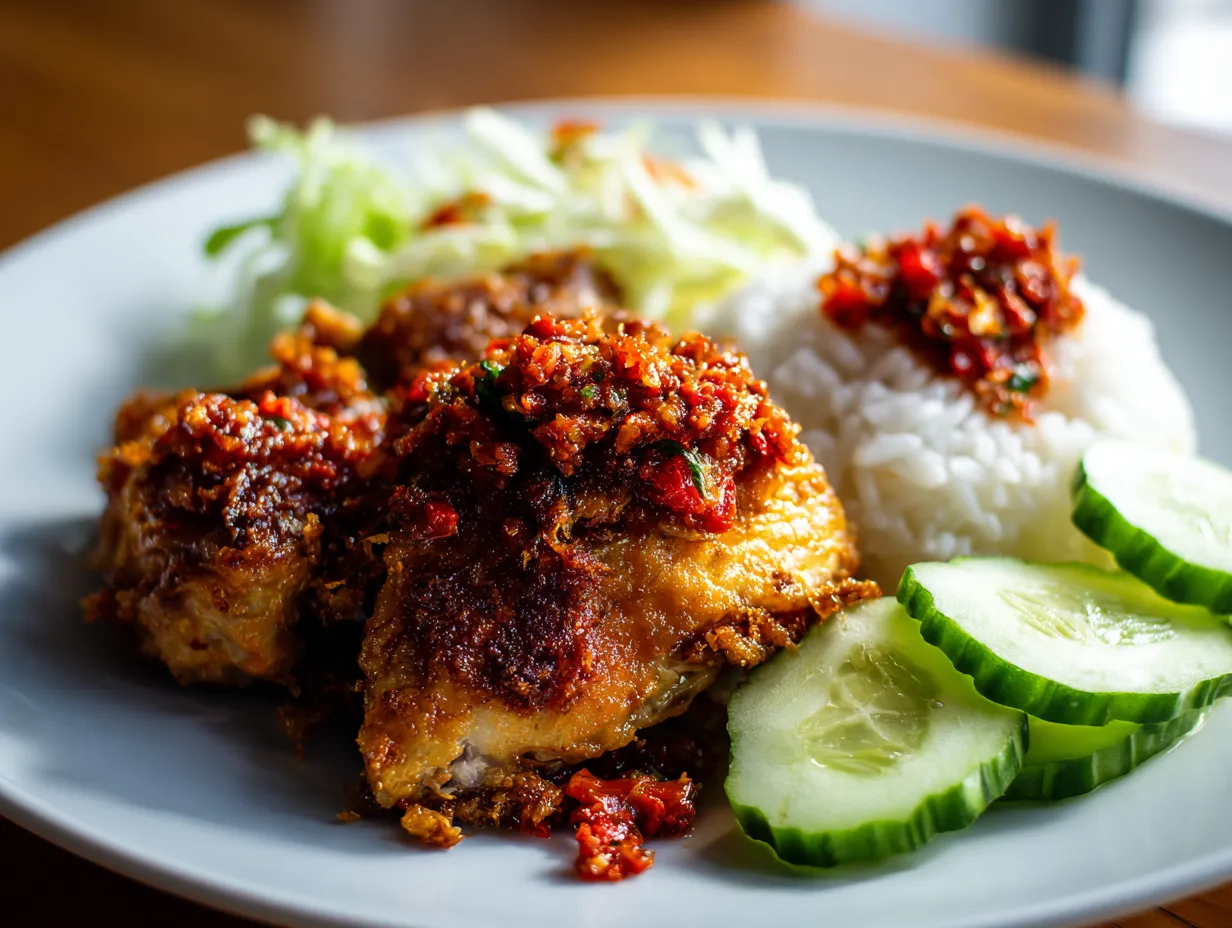
Singapore-style Ayam Penyet with sambal terasi — crispy smashed fried chicken served with a fiery belacan chilli sambal and fresh lalap, perfect for hawker-style makan at home.
About this dish
Ayam Penyet with Sambal Terasi is a beloved Malay-Indonesian hawker favourite that fits right into Singapore’s food scene — imagine a plate from a heartland kopitiam or zi char stall, piled with crispy smashed chicken, steaming white rice, and a punchy belacan sambal. In Singapore many households and hawker stalls serve this as a no-fuss family meal or a late-night supper, especially popular after an office gathering or a weekend makan session in the east coast or Tiong Bahru neighbourhoods.
The dish balances textures and flavours: the chicken is marinated, fried until golden and crunchy, then smashed (penyet) to let the juices mingle with the sambal. Sambal terasi (sambal with shrimp paste) gives a smoky, salty backbone that lifts the fresh heat of chilli padi and the sweetness of palm sugar. Serve it with lalap — raw cucumber, sliced cabbage and basil — for that classic cooling crunch, just like at a lively hawker centre.
This recipe is approachable for Singapore home cooks working with a wok or deep-frying pan and common ingredients from NTUC FairPrice, Cold Storage or neighbourhood pasar. It’s great for weeknight dinners, family-style sharing at potlucks, or even festive spreads when you want a crowd-pleasing, spicy protein. Make the sambal ahead to deepen flavours, and adjust the chilli to suit kopi time or supper tolerance.
Ingredients
- 800 g bone-in chicken thighs (or a mix of thighs and drumsticks), skin on
- 1 tsp salt
- 1 tsp ground white pepper
- 1 tsp turmeric powder
- 1 tbsp light soy sauce
- 1 tbsp rice wine or dry sherry (optional)
- 3 cloves garlic, minced
- 1 thumb (20 g) fresh ginger, thinly sliced
- 2 tbsp cornflour (for coating)
- 500 ml vegetable oil (for deep frying) or enough for shallow frying in a wok
- 6–8 red bird's eye chillies (chilli padi) or adjust to taste
- 4–6 dried red chillies, soaked until pliable
- 3 large shallots, peeled
- 3 cloves garlic (for sambal)
- 1 tbsp belacan (shrimp paste) or terasi, toasted
- 1 tbsp tamarind water or 1 tbsp lime juice
- 1 tbsp palm sugar or light brown sugar
- 1 tbsp kecap manis (optional, for slight sweetness and colour)
- Salt to taste
- Fresh cucumber, sliced (for lalap)
- Fresh cabbage leaves or lettuce (for lalap)
- Fresh Thai basil or kemangi (optional)
- Lime wedges to serve
- Steamed jasmine rice, to serve
Step-by-Step Method
- Prepare the chicken: pat the chicken pieces dry and make several shallow slashes on each piece so marinade penetrates.
- Marinate: in a bowl combine salt, white pepper, turmeric powder, light soy sauce, rice wine (if using), minced garlic and sliced ginger. Rub the mixture over the chicken and marinate for at least 20 minutes, or up to 2 hours in the fridge.
- Toast belacan: heat a small dry skillet and toast the belacan (shrimp paste) for 1–2 minutes until fragrant. Set aside to cool.
- Make the sambal terasi: in a blender or mortar and pestle, pound together bird's eye chillies, soaked dried chillies, shallots, garlic, toasted belacan, palm sugar and tamarind water (or lime). Pulse or pound to a coarse paste. Taste and season with salt and extra sugar or lime to balance heat and acidity. Set aside.
- Coat the chicken: toss the marinated chicken in cornflour to lightly coat. Shake off excess — this helps to get a crisp skin when frying.
- Heat the oil in a wok or deep frying pan to 170–180°C for deep frying (or medium-high for shallow fry). Test with a small bit of batter — it should sizzle immediately.
- Fry the chicken in batches to avoid crowding. For bone-in thighs, fry for 10–12 minutes until golden brown and cooked through; internal temperature should reach 75°C. For smaller pieces adjust time accordingly. Drain on a wire rack.
- Smashed finishing (penyet): using the flat side of a pestle or the back of a heavy spatula, press each fried chicken piece briefly in a mortar or on a cutting board to slightly flatten and create more surface area for the sambal to cling to — don't pulverise, just press until crackly skin shows.
- Toast the sambal briefly (optional): heat 1 tbsp oil in a small pan and fry the sambal paste for 1–2 minutes to deepen its aroma, then remove from heat. This mellows raw sharpness and builds flavour like many zi char stalls do.
- Plate and serve: place smashed chicken on a plate, spoon a generous amount of sambal terasi on the side (or over the chicken for extra kick), add sliced cucumber, cabbage and basil, and serve with steamed jasmine rice and lime wedges.
- Taste and adjust: encourage diners to squeeze lime and add more sambal to their liking — Singapore hawkers often leave sambal strength to each diner, so adapt heat as needed.
- Leftovers: refrigerate sambal separately. Reheat chicken in an oven or air-fryer at 180°C for 6–8 minutes to crisp up before serving again.
Tips & Serving Ideas
- Buy belacan/terasi from NTUC FairPrice, Cold Storage or wet markets; toast it briefly in a dry pan to remove raw funk before blending.
- Adjust the number of bird's eye chillies to suit Singapore heat tolerance — 6–8 gives real kick; halve for milder sambal.
- For extra-crispy skin, double-fry the chicken: fry at a lower temperature until cooked, rest 2–3 minutes, then fry again at higher heat to crisp.
- Use a mortar and pestle for the sambal if you want a more rustic texture and deeper aromatics; a food processor is fine for speed but may yield a smoother paste.
- If short on time, shallow-fry instead of deep-fry and finish with a high-heat press; the smashing step helps the sambal cling and intensify flavour.
- Make sambal a day ahead and refrigerate — flavours mature and the heat will mellow into a more rounded profile, great for potlucks.
- Reheat leftover chicken in an air-fryer or oven (180°C) to restore crispness rather than microwaving, which will make it soggy.
- Serve sambal on the side so guests can control spice level — like many hawkers in the heartland, offering sambal separately keeps everybody happy.
You might also like
More recipes to save for later.