Ayam Buah Keluak (Peranakan Black Nut Chicken)
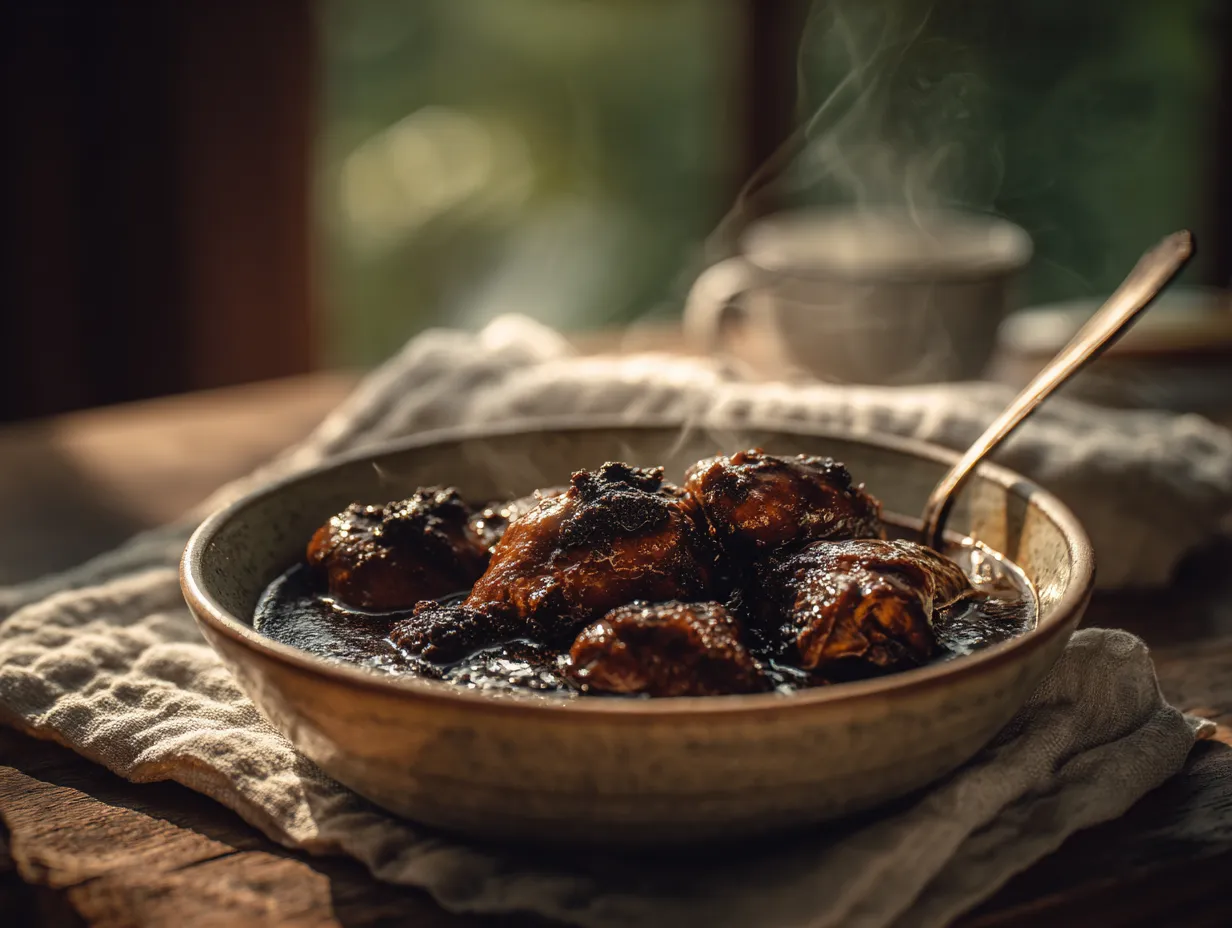
Singapore-style Peranakan Ayam Buah Keluak — a braised chicken stew enriched with earthy buah keluak (black nut) paste and aromatic spice paste, slow-simmered in a wok or pot.
About this dish
Ayam Buah Keluak is a signature Peranakan dish that you’ll find on menu cards at heritage restaurants and on family tables across Singapore, from Tiong Bahru makan sessions to festive reunion dinners. The dish centres on buah keluak — a dark, earthy nut traditionally prepared into a rich paste — combined with chicken and a heady spice paste to produce a bittersweet, nutty, slightly tangy gravy that’s full of depth.
In a typical Singapore home this dish is treated as a special-occasion centrepiece: great for family-style sharing, potlucks, or when you want to impress at a weekend dinner. The texture is a comforting mix of tender, fall-off-the-bone chicken and the dense, almost velvety spoonfuls of keluak paste; the flavour is complex — smoky, savoury and subtly medicinal from galangal and tamarind, balanced with a touch of palm sugar. Think of it as Peranakan heritage food that pairs beautifully with plain steamed jasmine rice and a tart achar.
Because buah keluak requires careful preparation, many cooks in Singapore buy pre-prepared flesh or paste from wet markets, Peranakan grocers or specialty stalls. At home you’ll use a wok or a heavy pot for the braise, build an aromatic spice paste in a mortar or blender, fry it until fragrant, and then slow-simmer with stock so the sauce becomes glossy and rich. Serve it family-style, with lime wedges and chilli padi on the side for those who like an extra kick — a true taste of Singapore’s multicultural hawker and Peranakan heritage.
Ingredients
- 800 g bone-in chicken thighs, cut into 6–8 pieces
- 150 g buah keluak paste (or flesh from about 6–8 pre-prepared buah keluak) — buy pre-prepared from a wet market or specialty grocer
- 6 shallots, peeled and roughly chopped
- 4 garlic cloves, peeled
- 2 tbsp candlenuts, toasted (or substitute 2 tbsp cashew nuts)
- 3–4 dried red chillies, soaked to soften (or 2 fresh red chillies for milder heat)
- 1 thumb (about 20 g) galangal, peeled and sliced
- 1 stalk lemongrass, white part bruised and sliced (optional)
- 1 tsp belacan (shrimp paste), toasted
- 2 tbsp vegetable oil or groundnut oil
- 1 tbsp light soy sauce
- 1 tbsp tamarind paste diluted in 50 ml warm water (or 1 tbsp tamarind juice)
- 1 tsp dark soy sauce (for colour, optional)
- 1 tsp palm sugar or brown sugar, adjust to taste
- 200–250 ml chicken stock or water
- 100 ml thick coconut milk (optional, for a richer, creamier finish)
- Salt to taste
- Fresh coriander (cilantro) or daun sup for garnish
- Sliced bird's eye chillies or chilli padi and lime wedges, to serve
Step-by-Step Method
- Prepare the buah keluak: if using whole pre-boiled nuts, carefully crack shells and scoop out flesh; rinse briefly and set aside. If using ready-made keluak paste, skip this step.
- Make the spice paste: in a blender or mortar and pestle, combine shallots, garlic, candlenuts, soaked dried chillies (or fresh chillies), galangal and toasted belacan. Pound or blitz to a smooth paste, adding a splash of water if needed.
- Heat a wok or large heavy pot over medium-high heat. Add 2 tbsp oil. When hot, fry the spice paste with the bruised lemongrass (if using) for 3–5 minutes, stirring constantly until the paste becomes fragrant and the oil separates.
- Add the chicken pieces to the wok and stir to coat in the paste. Increase heat to medium-high and brown the chicken on all sides for 4–6 minutes — this builds flavour similar to wok hei at a zi char stall.
- Stir in the buah keluak flesh or paste, light soy sauce, tamarind water, dark soy (if using) and palm sugar. Mix well so the keluak is evenly distributed.
- Pour in 200–250 ml chicken stock or water to barely cover the chicken. Bring to a boil, then reduce heat to low and cover. Simmer gently for 30–40 minutes, stirring occasionally, until the chicken is tender and the sauce has thickened.
- If using coconut milk, stir it in during the last 8–10 minutes of cooking on low heat — do not boil vigorously after adding coconut milk or it may split. Taste and adjust seasoning with salt, more light soy or a pinch more sugar, like a zi char cook would.
- Spoon the keluak mixture back into empty shells for presentation if you like (traditional) or serve the chicken with generous spoonfuls of the keluak sauce. Garnish with fresh coriander, sliced chilli padi and lime wedges.
- Serve hot family-style with steamed jasmine rice and achar or stir-fried greens. Leftovers keep well and flavours deepen overnight — reheat gently over low heat.
Tips & Serving Ideas
- Buah keluak safety: buy pre-prepared buah keluak flesh or ready-made paste from a trusted wet market or Peranakan grocer in Singapore (e.g., stalls in Tiong Bahru or specialty shops); do not attempt to eat raw kernels.
- Substitutions: if you can't find candlenuts, use raw cashew nuts or macadamia nuts toasted; if buah keluak isn't available, try a smaller batch with extra toasted nuts and a touch of dark soy for colour, though the flavour will differ.
- Heat control: fry the spice paste on medium-high first to develop aroma, then simmer on low for tender chicken and a glossy sauce — avoid high rolling boils after adding coconut milk to prevent splitting.
- Adjust spice: start with fewer bird's eye chillies if you’re not used to heat. Singaporeans often serve extra sliced chilli padi at the table so each person can control the spice.
- Make-ahead: flavour deepens overnight — cook a day before a gathering and gently reheat. Store in the fridge for up to 3 days; freeze portions in airtight containers for up to a month.
- Local shopping tips: buah keluak paste and whole pre-boiled nuts are commonly found at Chinatown wet market stalls, Peranakan grocers, and some Cold Storage or specialty Asian shops in Singapore.
- Presentation: for a traditional look, return the cooked keluak flesh into cleaned shells and place one shell on each serving — a classic Peranakan touch for festive tables.
You might also like
More recipes to save for later.