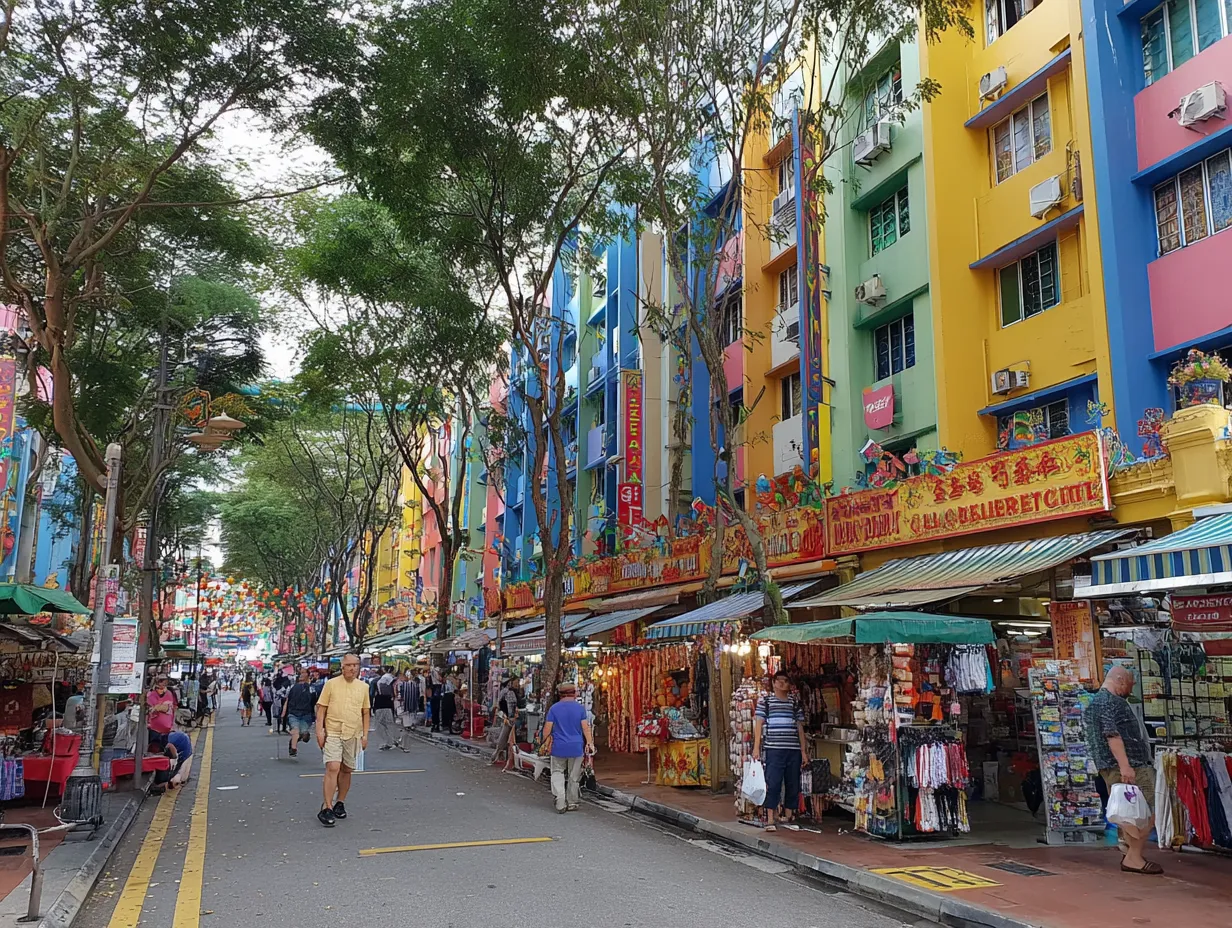
Explore Little India’s hawker maze
Tekka Centre (Little India)
Bustling Little India hawker centre and wet market known for affordable Indian and multi-ethnic Singaporean hawker food....
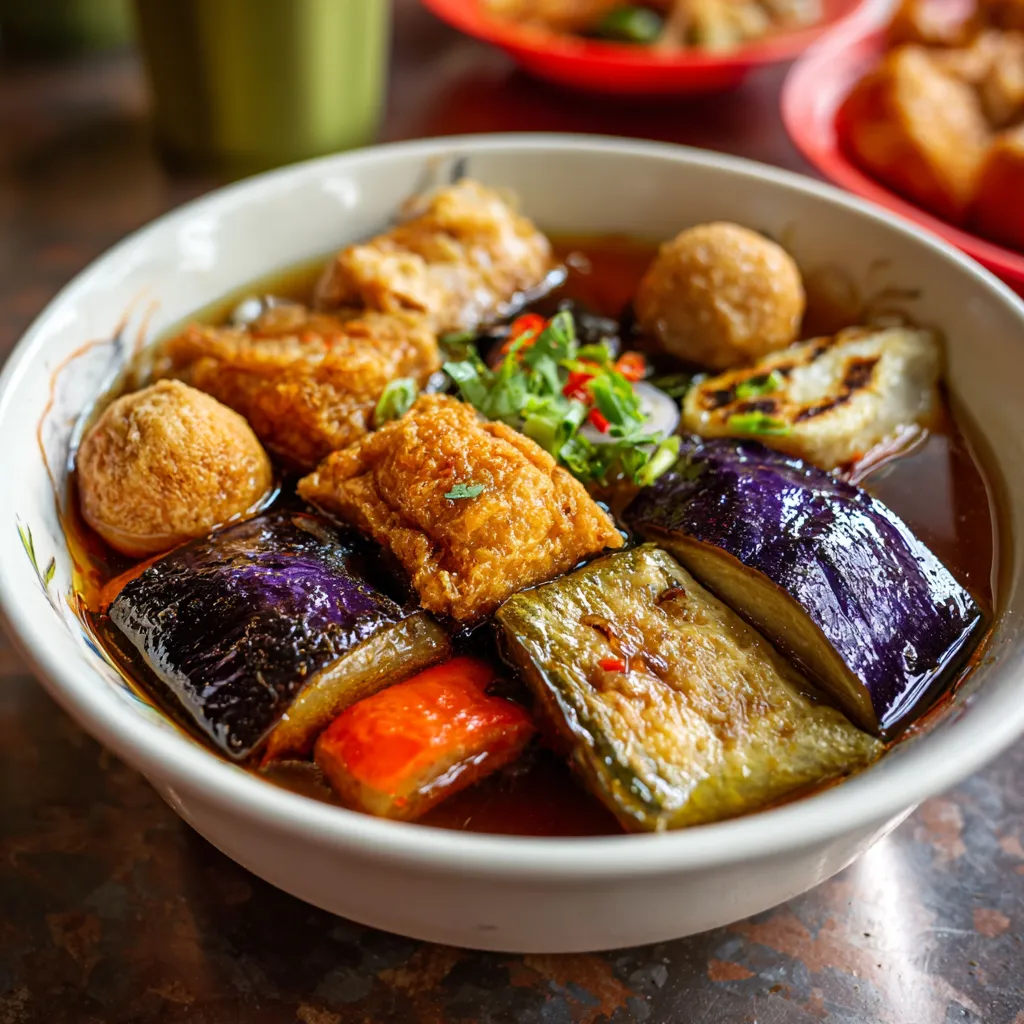
A practical Singapore-focused primer on ordering Yong Tau Foo — what to pick, how to pay, and the best hawker spots to try for a proper local makan.
Yong Tau Foo is the hawker equivalent of build-your-own comfort — quick, cheap and endlessly customisable.
Tip: always ask about the pricing method before you pick — it saves surprises at the cashier.
Yong Tau Foo (YTF) — stuffed tofu and vegetables in soup or dry — is a staple across kopitiams, hawker centres and casual zi char stalls in Singapore. It’s one of those dishes that’s both everyday and comforting: cheap, quick, and endlessly customisable.
The dish has roots in Hakka and Teochew cooking but in Singapore it’s been localised: you’ll find vendors selling everything from classic stuffed tofu and eggplant to fish-sausage hybrids and even fried items to drop into your bowl. It’s a popular choice for the CBD lunch crowd, heartland families and supper runs alike.
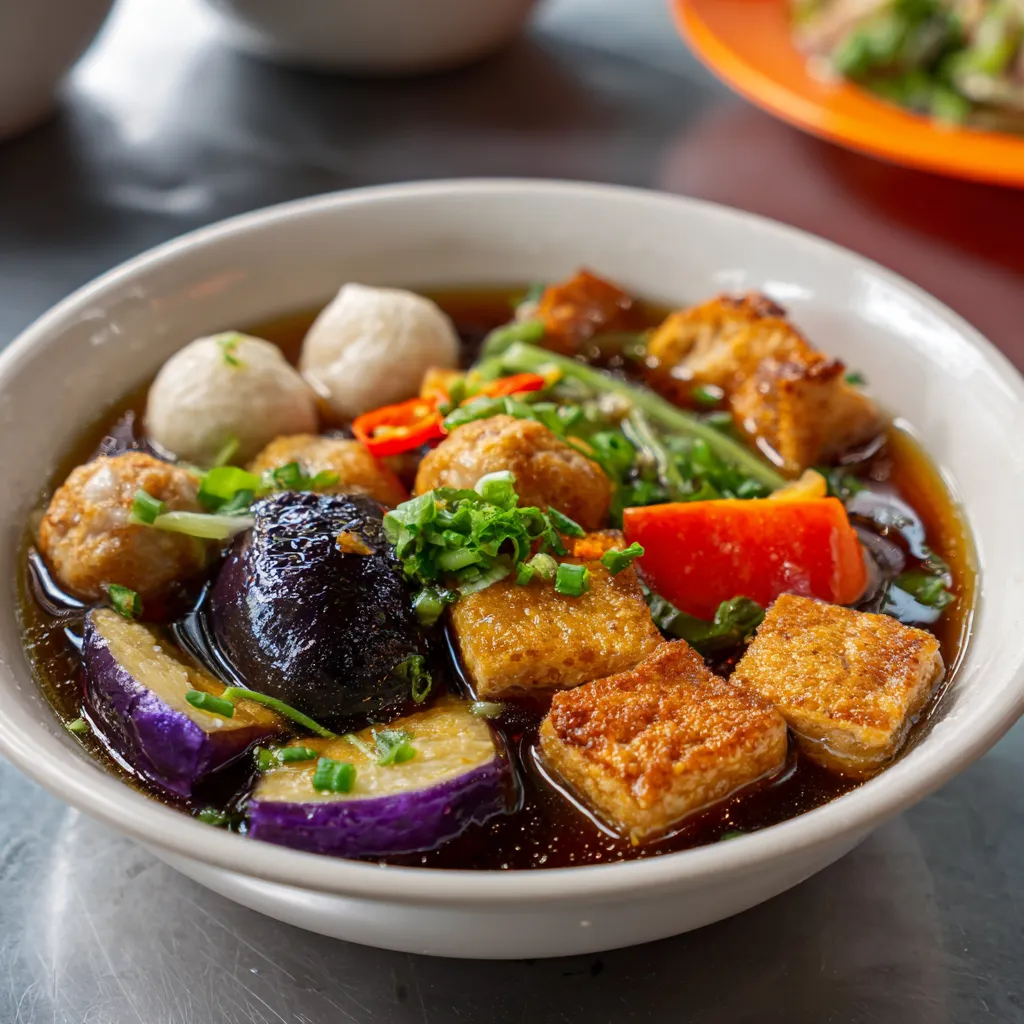
A typical Yong Tau Foo counter is a colourful spread: tau pok (tofu puffs), stuffed beancurd skin, bitter gourd, seeded eggplant, stuffed long beans, fishballs, sliced fishcake, and various fried items. The common thread is a fish-paste stuffing (surimi) or meat-paste filling — though plain tofu and vegetables are included too.
Items may be priced per piece, by colour-coded trays, or by weight. There are also pre-packed 'sets' (small/regular/large) that simplify ordering for visitors or families.
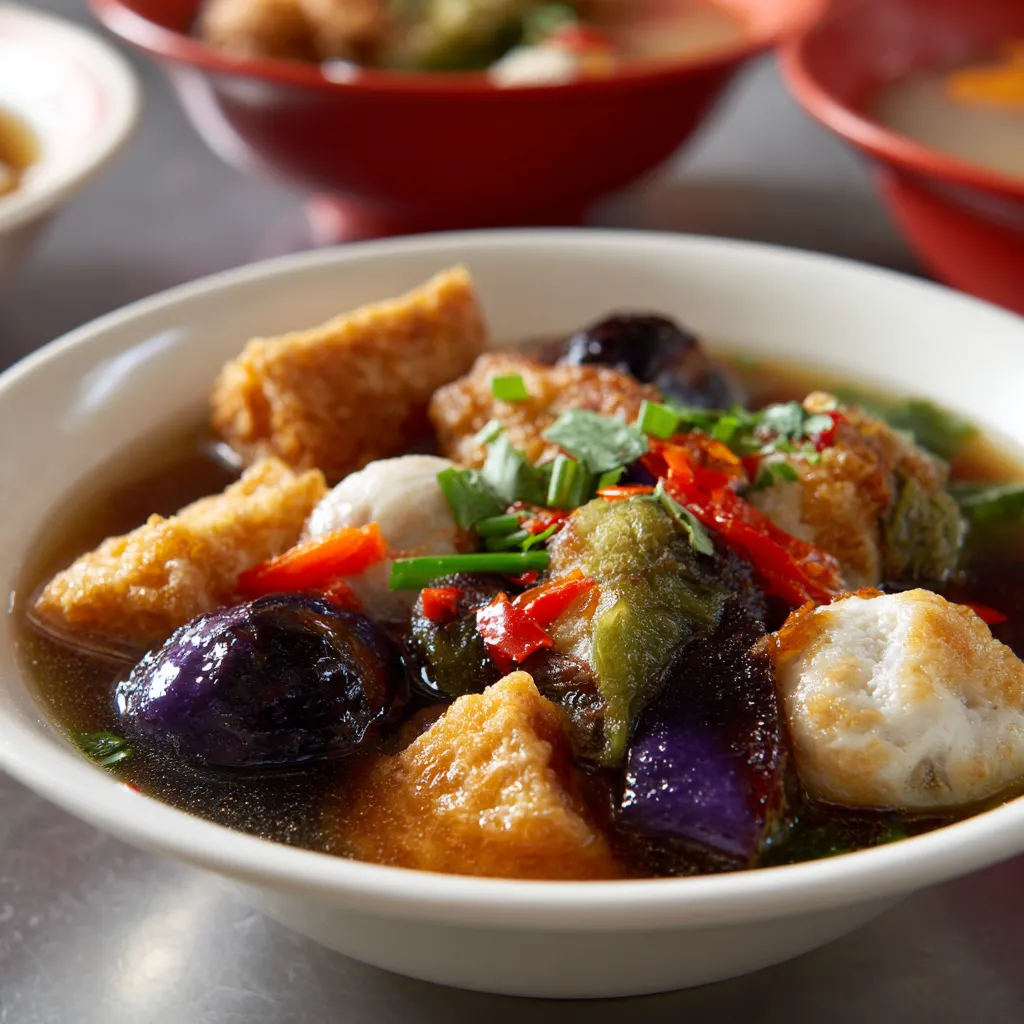
Ordering at a busy stall is straightforward once you know the routine. Step 1: pick your vessel (small/medium/large bowl or plate if dry). Vendors often have trays and a grabber — select the items you want and place them on the tray.
Step 2: choose soup or dry. If you want soup, hand the tray to the cook who will blanch and ladle broth; for dry, the vendor may toss your items in a house sauce or serve with a separate bowl of soup. Step 3: pay at the cashier or counter. Many stalls accept cash and PayNow, though some older stalls are cash-only — have small notes and coins ready.
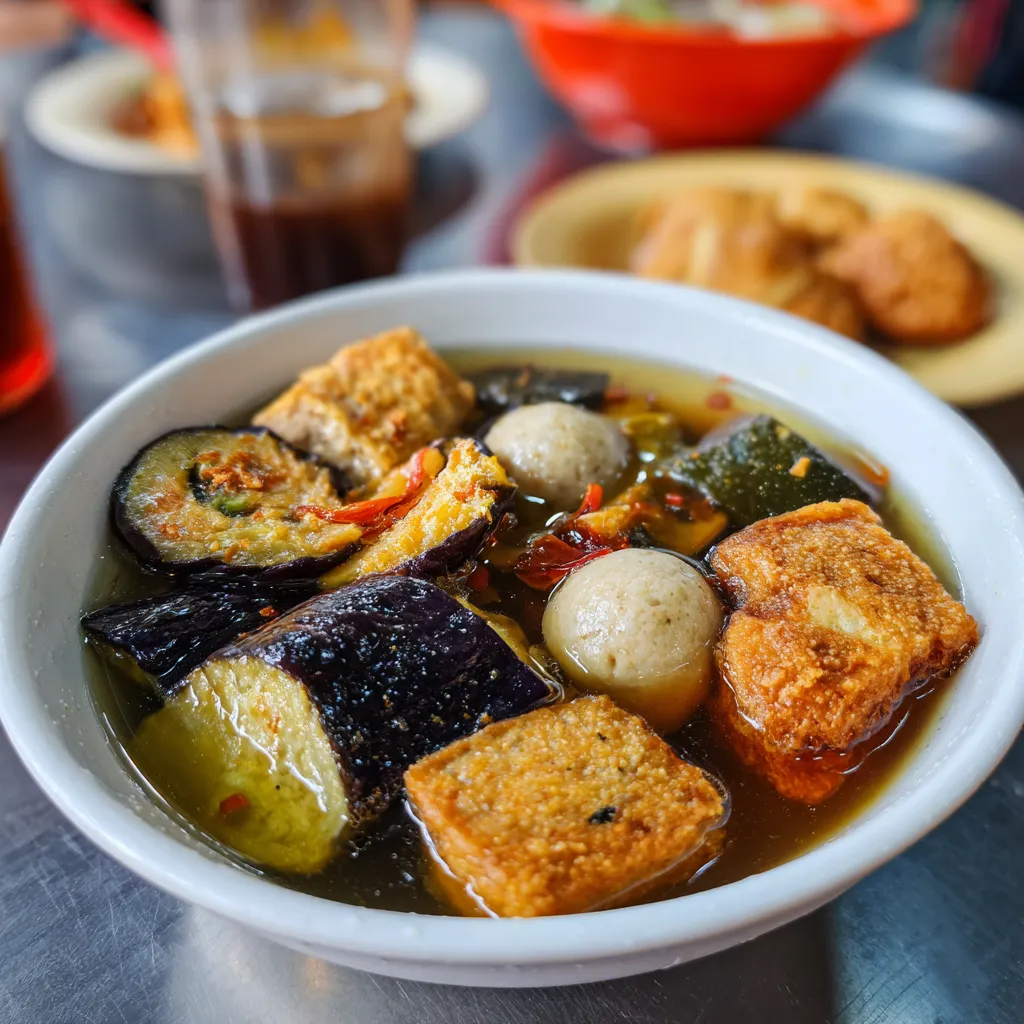
You’ll find excellent YTF across the island — from heartland hawker centres to kopitiams near office towers. Try bustling markets and neighbourhood hawker centres for the most authentic experiences: Tiong Bahru kopitiams for cosy stalls, Tekka Centre in Little India for a multi-ethnic food run, or Changi Village for a seaside makan session.
If you’re planning a makan trail, pair a Yong Tau Foo stop with nearby hawker classics — think a bowl of fishball noodle or a sweet tau huay for dessert — and walk to the next stall in the same complex to sample different styles.
Condiments make a Yong Tau Foo bowl: chilli (sambal or fresh chilli), sweet sauce, light soy, and often fried shallots. Some stalls provide a house chilli that defines their flavour — taste a little before loading up your bowl.
Common mistakes: overfilling a small bowl, assuming all stalls charge the same, or not asking whether an item is fried (which changes texture and how long it will stay crisp in soup). If you want a balanced meal, include a leafy vegetable and a protein item (stuffed tofu or fishball).