
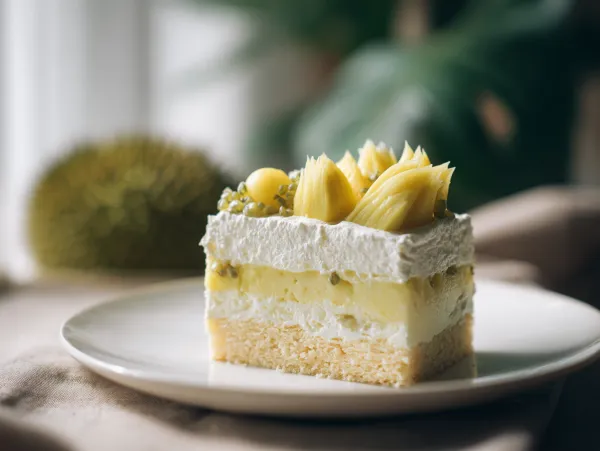

Find fresh durian stalls
Geylang Serai Market
A bustling heartland hawker centre and wet market in Geylang Serai known for Malay favourites, nasi padang and a lively ...
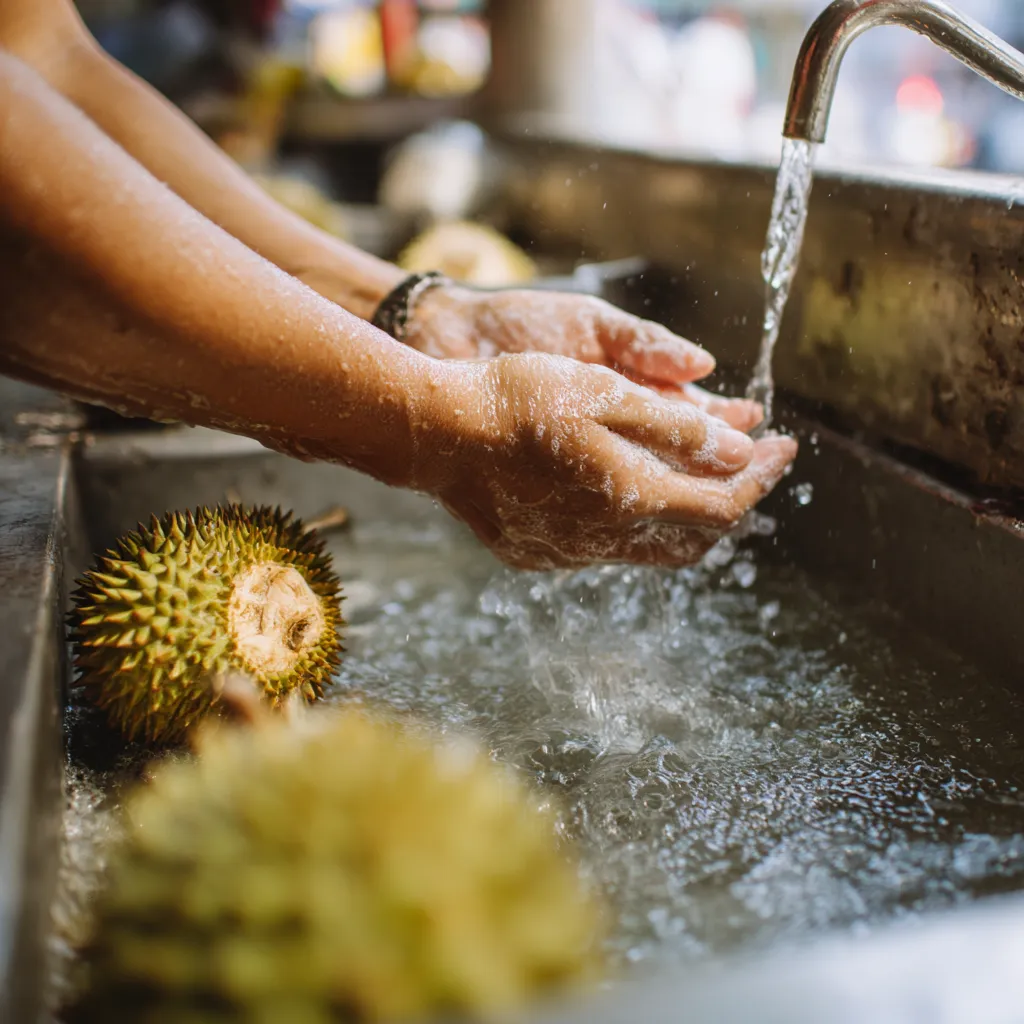
Practical, Singapore-ready tips to remove durian smell from your hands, breath and belongings after a makan session at hawker centres or neighbourhood stalls.
A quick soap wash and a squeeze of lime will fix most durian-smell emergencies after a hawker-centre feed.
Pack durian smart: seal it tight, double-bag, and keep it in the boot — your fellow commuters will thank you.
Durian is part of the city's food DNA — you’ll find stalls across Geylang Serai, East Coast and weekend markets — but its strong sulphurous aroma can linger long after the last bite. In a small, humid city where we eat at hawker tables, take taxis and squeeze onto buses, that lingering scent is more than a novelty; it’s a practical nuisance.
Local etiquette reflects this: many taxis, hotels and some eateries discourage carrying whole durians inside. Knowing quick fixes helps you enjoy durian without leaving a lasting trail on your hands, breath or clothes when you head back to work, a kopi meet-up or a night out in Tiong Bahru or Orchard.
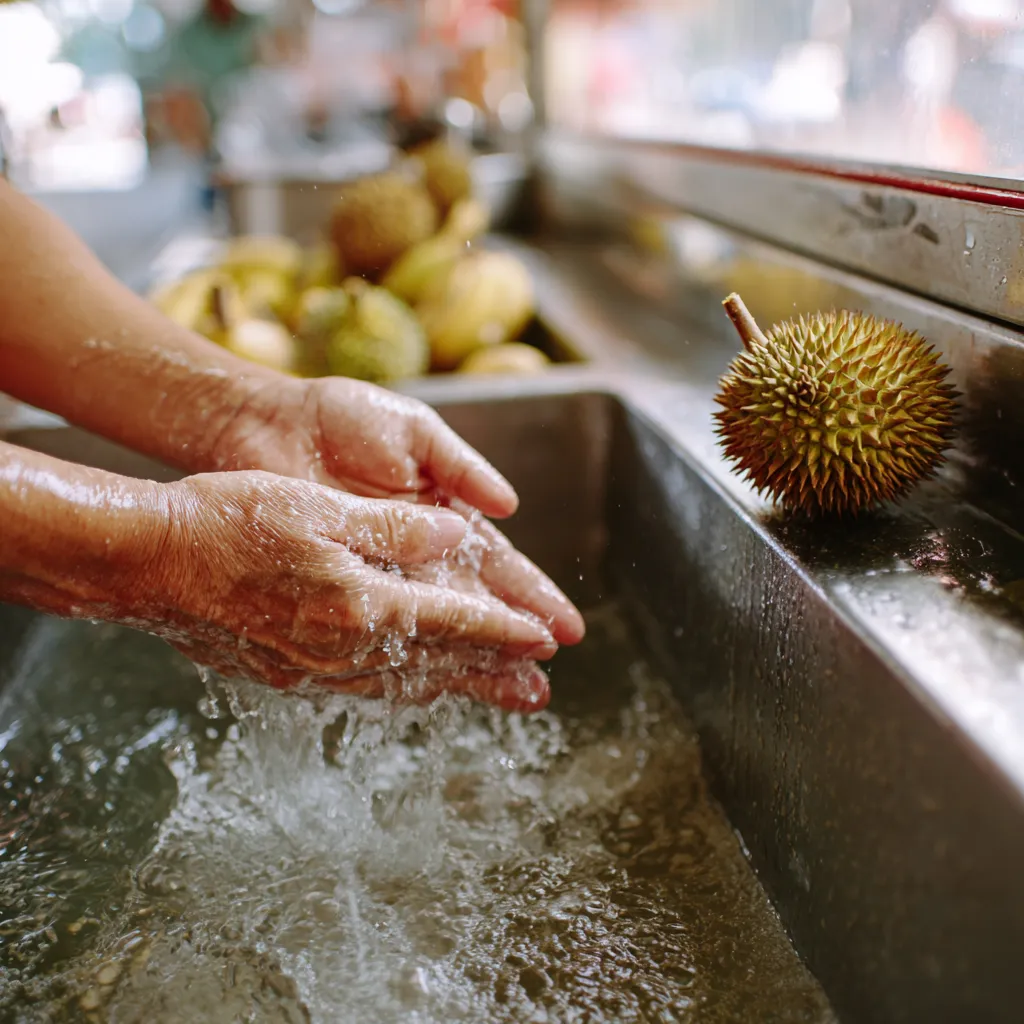
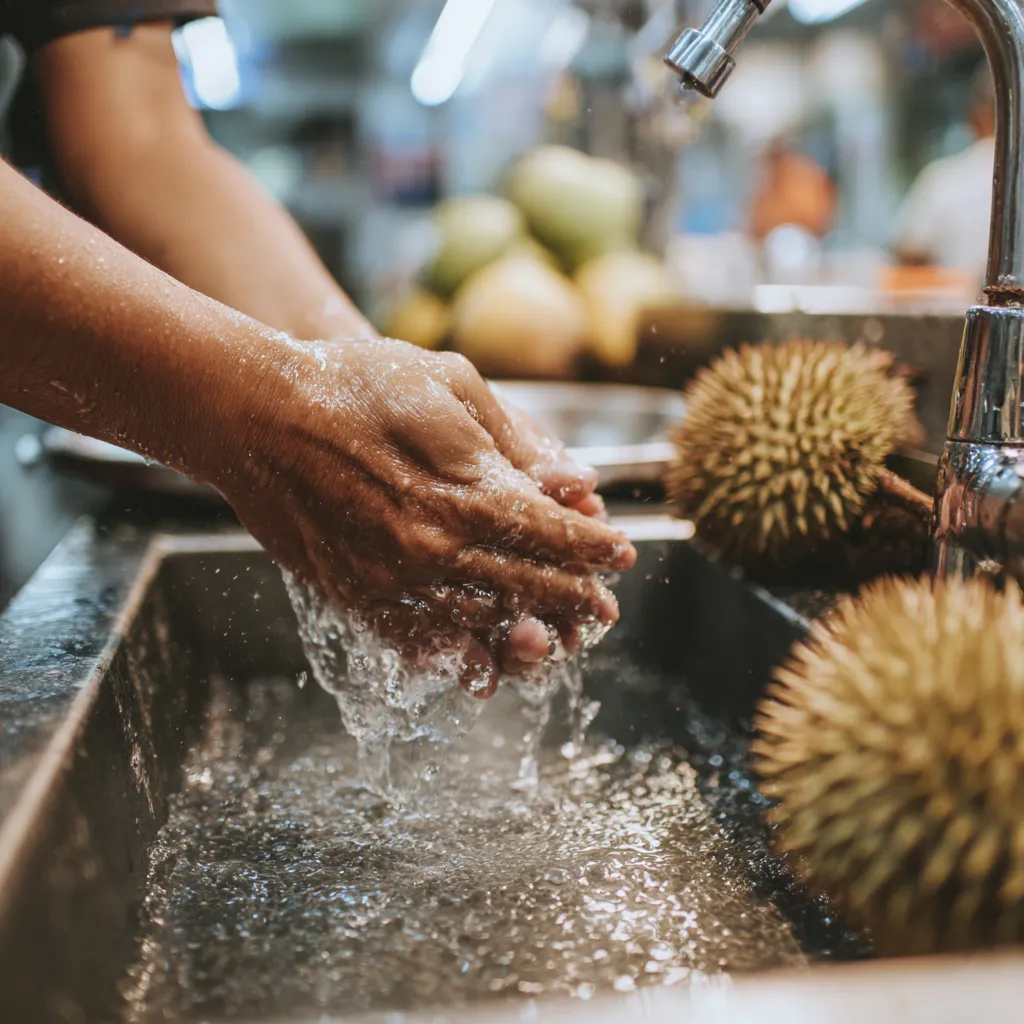
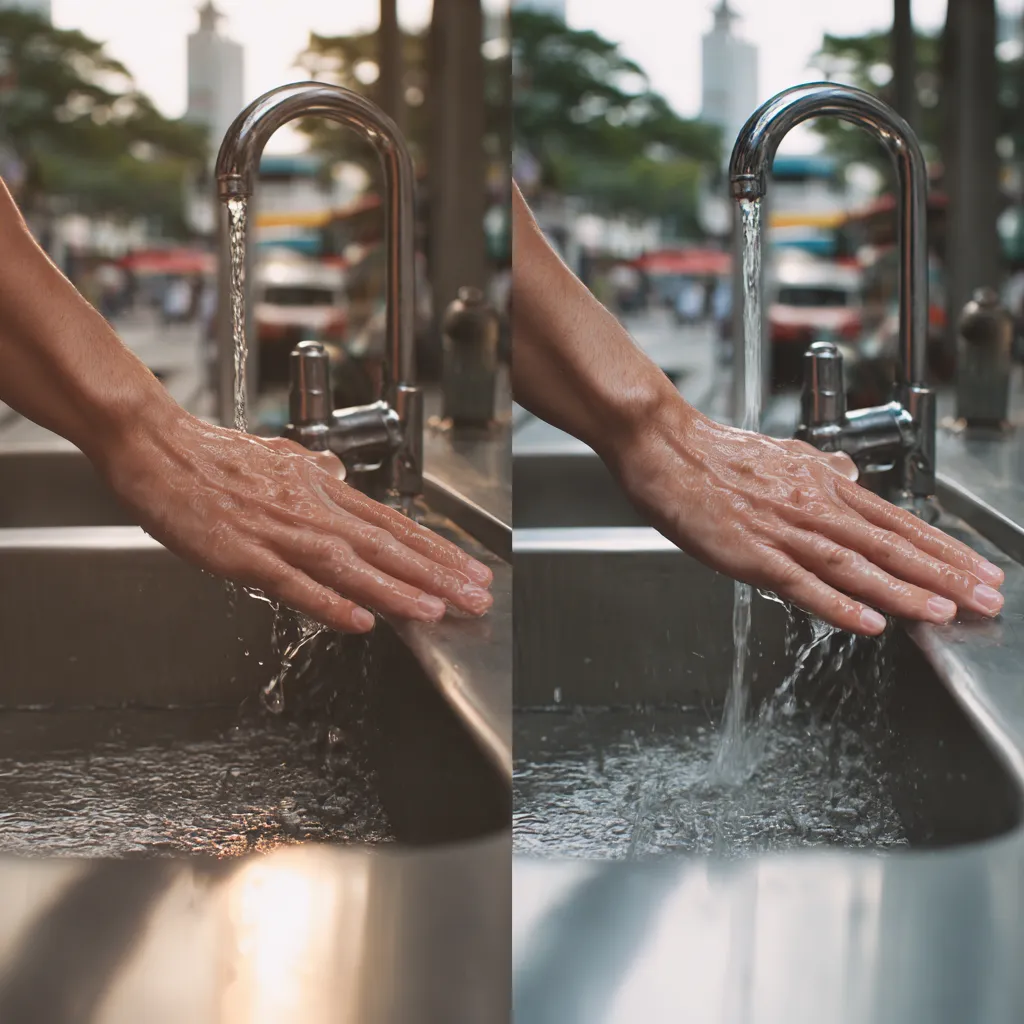
Start with plain soap and warm water — vigorous lathering for at least 20–30 seconds removes oils and particles. If you’re at a hawker centre, many stalls provide disposable wet wipes; use one immediately, then wash properly when you can.
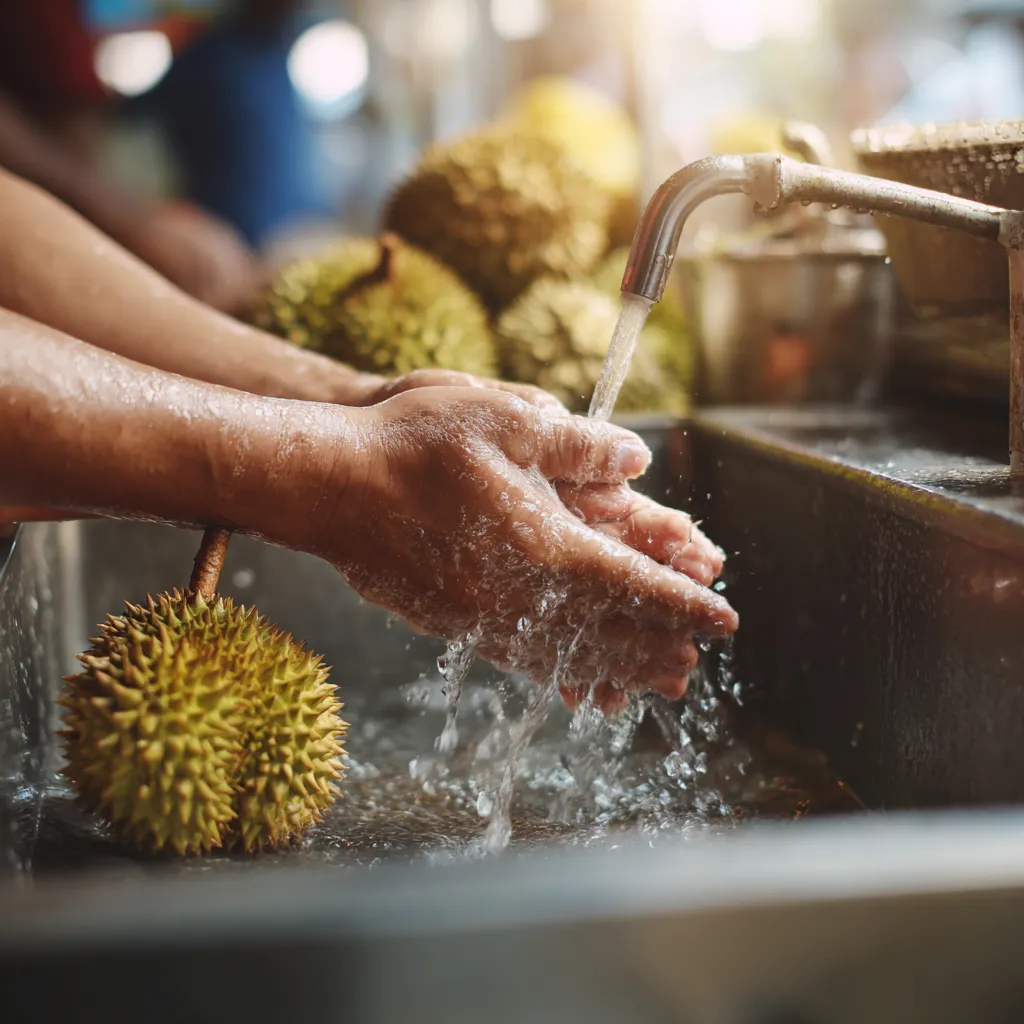
Several low-tech tricks help remove odour molecules: rubbing your hands on stainless steel (a dedicated stainless bar or the kitchen sink) is a long-standing kitchen hack; acidic rinses like diluted vinegar or a squeeze of lime help neutralise smell; and a paste of baking soda and water can lift stubborn residue. Oil-based cleansers (like peanut butter or cooking oil) dissolve odour-bearing fats, followed by a thorough soap wash.
Durian breath is oily and sweet, so typical mint toothpaste or mouthwash is effective at masking and removing the smell. Brushing your teeth and using an antiseptic mouthwash will neutralise lingering compounds rather than just cover them up.
If you’re out and don’t have a toothbrush, chewing fresh mint leaves or parsley helps; dairy can also help — a small glass of milk or a yoghurt will coat and bind odour molecules temporarily. Coffee grounds or strong black coffee can mask the scent for a while, and sugar-free gum is a handy short-term fix for kopitiam chats or catching the MRT (if you’ve got a long ride ahead).
Durian scent clings to fibres. If the smell gets on your shirt or bag, air the item outside in the sun and breeze as soon as possible — sunlight and airflow disperse volatile compounds. For stronger contamination, a soak in warm water with baking soda or a deodorising laundry booster before washing helps.
For cars or taxis, remove any packaging immediately and open windows to air out. Charcoal sachets, baking soda boxes or activated-carbon car filters are effective at absorbing lingering odour over a day or two. For treasured leather goods or delicate fabrics, professional cleaning may be necessary.
If you’re buying durian at a stall (Geylang Serai Market is a popular spot), ask the vendor to pre-pack the flesh into a sealed container or double-bag it. Re-sealable plastic containers or vacuum bags keep smell contained; wrap boxes in a plastic bag and put them in another bag for extra protection.
When travelling around the island after a durian purchase, keep the fruit in the boot of a taxi or in the luggage area of your car when possible. Many hotels and transport providers frown on carrying open durians indoors — being discreet keeps the peace with fellow commuters and the CBD lunch crowd heading back to the office.