Sambal Lala (Stir Fried Clams)
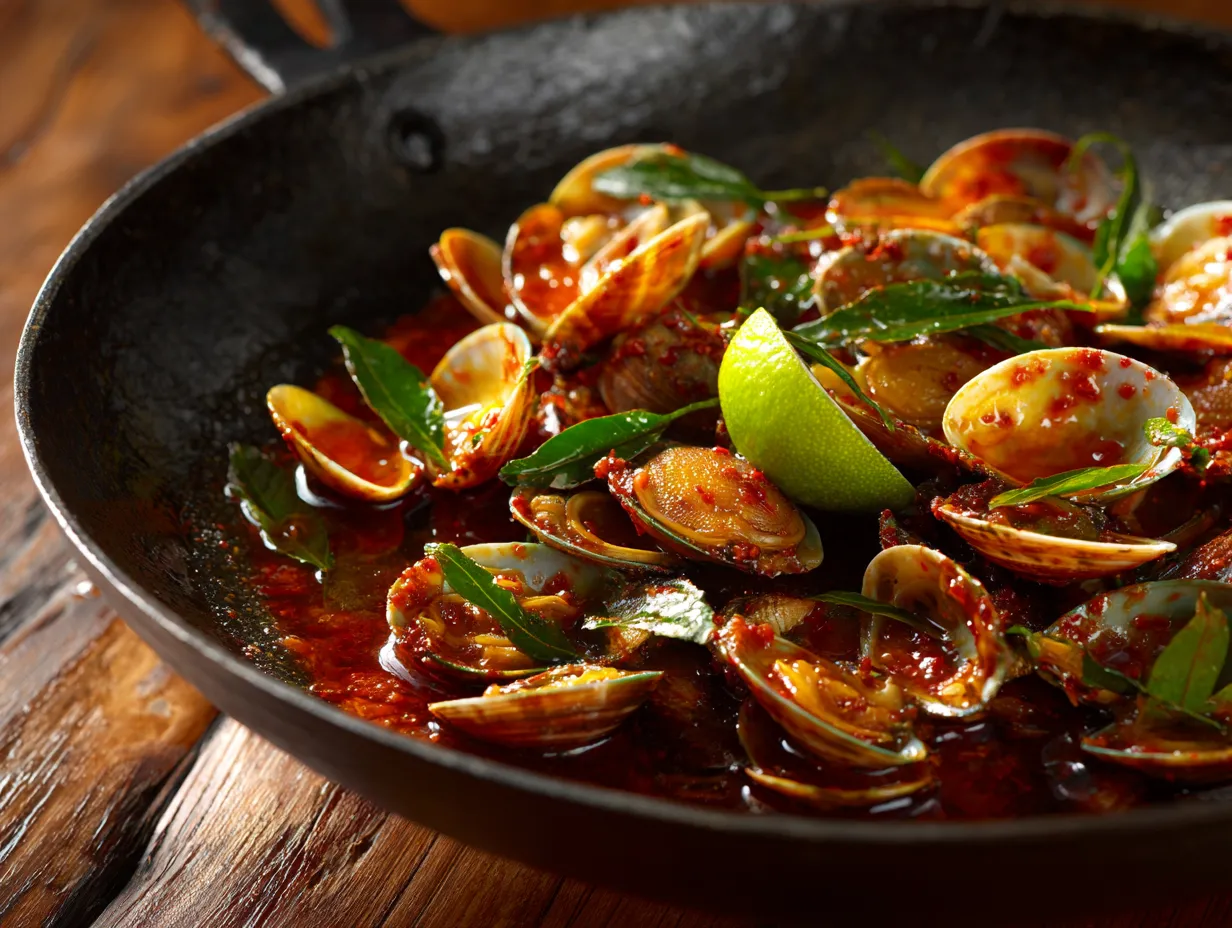
A Singapore-style wok-fried sambal lala (stir-fried clams) — spicy, tangy and ready for sharing with steamed rice or at a zi char dinner.
About this dish
Sambal Lala is a classic Singapore hawker-style seafood dish — clams wok-fried in a punchy sambal sauce made with chillies, belacan and tamarind. It’s the kind of dish you’ll find on zi char menus in heartland hawker centres and late-night supper stalls along East Coast or hidden in HDB estate kopitiams. At home it’s great for a family-style dinner, weekend gatherings or a no-fuss potluck where people come ready to makan and share.
The flavour profile is bright and layered: fiery chilli heat from bird’s eye chillies, umami depth from toasted belacan (shrimp paste), sour notes from tamarind and a touch of sweetness to balance. Texture-wise the clams stay plump and juicy with the sambal coating each shell; a quick stir-fry over high heat produces a little wok-char and intense aroma like a good zi char stall. You can make the sambal from scratch for authenticity or speed up prep with store-bought sambal belacan.
This recipe assumes a typical Singapore kitchen — a trusty wok, rice cooker and access to wet markets or supermarkets like NTUC FairPrice and Sheng Siong for fresh lala (clams). It’s versatile: tone down the chilli for sensitive eaters, add a splash of coconut milk for a creamier finish, or serve as part of a larger spread with sambal kangkong, achar and cold barley for a proper local meal.
Ingredients
- 800 g lala clams (small razor clams or Manila clams), scrubbed and soaked in salted water for 20 minutes to remove sand
- 2 tbsp vegetable oil or neutral oil
- 2 tbsp water or oil for frying sambal
- 6–8 bird's eye chillies (adjust to taste), chopped
- 6 dried red chillies, soaked in hot water and drained (optional for deeper colour)
- 4 shallots, peeled and roughly chopped
- 3 cloves garlic, peeled
- 1 thumb-sized piece ginger (20 g), peeled and sliced (optional)
- 1 tbsp belacan (shrimp paste), toasted lightly
- 1 tbsp tamarind paste mixed with 50 ml water (or 1–2 tbsp calamansi/lime juice as alternative)
- 1 tsp light soy sauce
- 1 tbsp fish sauce
- 1 tsp sugar (palm sugar or caster sugar)
- 50 ml water or stock to deglaze
- 2 sprigs curry leaves (about 10–12 leaves)
- 2 stalks spring onion, sliced (white and green separated)
- Juice of 1 lime or 2 calamansi
- Fresh coriander (cilantro) leaves or Vietnamese coriander (rau răm) for garnish (optional)
- 1–2 tbsp coconut milk (optional, for a creamier sambal)
- Cracked black pepper to taste
- Lime wedges to serve
Step-by-Step Method
- Clean the clams: discard any open clams that don't close when tapped. Scrub shells under running water and soak in cold salted water for 20 minutes to expel sand; rinse and drain.
- Make the sambal paste: in a blender or mortar and pestle, combine bird's eye chillies, drained dried chillies (if using), shallots, garlic, ginger (if using) and toasted belacan. Grind to a coarse paste, adding a splash of water if needed.
- Heat the wok on high heat until smoking slightly. Add oil and swirl to coat. Add the sambal paste and fry for 2–3 minutes until aromatic and oil separates; fry on medium-high so it doesn’t burn but develops colour.
- Add curry leaves and the white parts of the spring onion, stir-fry quickly for 30 seconds. Pour in the tamarind water (or lime/calamansi substitute) and 50 ml water or stock to deglaze the wok and loosen the paste.
- Season with light soy sauce, fish sauce and sugar. Taste and adjust: balance heat with sugar, add a little more tamarind or lime if you want brighter acidity — think of the balance you get at a good zi char stall.
- Increase heat to high, add the drained clams and toss to coat in the sambal. Cover with a lid for 2 minutes to help clams open, then uncover and toss for another 1–2 minutes. Discard any clams that remain tightly closed.
- If using, stir in coconut milk now for a creamier sauce and simmer for 30 seconds to warm through. Check seasoning and add cracked black pepper and a squeeze of lime.
- Finish with the green parts of spring onion and fresh coriander or rau răm. Give the wok one final toss to mix flavours and remove from heat.
- Serve immediately in a large bowl for sharing with steamed jasmine rice, toasted bread, or as part of a larger zi char spread. Eat with a squeeze of lime and extra sambal on the side if you like it hotter.
Tips & Serving Ideas
- Buy fresh lala from your local wet market (Geylang, Tiong Bahru market) or supermarket (NTUC, Cold Storage); they should smell briny, not fishy.
- To remove sand effectively, soak clams in salted water for at least 20 minutes and change the water once. Some cooks add a teaspoon of cornmeal to the soak to encourage sand expulsion.
- Adjust chilli levels to suit kids or spice-averse eaters: use fewer bird's eye chillies and add more sweet tamarind or coconut milk to mellow the heat.
- Work fast over high heat for wok hei (charred aroma) — get the wok hot, keep the ingredients moving and avoid overcooking clams which get rubbery.
- If pressed for time, use store-bought sambal belacan and boost with fried shallots and extra lime for freshness.
- Make-ahead: you can prepare the sambal paste a day ahead and refrigerate; add clams to the hot sambal right before serving. Leftovers keep 1–2 days in the fridge; reheat gently and add a splash of water or stock.
- Substitutions: swap lala for cockles, mussels or clams available locally if you can’t find lala; adjust cooking time for larger shellfish.
You might also like
More recipes to save for later.